From my blog posts and Instagram posts I know it might look like I’m just galavanting around Europe and not doing any studying. The truth is that I am doing both! I promise that I am actually attending classes, learning things, gaining new skills, and working on cool projects. In this post I will talk about the classes I am taking this semester, which classes I’ll take next semester, what it’s like to study in Sweden, and what it’s like to go back to school as a 26 year old.
- What classes am I currently taking?
- What classes will I take next semester?
- What is Swedish university like?
- What’s it like going back to school as a 26 year old?
- Conclusion
What classes am I currently taking?
This semester I am taking two classes in-person at KTH, three classes online at UPC, and I have one “class” that is a year-long consulting project. I’ll give a short summary of all of my classes and what I’ve learned so far.
Renewable Energy Technology
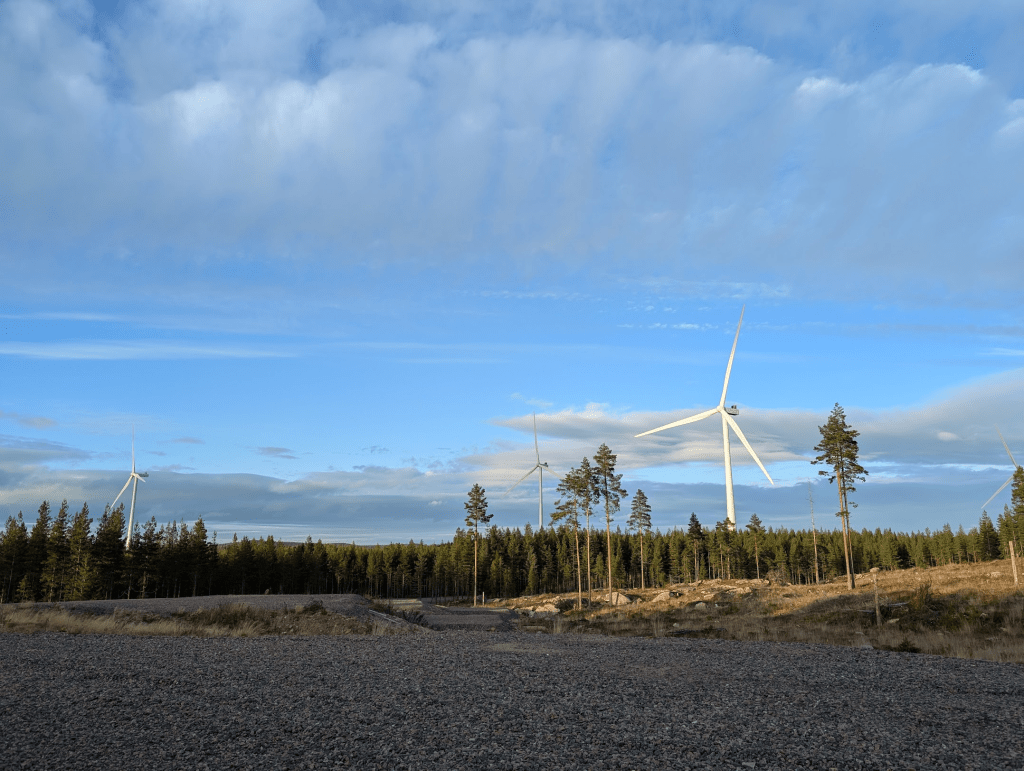
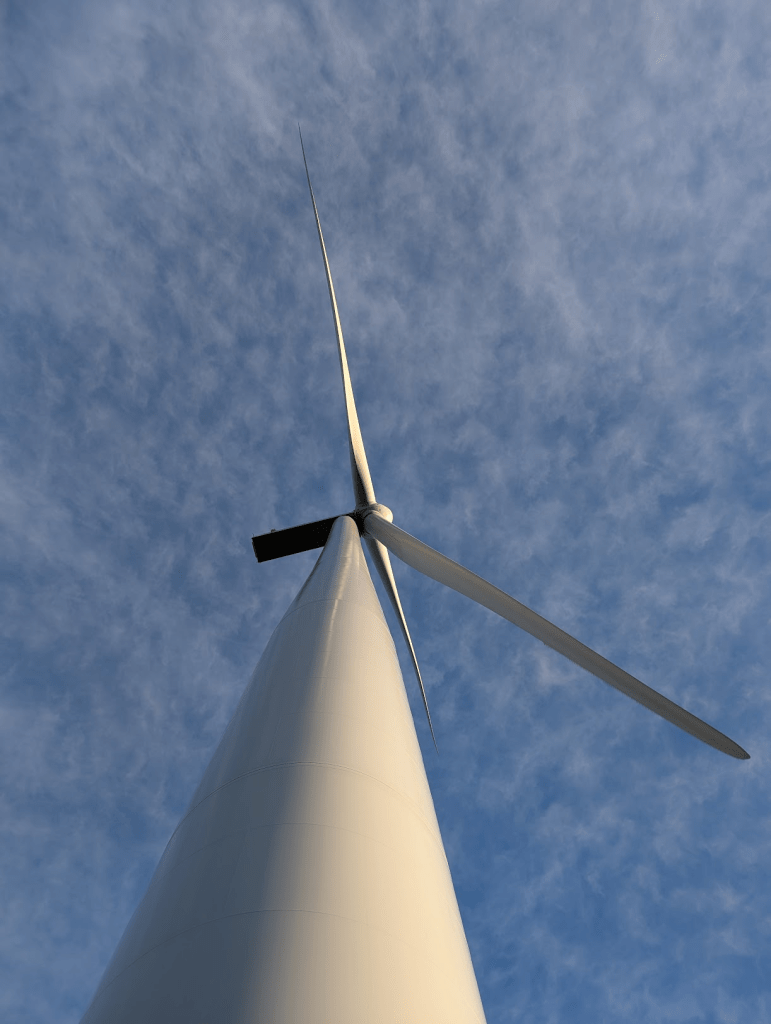
In this class (taught at KTH) we learn the fundamentals of solar energy, wind energy, biomass, hydropower, and energy storage. In each of those five modules, we learn about the technology, market, applications, and challenges for each technology. We also learn how to calculate things like yield, efficiency, and cost for different scenarios. Last week, we got to go on a field trip to see a wind turbine in the Dalarna region of Sweden. We even got to go inside the tower! I am really enjoying this class and I think it’s a great introduction to sustainable energy.
Artificial Intelligence Applications in Sustainable Energy Engineering
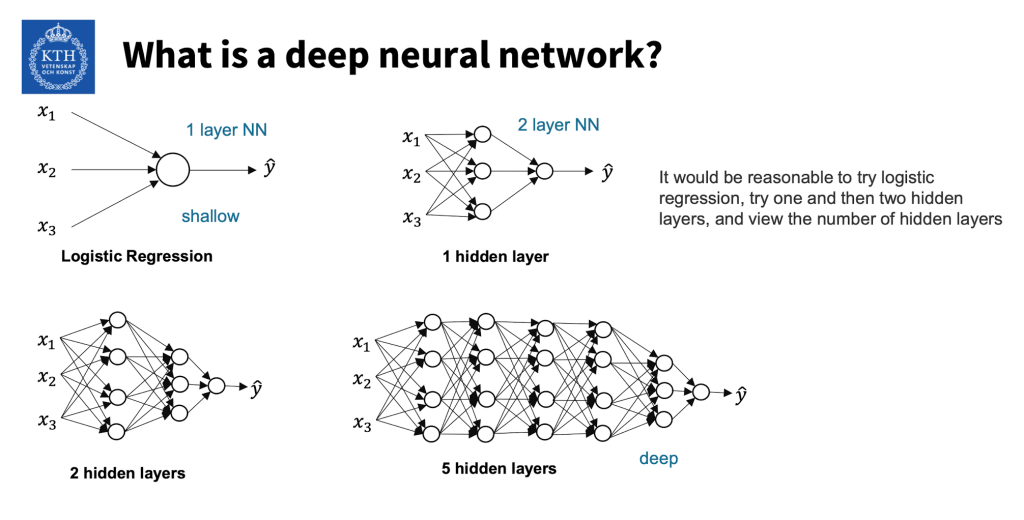
This AI class (taught at KTH) is a bit of a departure from the expected energy engineering curriculum but it has been really interesting so far. In this class we learn about machine learning and neural networks and apply that knowledge to solve sustainable energy problems. In the first half of the class, we had lectures on neural network basics, logistic regression, shallow neural networks, and deep neural networks. We learned the mathematics behind it all and we learned how to build neural networks in the Python programming language. We also had a guest lecture and a few readings on the ethics of AI. In the second half of the class, we are working in small groups to build a neural network to analyze a sustainable energy problem. My group is building a neural network to forecast space heating usage in a building on campus using historical data. Other groups are forecasting day ahead electricity market prices, wind and solar power generation, and geothermal temperature distribution. I have enjoyed learning Python and I’m looking forward to seeing how the project goes.
Microeconomics and Energy Markets
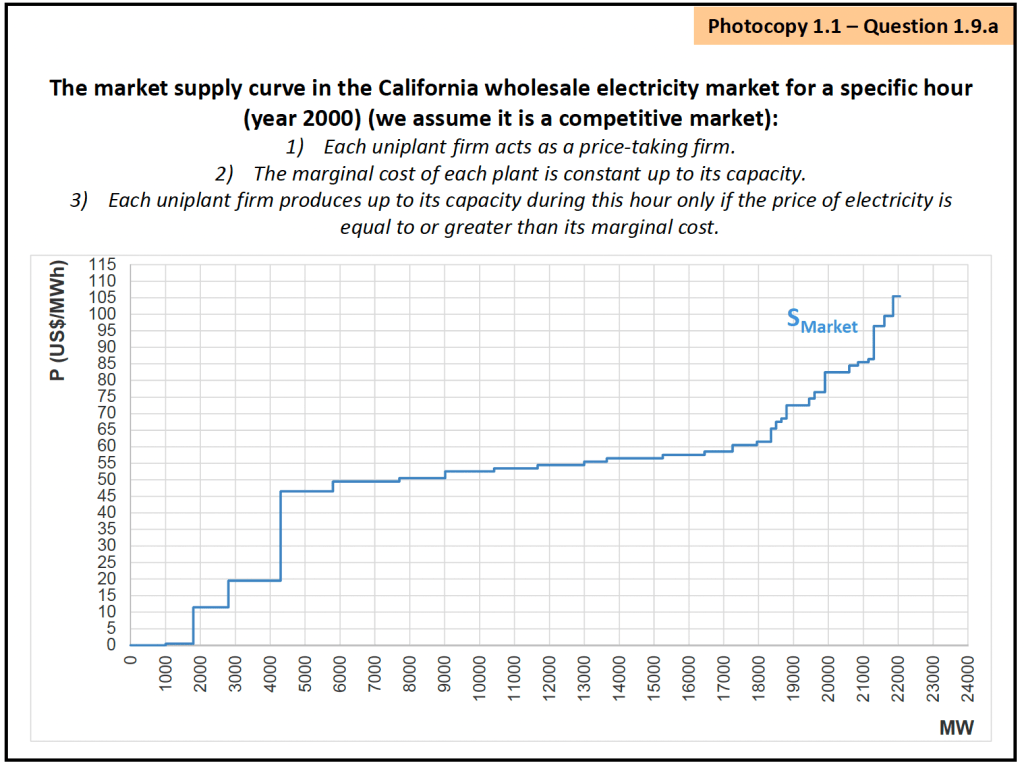
This class (taught at UPC) is a microeconomics class with a concentration on energy markets. We are learning about basic economic concepts such as supply and demand, taxation, trade, price-elasticity of demand, economies of scale, monopoly, and oligopoly. We also learn specifically about natural gas markets, electricity markets, and greenhouse gas emissions allowances markets. The project for this class will be a debate on an energy economics topic but we haven’t seen the list of topics yet. This is my least favorite class by far, but it’s important to learn these things.
Power Systems
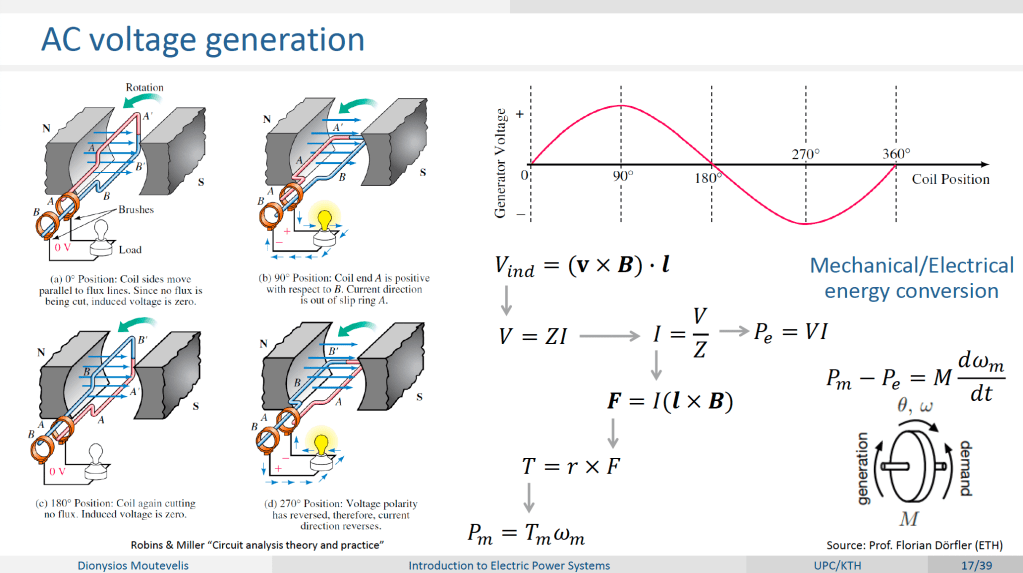
This UPC class is an introduction to electrical engineering. We are learning about circuit analysis, energy conversion, synchronous generators, frequency and voltage control, power converters, the control of power systems, and the transition of power systems to a power-electronics dominated network. We will also learn to model synchronous generators, power converters, and power plants in MATLAB. We should learn more about our project for this class next week.
Energy Resources
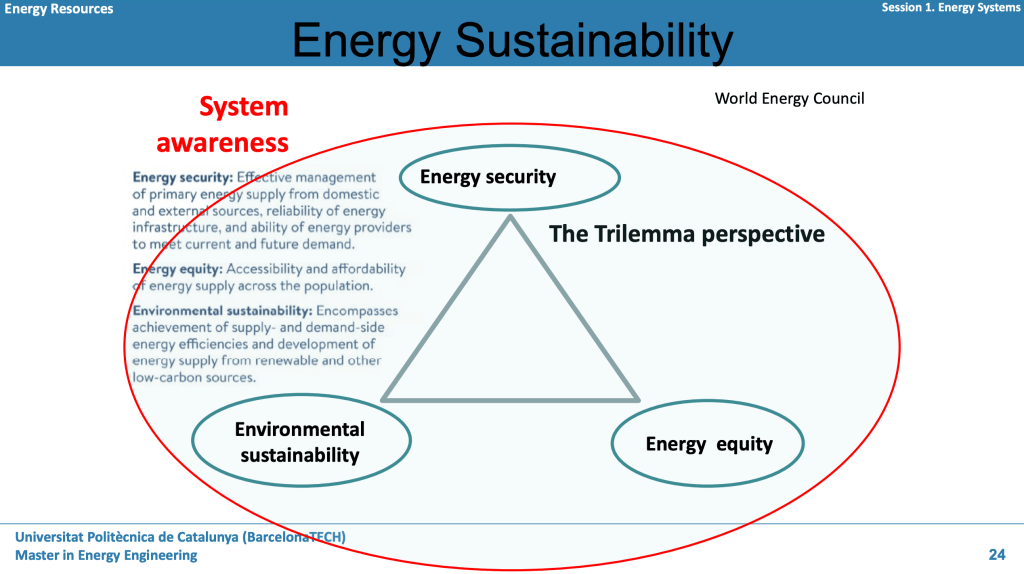
This class on energy resources (taught at UPC) is the least “engineering” course I’m taking. It combines technology, economics, politics, and social sciences to examine the different types of energy resources in the world and how they are distributed. We look at the interrelationship of aspects such as energy efficiency, economics, human development, environmental impact, and security of supply. We also discuss the universal need for energy and its relationship to sustainable human development. We consider the structure of different energy systems and the complete journey from source to end use.
Courses like this are the reason I chose this Master’s program. I love getting to study engineering and also study broader topics like the ones we discuss in this class. The course project for this class is a group research project where we got to pick from a list of 50 topics. Topics include geopolitics and energy security, the hydrogen economy, advanced use of coal, decarbonizing maritime transport, carbon capture and sequestration, economics of LNG transport, environmental impact of hydroelectricity, the future of biofuels, competition for land usage between renewable energy and agriculture, the effect of China’s nuclear energy program on the global economy, scarce and abundant minerals in the energy industry, and social effects of the path towards a net zero carbon energy mix by 2050. My group is researching energy poverty in seemingly affluent countries. This is probably my favorite class so far and I have really enjoyed working on our project!
Project of the Year in Sustainable Energy Systems
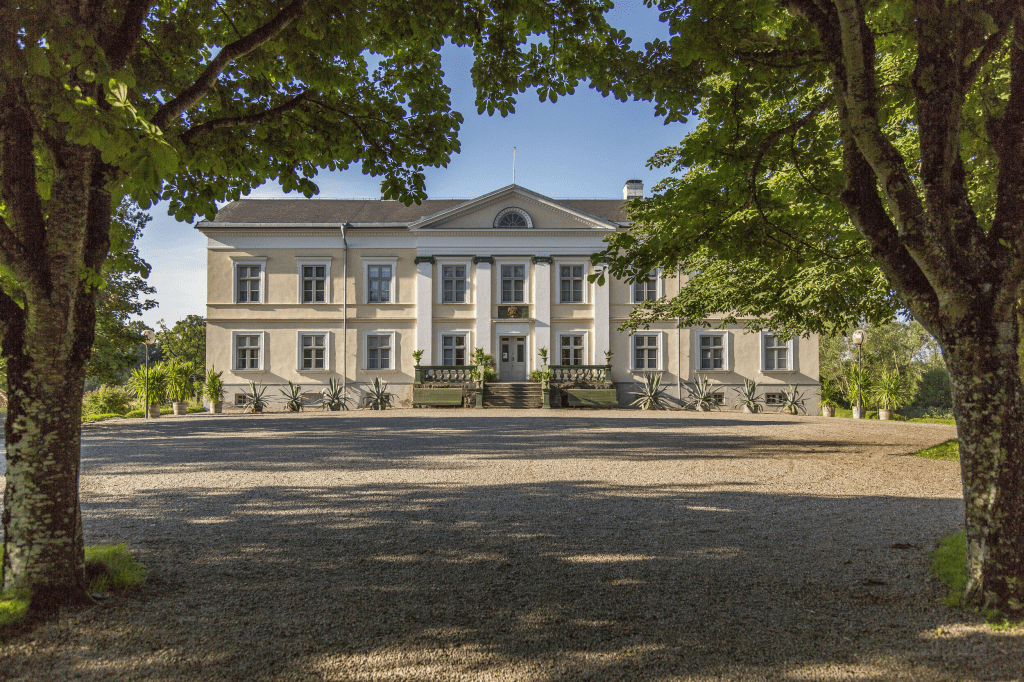
The Project of the Year (POY) is a year-long consulting project. We are working with a real client to solve a real problem. Our groups for this project are a bit larger than usual (7-8 people) and teams are spread between KTH (Stockholm), UPC (Barcelona), and TU/e (Eindhoven). I am working on a project with a historical property located in southern Sweden called Huseby Bruk. The property is owned by Sweden’s National Property Board and they are looking to decrease energy costs and increase energy resilience and sustainability on the property. I think it’s a great project and I’m really excited to see what we come up with. Other POY teams are working on projects related to battery energy storage data management, optimizing biogas yield, carbon emission accounting, and electrical grid stability. During this semester, we will understand the challenge we’ve been assigned, write a problem statement, conduct a literature review, and propose two potential solutions. Next semester, we’ll fully build out a proposed solution. This is a really cool aspect of this program and I’m excited to see the results of all of these projects.
What classes will I take next semester?
Next semester I will be taking five classes and will continue the Project of the Year. I believe most or all of the classes will be taught in-person at KTH but I don’t know exactly yet. All I know is the course names and they sound pretty interesting. Here they are:
- Sustainable Energy and Environment
- Heating, Cooling and Indoor Climate
- Thermal Conversion and Industrial Systems Analysis
- Energy Storage – Systems and Applications
- Transformation in Energy Policy and Climate Agenda
What is Swedish university like?
Swedish university feels quite similar to my experience at an American university, with the exception of a couple of key differences. I’ll talk a little bit about the class schedule, exams, projects, graduation timeline, and dress code.
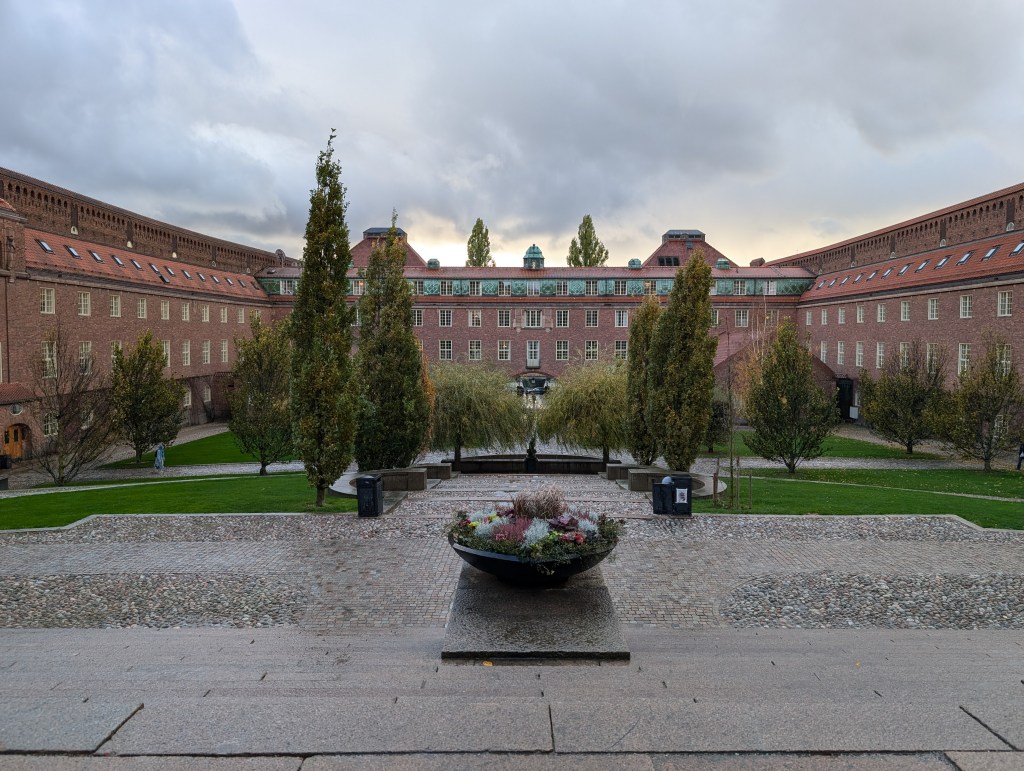
First, the class schedule is a bit different here. In the U.S., I had either a 50 minute class on Mondays, Wednesdays, and Fridays or a 75 minute class on Tuesdays and Thursdays. The schedule here is not nearly as predictable. My classes at KTH are 2 hours long and the professor generally gives a 10 minute break somewhere in there. These classes are scheduled at seemingly random times. If there’s a pattern to it, I haven’t discovered it yet. I have no idea how they successfully coordinate all of the classes at the university. Each of my classes at UPC happens once a week and lecture is 3 hours long. The professor generally gives 1-2 breaks (although we often have to politely remind them to let us take a break). I find it incredibly difficult to focus during the 3-hour long classes, especially because those are online. We do have a classroom at KTH where we can meet to attend lecture in a hybrid set up, but often it’s nicer to watch from home and a bit easier to focus.
The biggest difference, for me, between European and American university classes is that your final grade in a class is almost entirely based on a midterm and a final exam. There is generally very little homework (or none at all) and most classes do not track attendance. Many of my classes also include a project, which I’ll talk more about below. This means that the final exam almost completely determines your grade in the course. I find this to be quite stressful. Overall, however, I am much less stressed out about my grades than I was during my bachelor’s degree. I am working hard to understand the material and want do well in the class, but at the end of the day I know I am here for so many reasons that have nothing to do with GPA.
Another difference is that exams operate a bit differently here. My classes here have all had only one midterm exam so far; in my bachelor’s degree my classes often had 2-3 midterms. Exams are much more formal here than what I am used to; they are strictly proctored and you must bring a photo ID to the exam in order for them to let you in. Another funny thing in Sweden is that you have to register for each of your exams. No one seems to be sure why it works like this but in order to take a (mandatory) exam, you have to actively register and declare that you’ll be taking it. If you forget to register, too bad! Try taking the class again next semester.
It is much more common here to fail a class and retake it once or maybe even a few times. People tend to graduate at different rates. Someone asked me once why Americans make such a big deal of their graduation year (i.e., “class of 2020”). I explained that almost everyone will graduate with their bachelor’s degree in 4 years. In Sweden, there’s a lot more flexibility and people finish at their own pace. My theory is that this is mainly due to the way people pay for school. In the U.S., taking an extra semester to graduate costs you a lot of money and puts you further in debt; this is not so true in Sweden. I have had a lot of conversations on this topic and it’s really interesting but it’s a bit too much to unpack for this post. Suffice to say, paying for university works very, very differently in Sweden and America.
Projects are an essential component of the educational system here at KTH. For me, this is not much different than it was in the U.S. For some of my classmates, however, this is completely new. Many of their bachelor degrees were focused entirely on theory and individual work and did not have much, if any, group project work. I have a total of six group projects this semester which requires some serious time management and scheduling skills. The projects are all really cool though and I find it to be the most rewarding part of school. It’s also a great way to make friends and build your resume!
Another key difference between Swedish and American universities is what students wear to class. American university is very casual; t-shirts, sweatpants, and hoodies are the norm. Here in Sweden, people tend to dress very nicely while still being comfortable. Many men here will wear a button down shirt with a collar, a nice sweater, and a nice pair of jeans or slacks. They often look like they walked straight out of a magazine cover. To be completely honest, it’s really fun to see. The women also dress very nicely and I’ve been trying to take notes. Everyone favors neutral tones (beige, gray, brown, black). Layering is essential for Swedish weather so scarves, gloves, hats, and sweaters are all combined into really nice outfits. Another fun thing I noticed was that every classroom has a large number of coat hooks near the door. I don’t think I ever saw this in the U.S. but maybe that’s partially because I went to school in Tennessee, where the weather is mostly quite warm. It’s really nice to be able to leave your coat hanging up, especially if it’s wet. I’ve also noticed it seems more common to carry any bag other than a backpack. In the summer there were a lot of tote bags but now that it’s getting colder I’m seeing a lot more leather briefcases and heavier bags. I love seeing what people wear to class and I’ve been trying to find some nice items of clothing at thrift stores to add to my closet.
What’s it like going back to school as a 26 year old?
Going back to school after having worked for four years definitely has its pros and cons. Our class is a decent mix of people who started their Master’s degree directly after their Bachelor’s degree and people who have 2-8 years of working experience. This also means we have a wide variety of ages which is really fun. The benefits of going to grad school a few years after graduating with a Bachelor’s are that I have a much greater perspective on life and what I value, I’m more emotionally mature, and I have some savings in my bank account. I am enjoying the huge amount of personal freedom that comes with student life and the ability to make my own schedule. I love having the freedom to decide how to spend my day and manage my workload. I also really enjoy the social environment of university. It has been super easy to make friends. The main challenge is that I have had to relearn a lot that I used to know, especially the mathematics and programming skills. I felt like I was reawakening the part of my brain dedicated to learning. The other significant challenge is going back to living on a student budget. I try to limit my spending and spend my money wisely but I’m also trying to take advantage of all the amazing opportunities I have while I’m here in Sweden. Stockholm is an expensive city but thankfully there are a lot of student discounts and everyone I interact with on a daily basis is on a similar budget so we find cheap ways to travel and have fun.
Conclusion
I hope with this post I have successfully proven that I am indeed actually studying in addition to all the fun I’m having. I’m very happy with the SELECT program and I really enjoy the vast majority of the things we are learning in class. Some topics are more difficult than others (microeconomics is the worst by far) but everything is interesting if you really engage and start to figure things out. Going back to school is a big transition but it has lots of perks. As always, if you have any questions or are curious to learn more about anything I’ve talked about, leave a comment or contact me directly!
 Nordic Breeze | Iberian Seas
Leave a comment