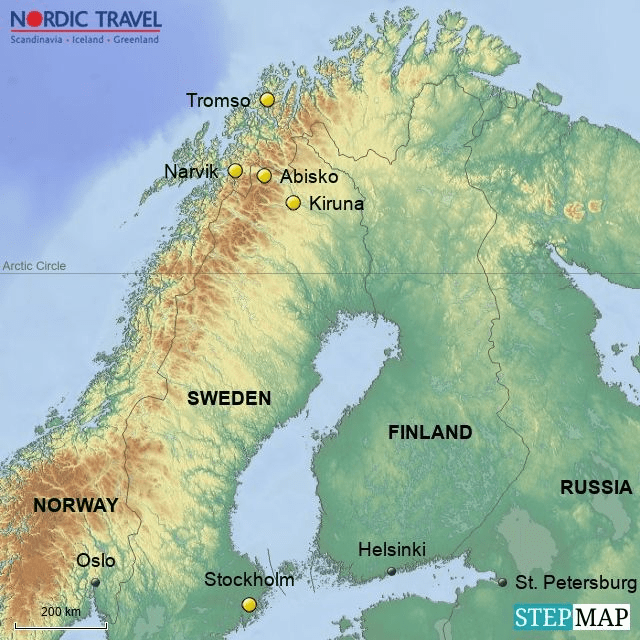
In February I went on the most breathtakingly beautiful and otherworldly trip I’ve ever been on: way up north in Sweden to an area around the city of Kiruna and Abisko National Park. I checked off two longstanding items from my bucket list: seeing the northern lights and seeing a moose (I saw four!). We also went dogsledding, hiking, cross-country skiing, snowshoeing by moonlight, and explored Abisko National Park. It was a busy, beautiful, and invigorating trip and an absolute dream come true. I felt a deep desire to spend more time in this beautiful land and I hope I can come back soon.
- Introduction and Day 0 – Travel
- Day 1 – Hiking and Sámi Culture (and reindeer)
- Day 2 – Abisko National Park (Plan B), Snowshoeing, and Northern Lights
- Day 3 – Dogsledding, Kiruna, XC Skiing
- Day 4 – Travel Home
Introduction and Day 0 – Travel
This region is commonly known as Swedish Lapland but this term is derived from the word Lapp, a derogatory name for the native Sámi people who live there. The land of the Sámi people is called Sápmi and it covers land throughout Sweden, Norway, Finland, and Russia. The history of this land and its people is long, complex, and full of both violence and beauty. I highly recommend learning more about it.
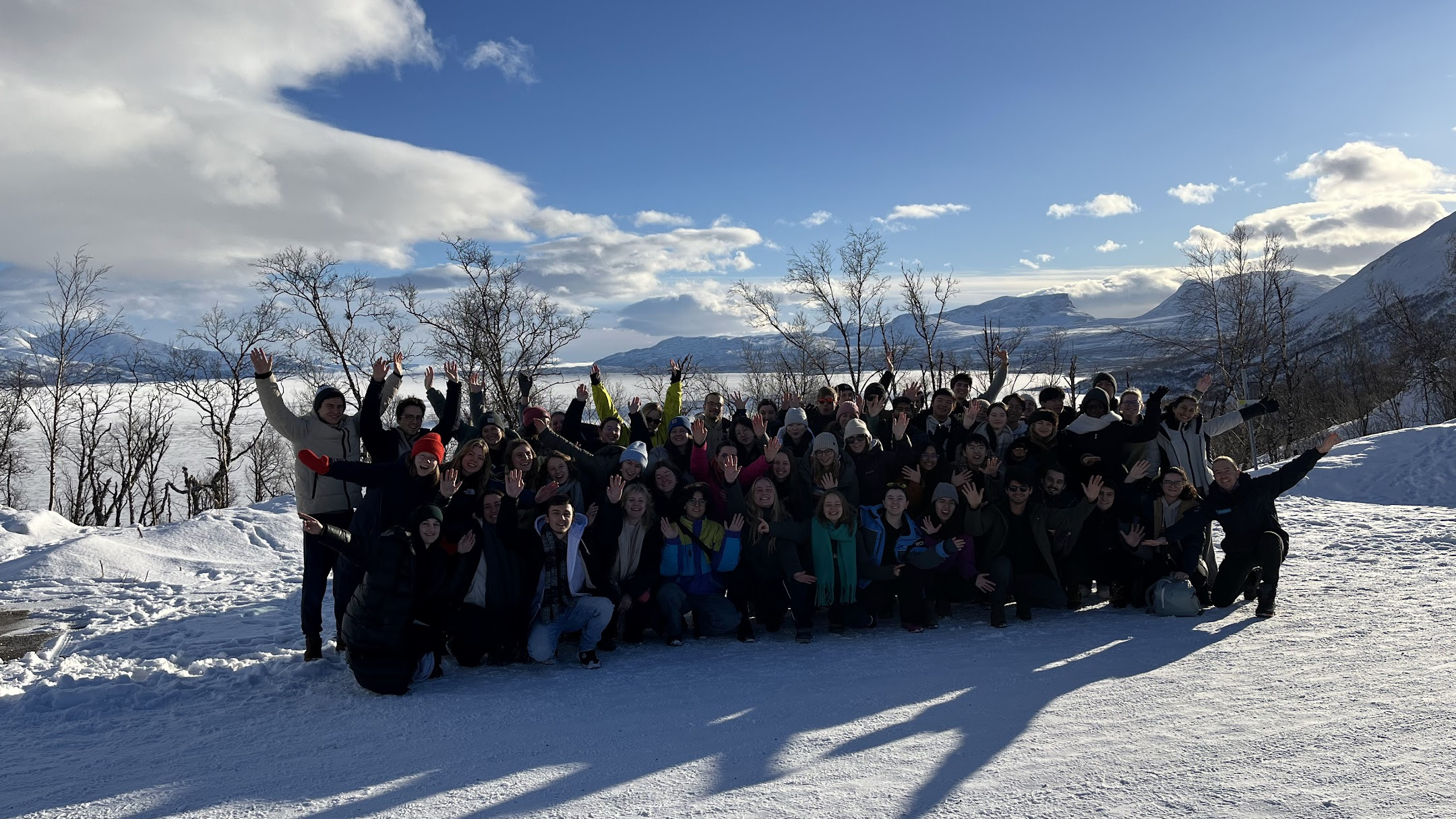
For this trip I traveled in a large group with a tour operator called Timetravels, recommended to me by classmates, and it was a great way to visit the area for the first time. Visiting such a remote and wild place, especially in February, leaves a lot of opportunity for things to go wrong and if you keep reading you’ll see a few examples of times we had to pivot (don’t worry, everything was okay in the end!). I would definitely recommend traveling with a tour guide and I was really impressed by the professionalism and passion of our guides, as well as their ability to roll with the punches and keep everyone safe and happy despite a few setbacks. I also had four or five friends who signed up for the trip, including my two roommates, and it was fun sharing this experience with friends.

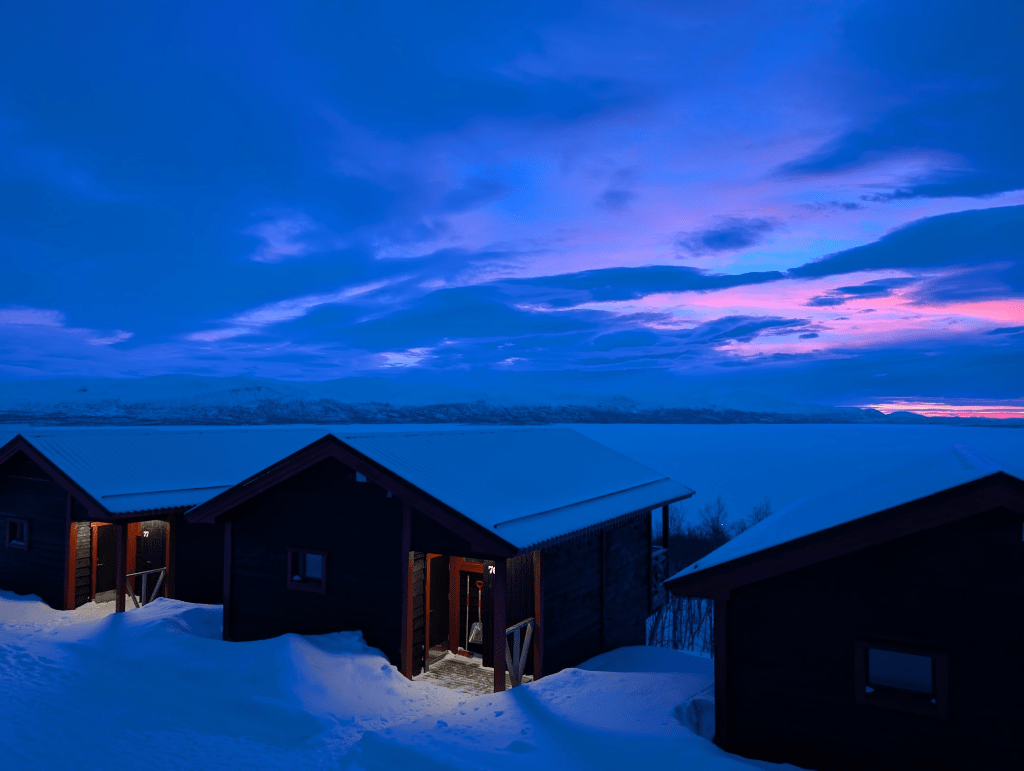
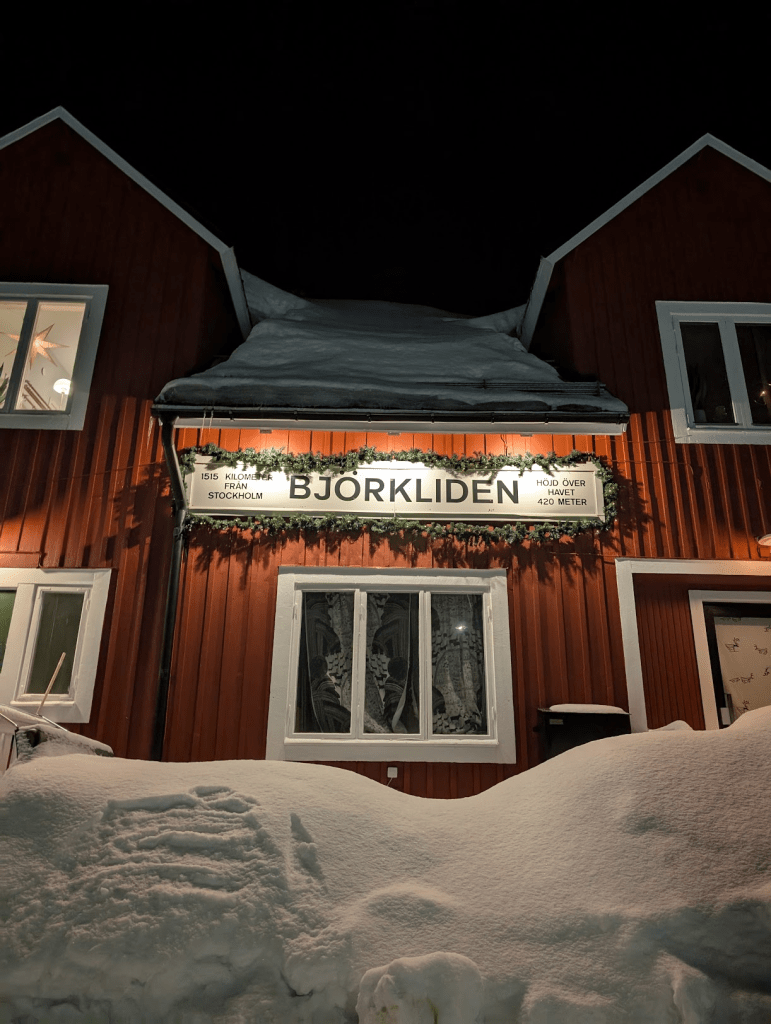
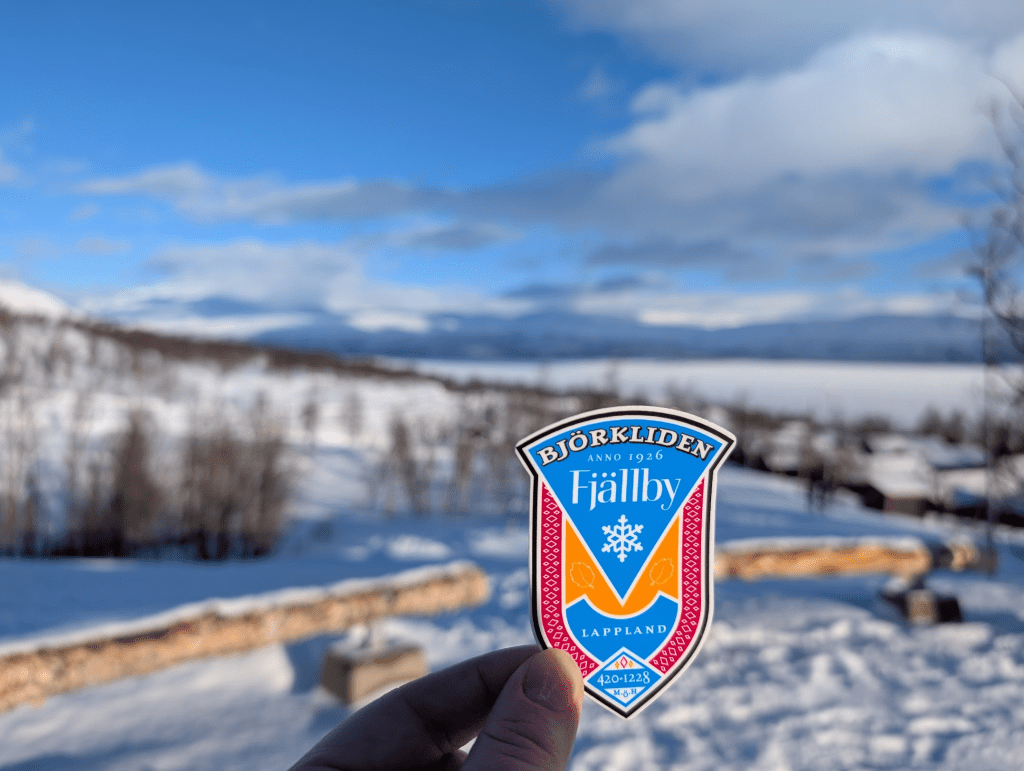
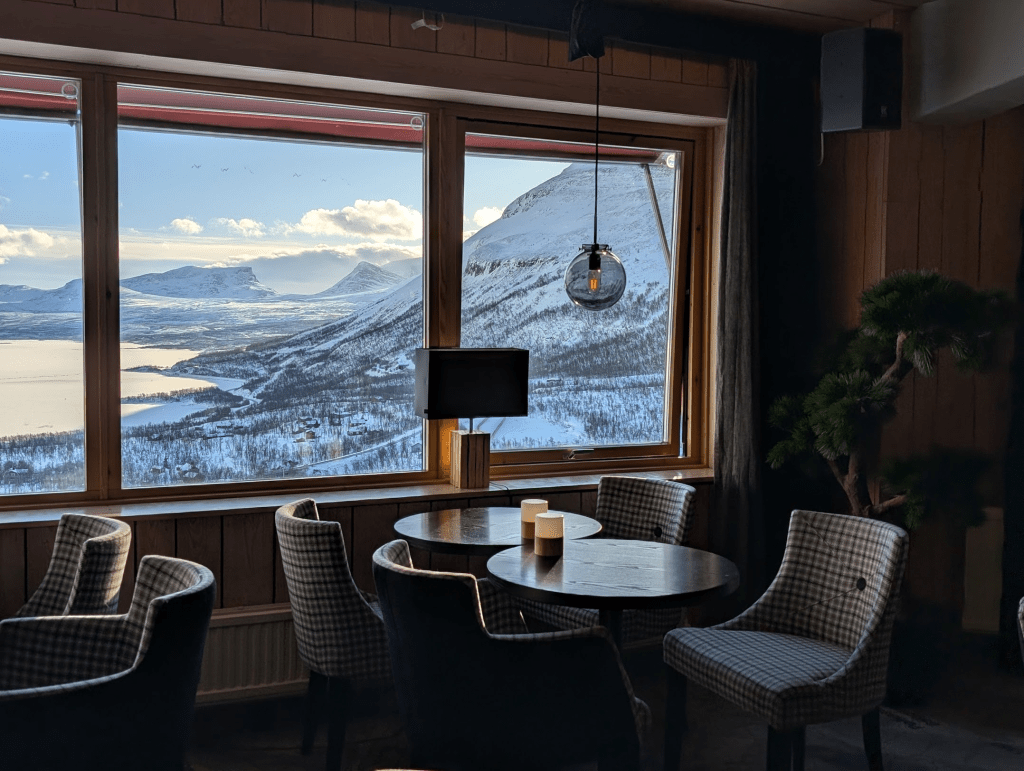
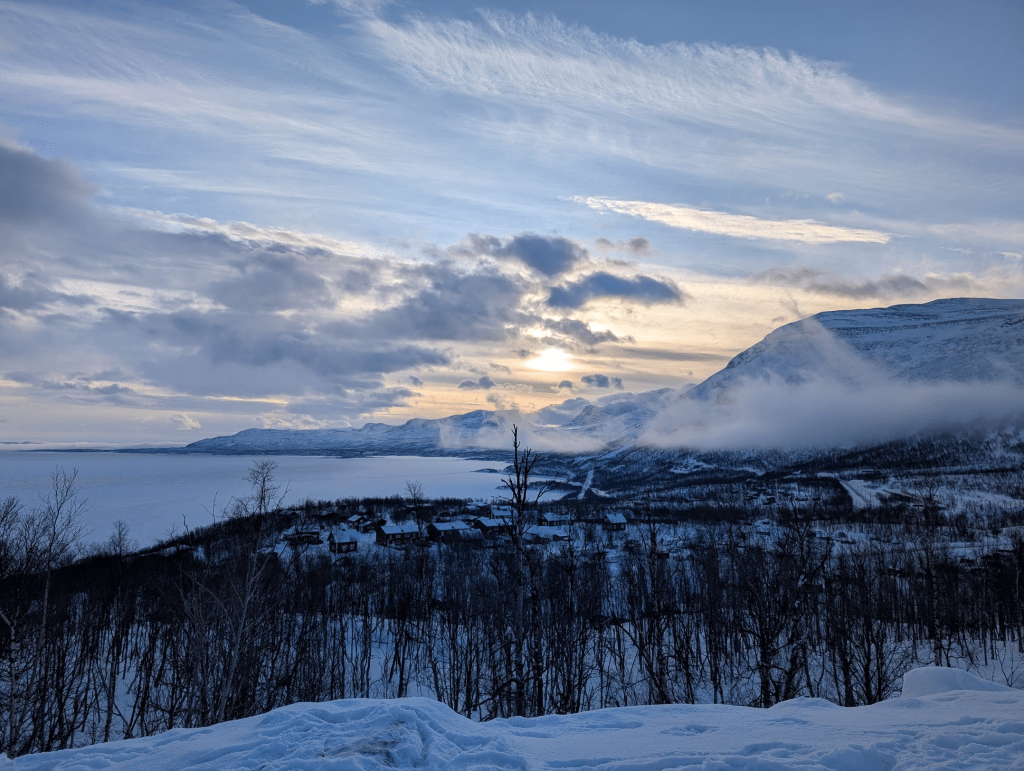
We left Stockholm at 8:30 PM on a tour bus and made it to our accommodation in Björkliden around 4 PM the next day, after stops for a late night dinner, breakfast, and groceries. Lesson #1: I am already too old (at the ripe old age of 27) for 20-hour bus trips. In true American fashion, however, I really enjoyed the road trip and watching the world go by, even if my lower back didn’t appreciate the experience. The views of Lake Torneträsk, between Kiruna and Björkliden, were especially gorgeous. Our accommodation was in cabins at Björkliden Fjällby, a small ski resort, and I really loved it there. Our cabin even had a sauna! I love to cool off between stints in the sauna by rolling in the snowbanks outside. My roommates think I am crazy. On our first night, we went outside to try to see the northern lights and we did see them, but only very faintly and mostly through a camera lens.
Day 1 – Hiking and Sámi Culture (and reindeer)
On our first full day above the Arctic Circle I went hiking in the snow with a few of my friends in the morning and then learned about Sámi culture and met some reindeer in the afternoon. There were a few inches of fresh snow on the ground in the morning which was delightful. The weather hovered in the high 20s (Fahrenheit) and occasionally rose above freezing. It was perfect for outdoor activities but, admittedly, I was hoping it would be colder. Our Sámi host told us it is typically about negative 20 degrees Fahrenheit this time of year. While I am glad we had pleasant weather for the sake of my own safety and enjoyment, this sort of climatic anomaly is rather concerning.
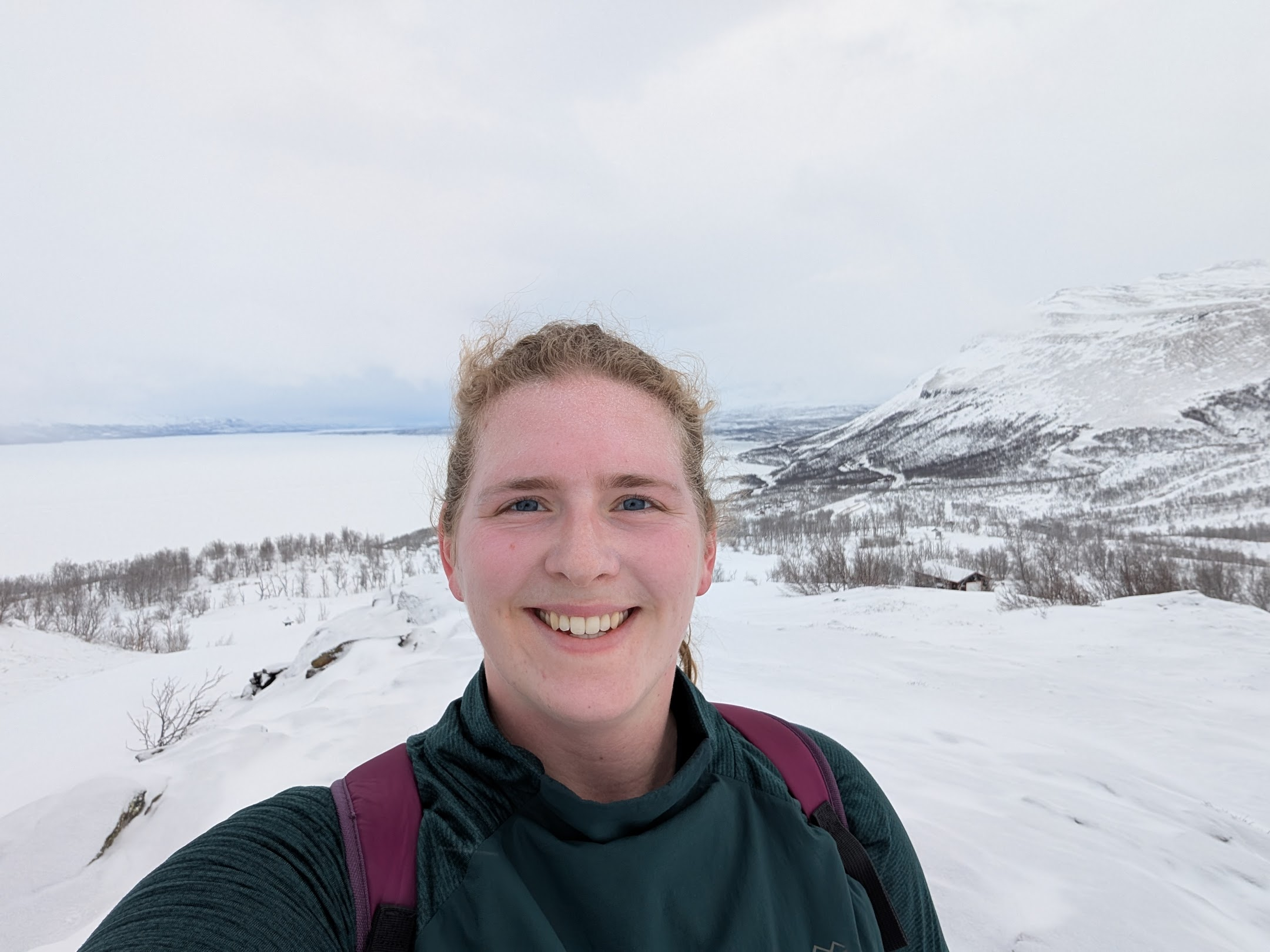
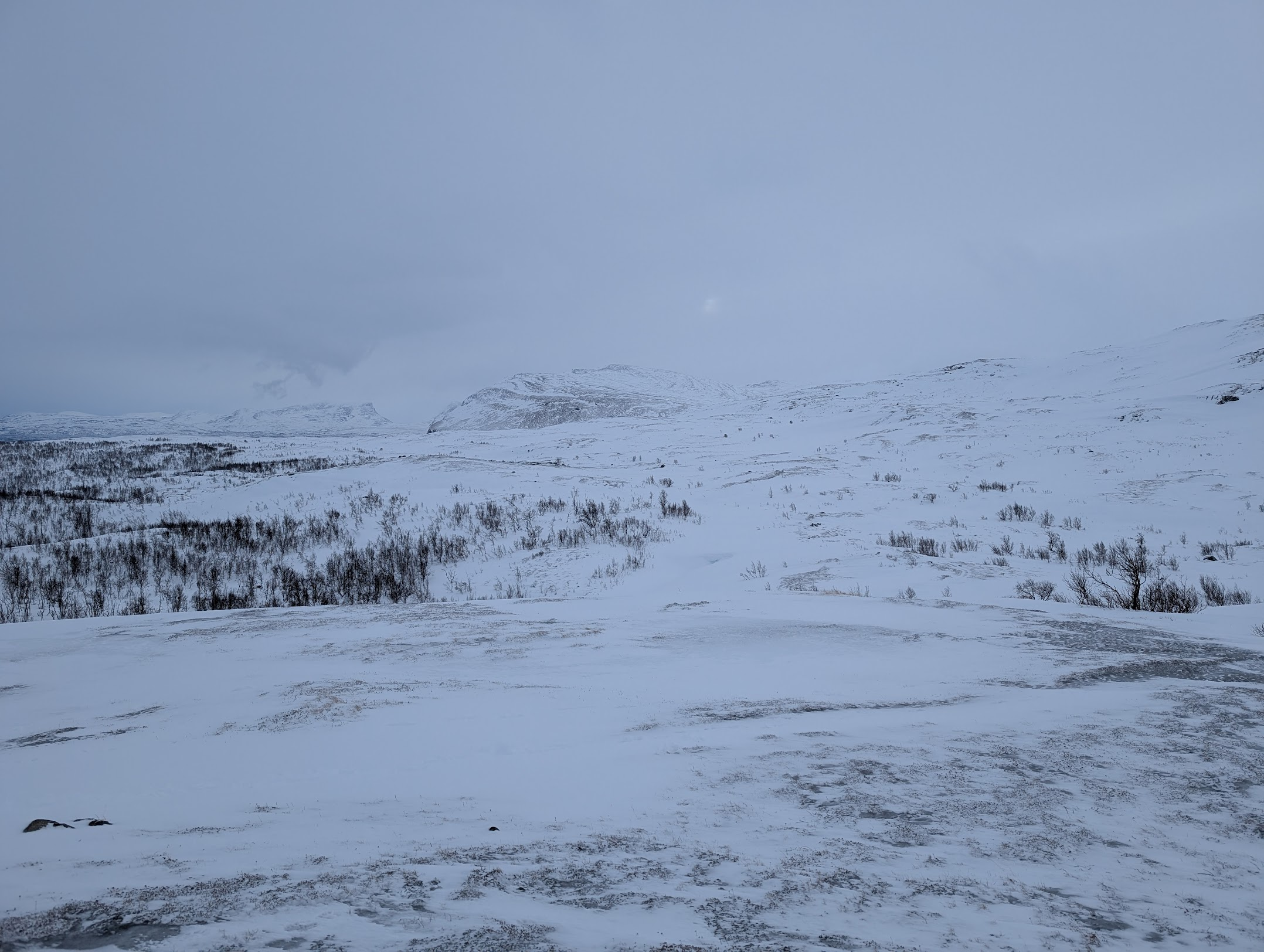
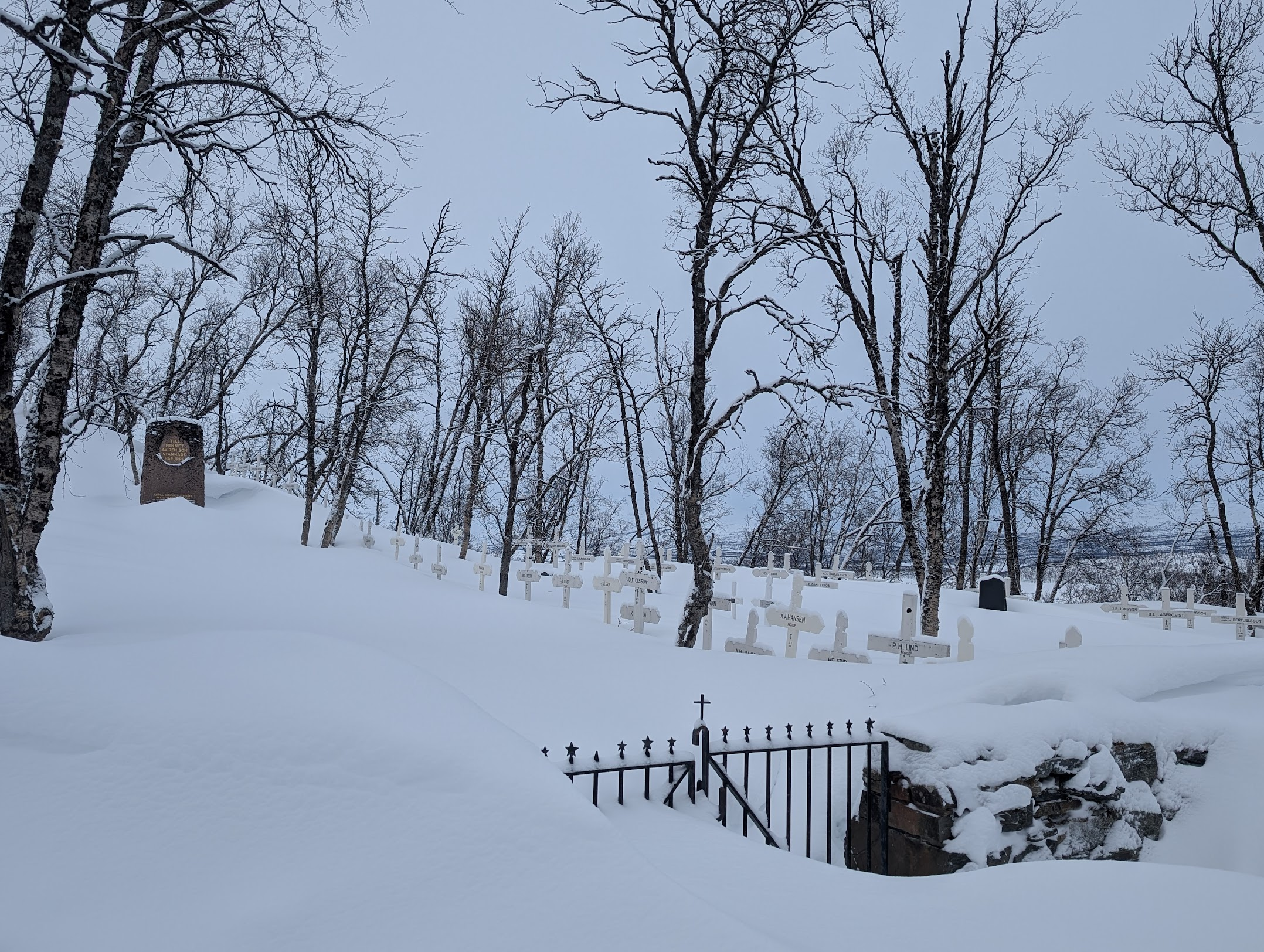
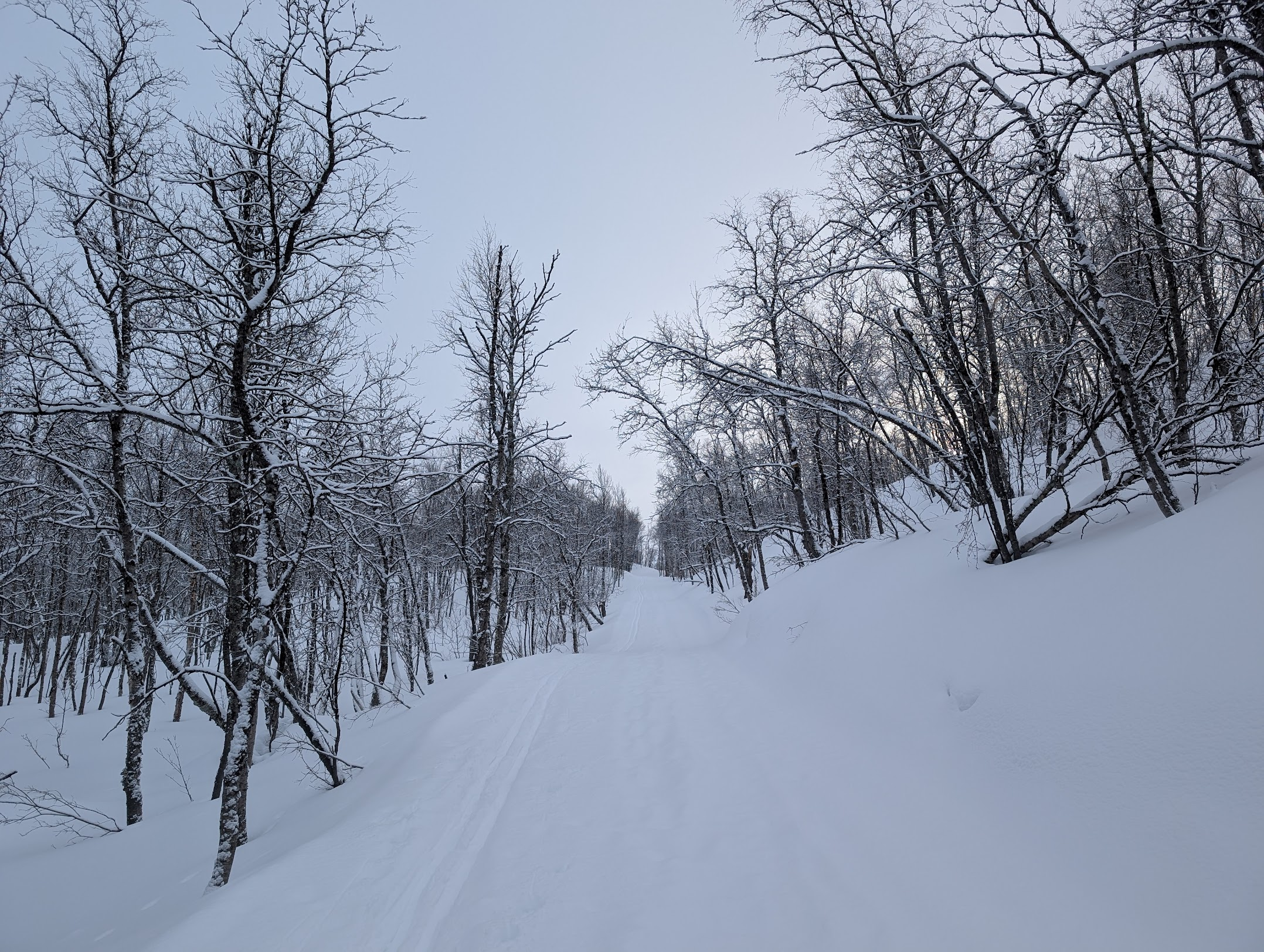
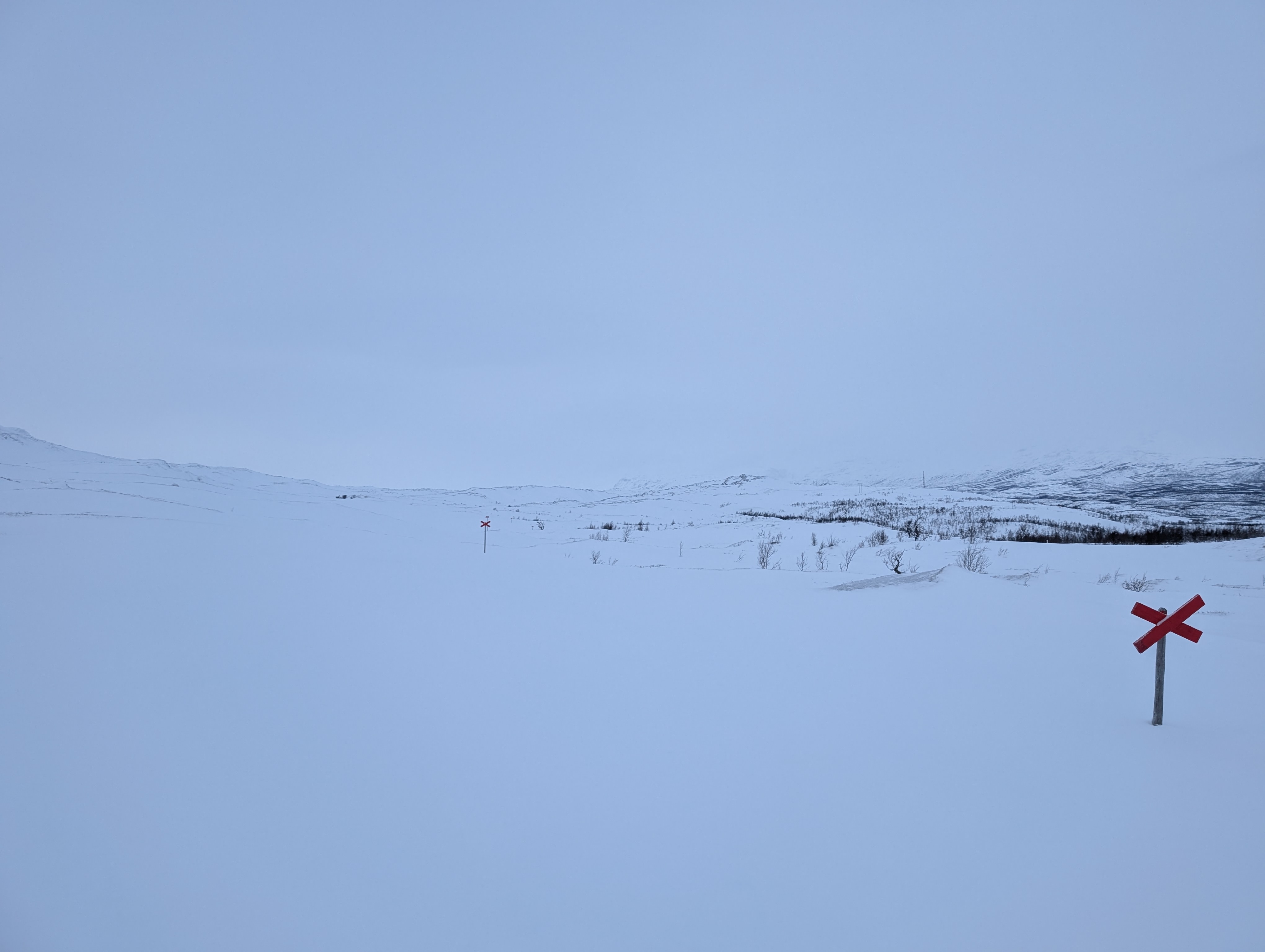
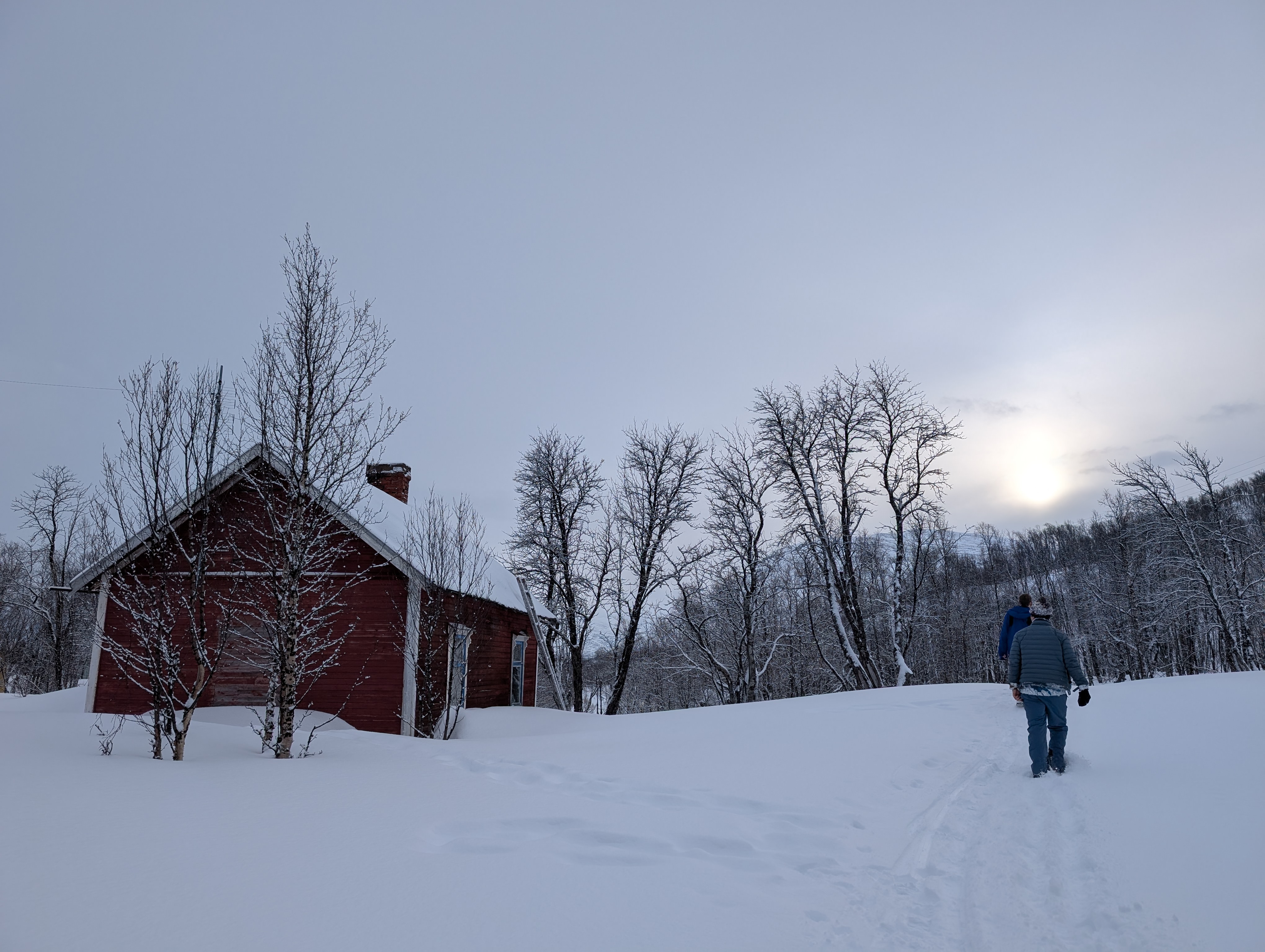
Our hike was gorgeous, wet, and slightly nervewracking. I was extremely grateful for the temperate weather and I immediately understood why the trail markers are tall and red. I also truly understood the term “snow blind” for the first time in my life. I can’t even begin to imagine spending extended periods of time in this landscape or what it would look and feel like for a storm to blow through. I was accompanied by three bold, confident, and joyful young men (friends of mine from school) with seemingly endless resources of energy. I kept up, barely. After a few hours of trudging through knee-deep snow, we finally came across a ski path and had an easier hike back to the cabins. All of the other activities on this trip were organized through the tour group, so I really enjoyed this moment of freedom, exploration, and moving in a smaller group. The landscape is just stunningly beautiful. Photos do not do it justice in the least. I wished fervently that I had the skills of a painter to accurately capture the play of winter light on snow but for now it will have to remain seared in my memory. Click through the slideshow below to enjoy a few of my better photos.
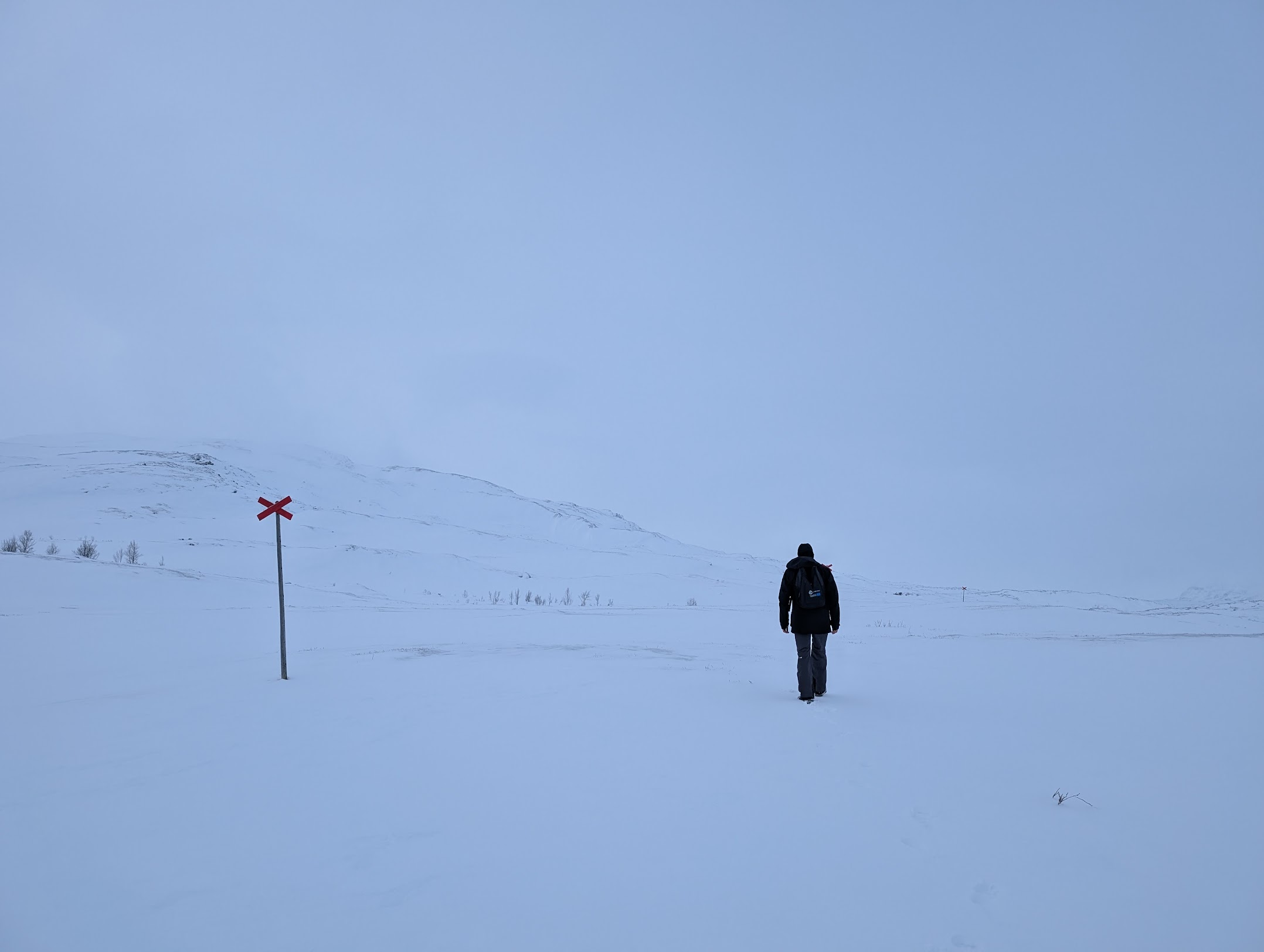
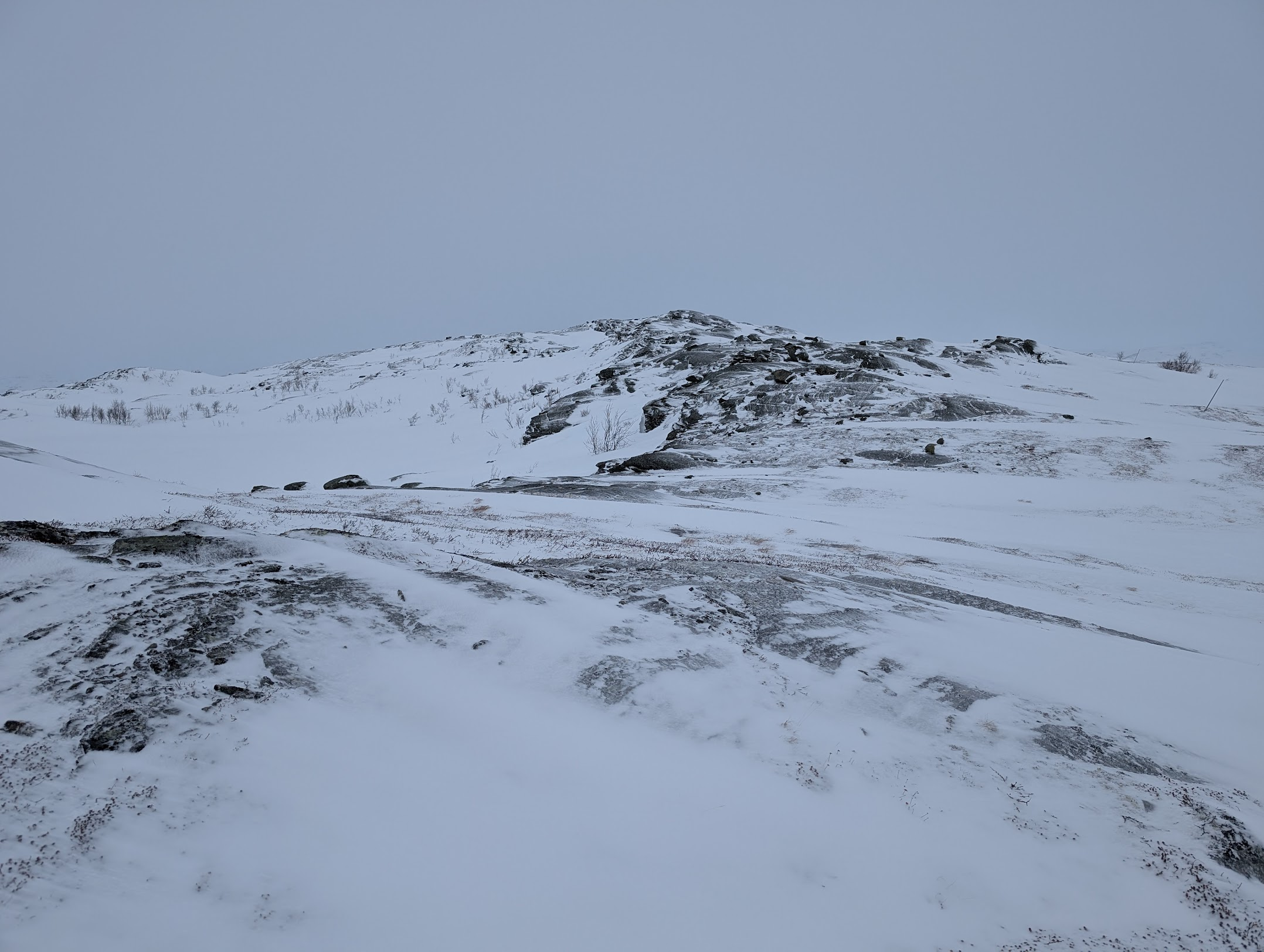
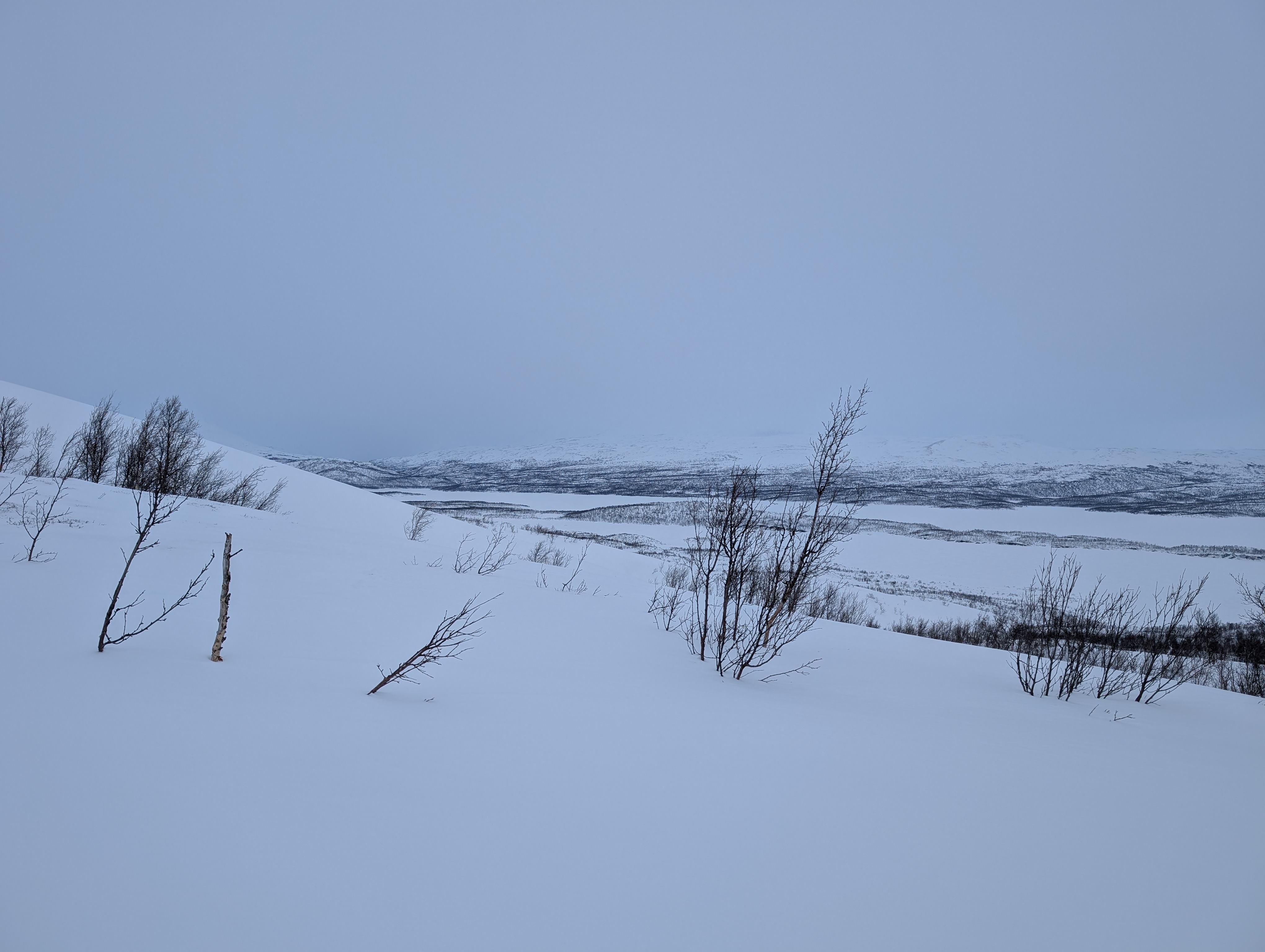
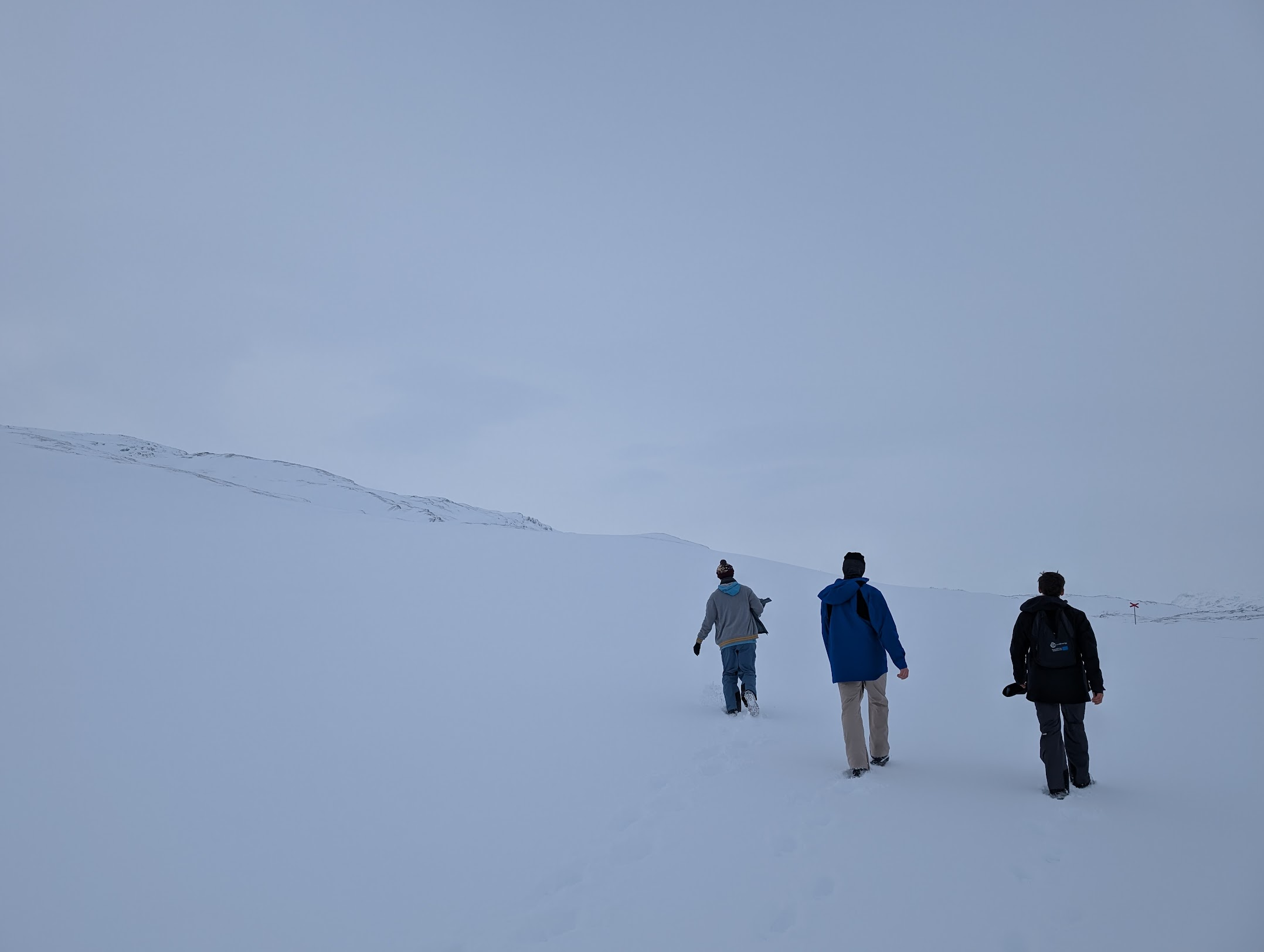
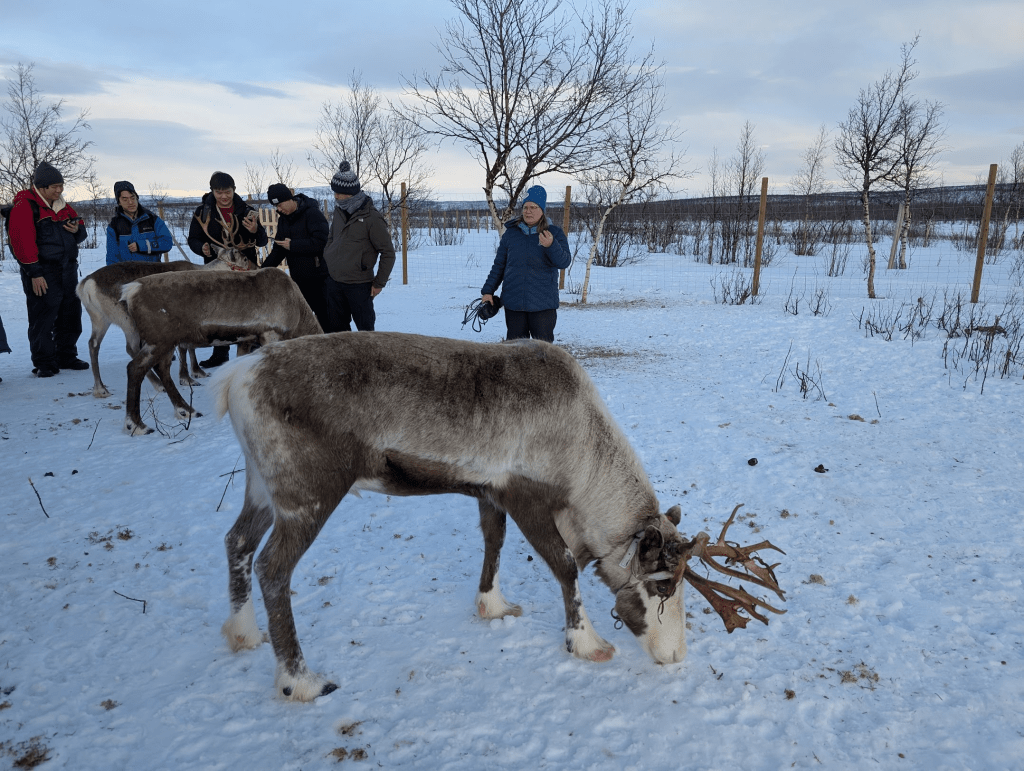
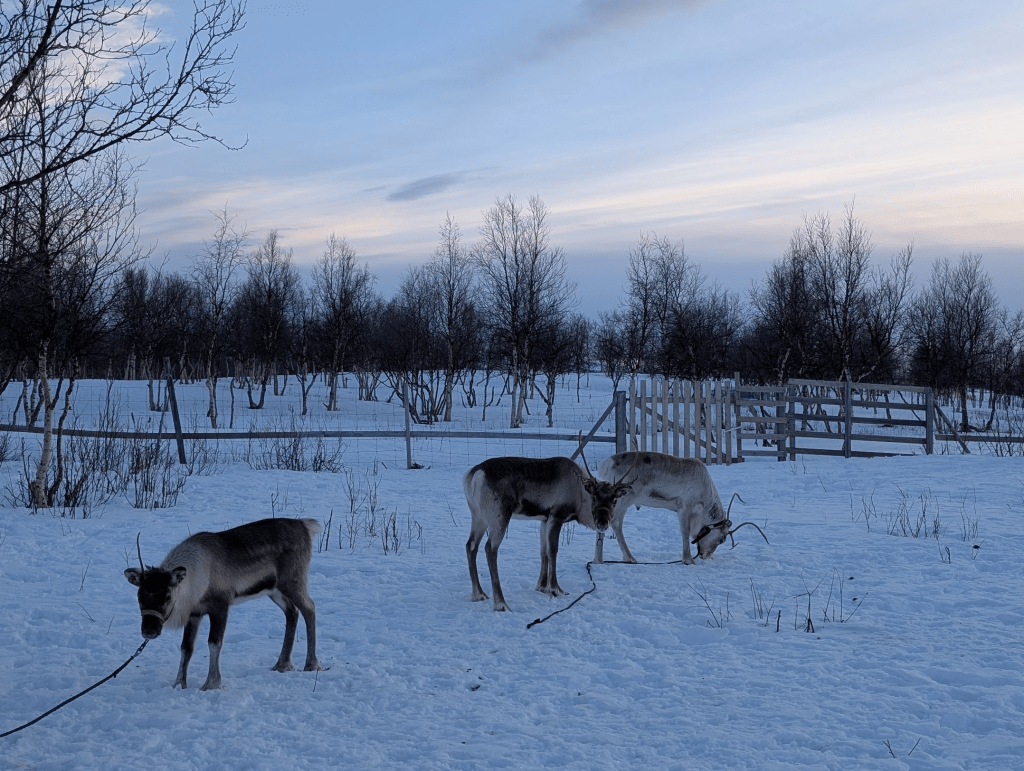
In the afternoon we met two Sámi people, Maria and Anders, who taught us about Sámi history and culture. The Sámi are nomadic reindeer herders and it was fascinating to learn about the myriad ways Sámi culture is deeply intertwined with the lives and habits of the reindeer. The reindeer and the Sámi have a mutually beneficial relationship; the Sámi keep the reindeer herd healthy and at a good population size and the reindeer provide the Sami with pretty much everything they need to survive. Fun fact: the Sámi are considered the only indigenous people in Europe. We got to meet some of the reindeer and feed them lichen. This was very cute and fun, but it was honestly much more interesting to hear Maria and Anders talk about their families and their people.
The Sámi have sometimes been treated well by the Swedish government, but mostly not. Their traditional way of life is threatened in many ways through politics, economics, land use changes, and climate change. The major issue is that the traditional migration paths of the reindeer are being destroyed by industry and by climate change. Reindeer migrate seasonally across long distances; in the summer they head towards Norway up into the mountains where the wind keeps mosquitos away and in the winter they come back into Sweden into the forests. The reindeer know these paths through instinct, so the Sámi aren’t leading them in any direction, they are simply keeping the herd safe and cared for as they migrate. This also means that they cannot just convince the reindeer to take a different path. The traditional migration paths are being destroyed due to climate change and industry, such as the extremely large iron mine in the nearby city of Kiruna (more on that later). The reindeer are also frightened by loud machinery like snowmobiles (which are both a primary transportation method and a form of recreation in this area) and wind turbines. In Swedish law, the Sámi have the right to herd reindeer, but the interpretation of what this really means is complicated. Any decisions made up here in this region are extremely complicated due to conflicting interests. Who do you prioritize? What is most important? There are no right answers.
These days, very few Sámi are able to make a living through traditional reindeer herding. Many people still herd but they have to supplement their income with something else. Like most indigenous peoples around the globe, their traditional lifestyle is endangered. Anders spent 45 minutes telling us about the past and current challenges his people face. It is part of the reason he and Maria do gigs like this one with our tour group of international students; they share the reality of their lives and their challenges with a broad range of visitors in hope that people will care and will act. Anders ended by telling us: “but I’m optimistic. Not for my children or my children’s children but I know that some day the mining will end and the industry will move and the Earth will adapt and my children’s children’s children’s children will have a better future.”
Day 2 – Abisko National Park (Plan B), Snowshoeing, and Northern Lights
The original plan for today was to take a day trip across the border into the town of Narvik, Norway. Narvik is a small strategic port city located deep in a fjord on the Atlantic Ocean. Iron ore from the mine in Kiruna, Sweden is transported by railroad to Narvik, where it is shipped out. Due to the port’s strategic significance, it was the site of an important battle during WWII (appropriately called the Battle of Narvik). Our plan was to see the mountains and fjords, visit the town of Narvik, and swim in the Atlantic Ocean, which does not freeze over due to its salinity, even in February.
Unfortunately, we never made it to Narvik. There is one road into Norway, high up in a mountain pass, and it is often closed to due extreme wind, snow, or ice. The weather on this day was bright and clear, with temperatures hovering just below freezing and light winds. Our bus made it to the border crossing into Norway (which, unlike Sweden, is not in the European Union) and, for the very first time in our guide’s career, we got stopped by the authorities for a routine search. This was odd but not a problem; we were on our way again within five minutes. Just past the border, however, we learned that the mountain pass was closed. We would be able to get through once it was cleared, but nobody could tell us how long that might be. This was confusing since the weather was lovely and there had been no new snowfall. The guides told us it was especially strange since no one from the traffic control or border authorities was willing to give them a clear answer on what was happening or when we might be able to go through. The best speculation was that there was potentially a military exercise being conducted. This area is often used for military training due to its remoteness and extreme conditions.
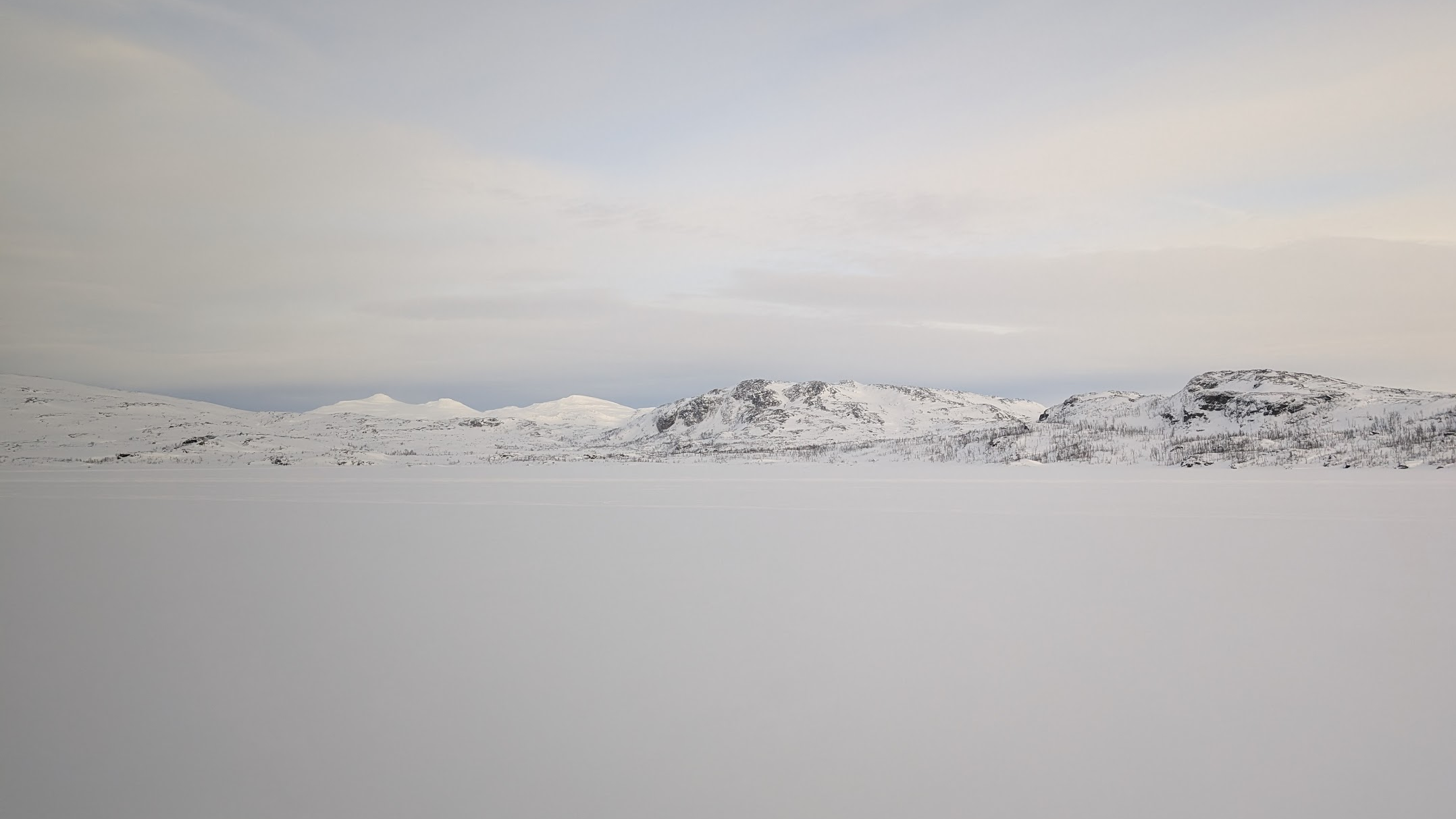
Thankfully, the tour company always has a backup plan (or two) in place in case of events like this. We turned the bus around and went to Abisko National Park instead. I was disappointed to not make it to Narvik and swim in the ocean but I was also glad to get a chance to check out Abisko. The park is located about 120 miles (200 km) north of the Arctic Circle, on the shores of Lake Torneträsk. It is the starting point of Kungsleden (the King’s Trail in English), a 300 mile (450 km) hiking trail established in the early 1900s.
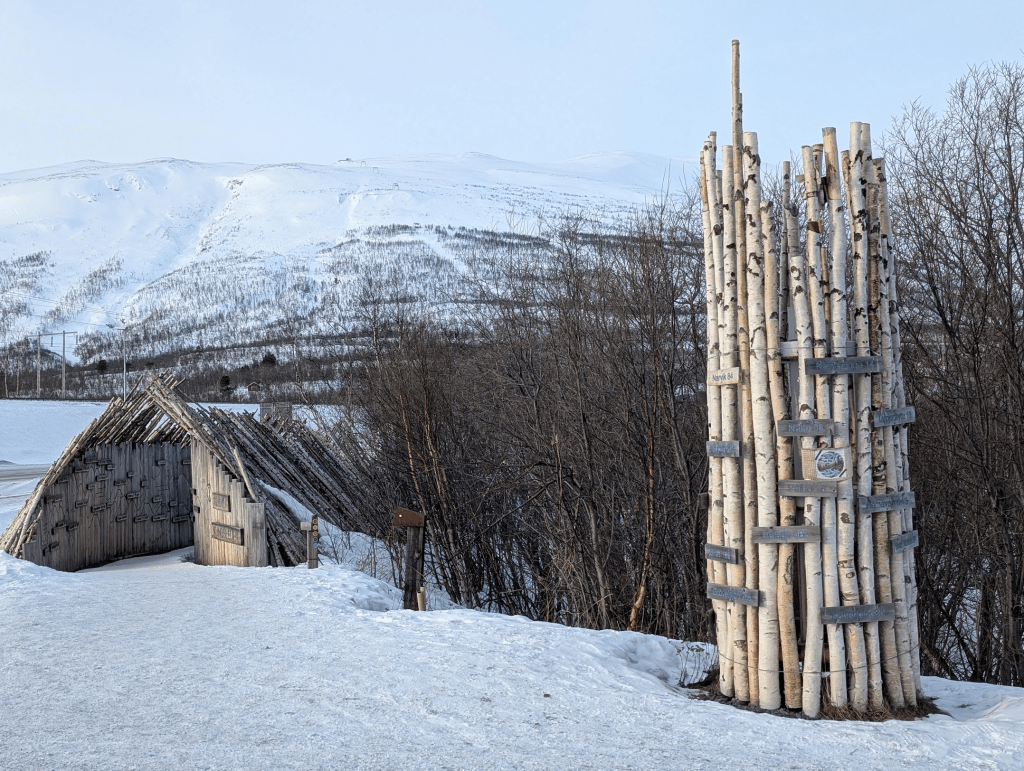
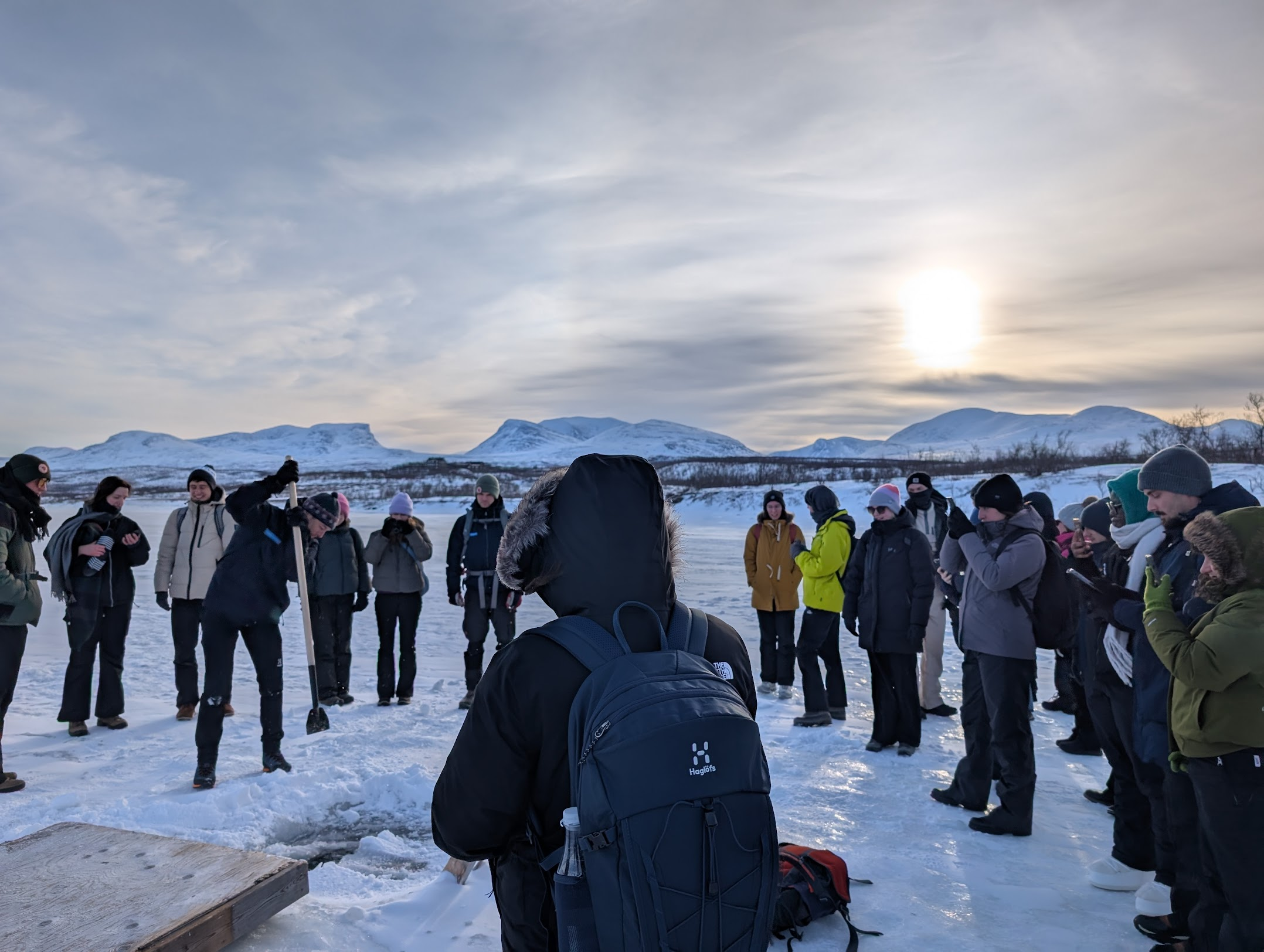
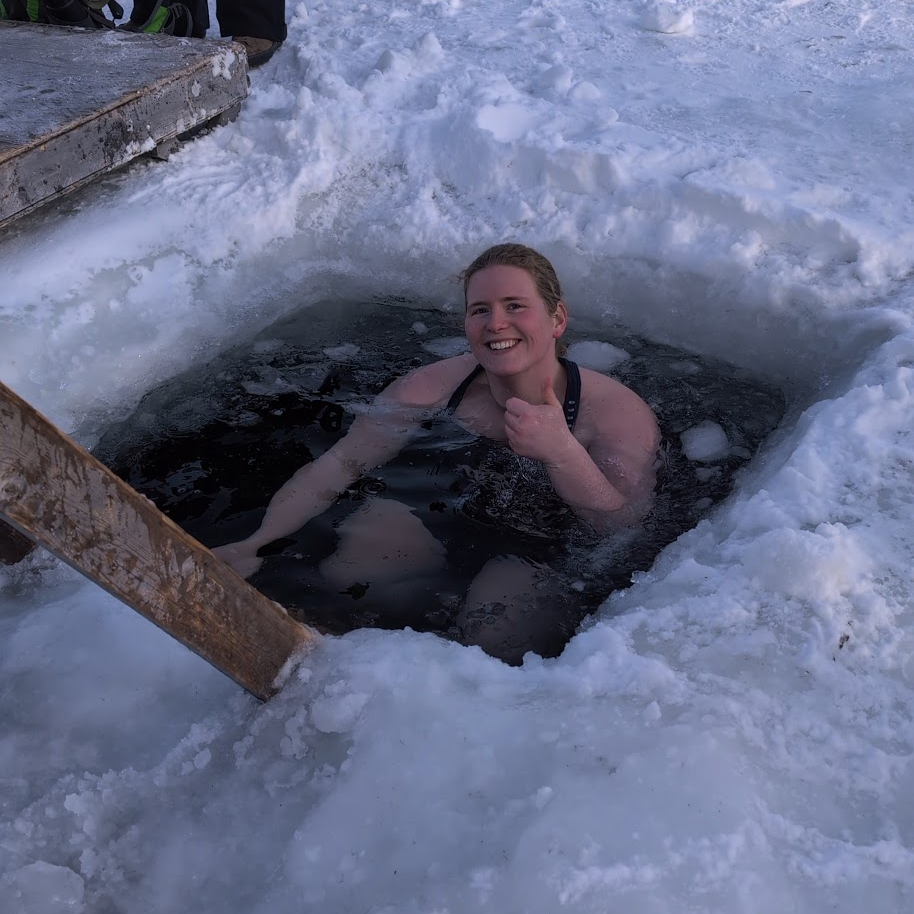
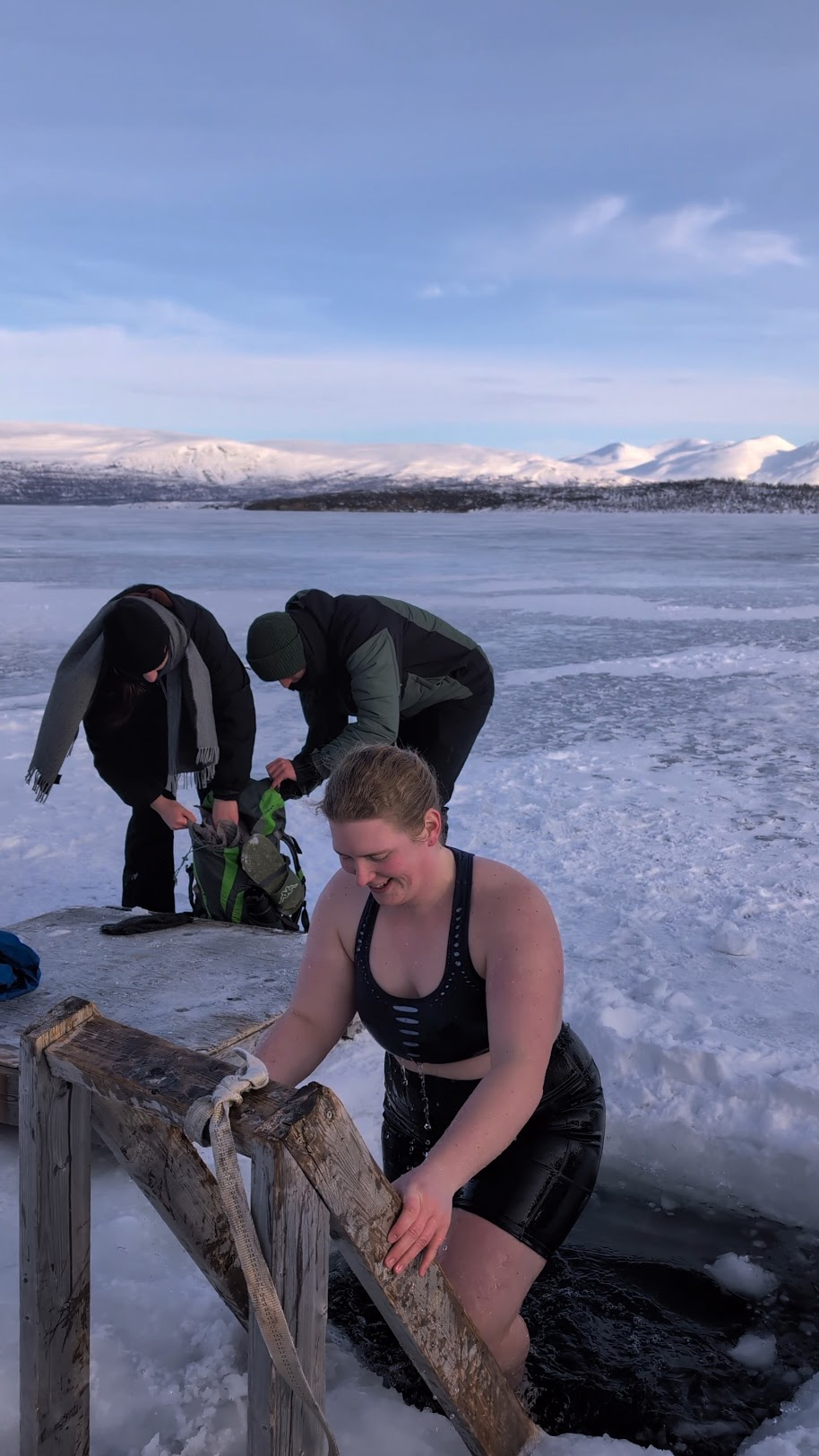
Our first activity was ice bathing in Lake Torneträsk! The weather was in the high 20s (Fahrenheit) with a brisk wind – perfect for a lovely dip in the lake. About 75% of our group was brave enough to try it, which I was impressed by. I had tried ice bathing for the first time with my choir a week before this trip so I was a seasoned professional. This activity is traditionally paired with an immediate visit to the sauna (and perhaps a few trips back and forth) but I actually didn’t have access to a sauna in either experience. A person-sized hole is cut in the ice with a saw and there’s a ladder you climb down and hold onto while you’re in the ice. It’s easy to get disoriented so it’s good to hold on for safety. You don’t stay in for long – definitely less than a minute and often just a few seconds. You can dunk your head underwater if you want but it’s a bit extreme and not recommended when you have long hair that will freeze immediately afterwards. Getting undressed and climbing down into the water require a bit of bravery. I really like the feeling of the icy cold water and the way it completely takes your breath away. You definitely couldn’t stay in for long but I do think it feels refreshing and exciting. For me, the hardest part was coming out of the water and trying to dry off and get dressed back into many layers of clothing. It turns out buttons and zippers are quite difficult when your fingers are frozen and numb. Click through the gallery below to see some photos from this part of the adventure.
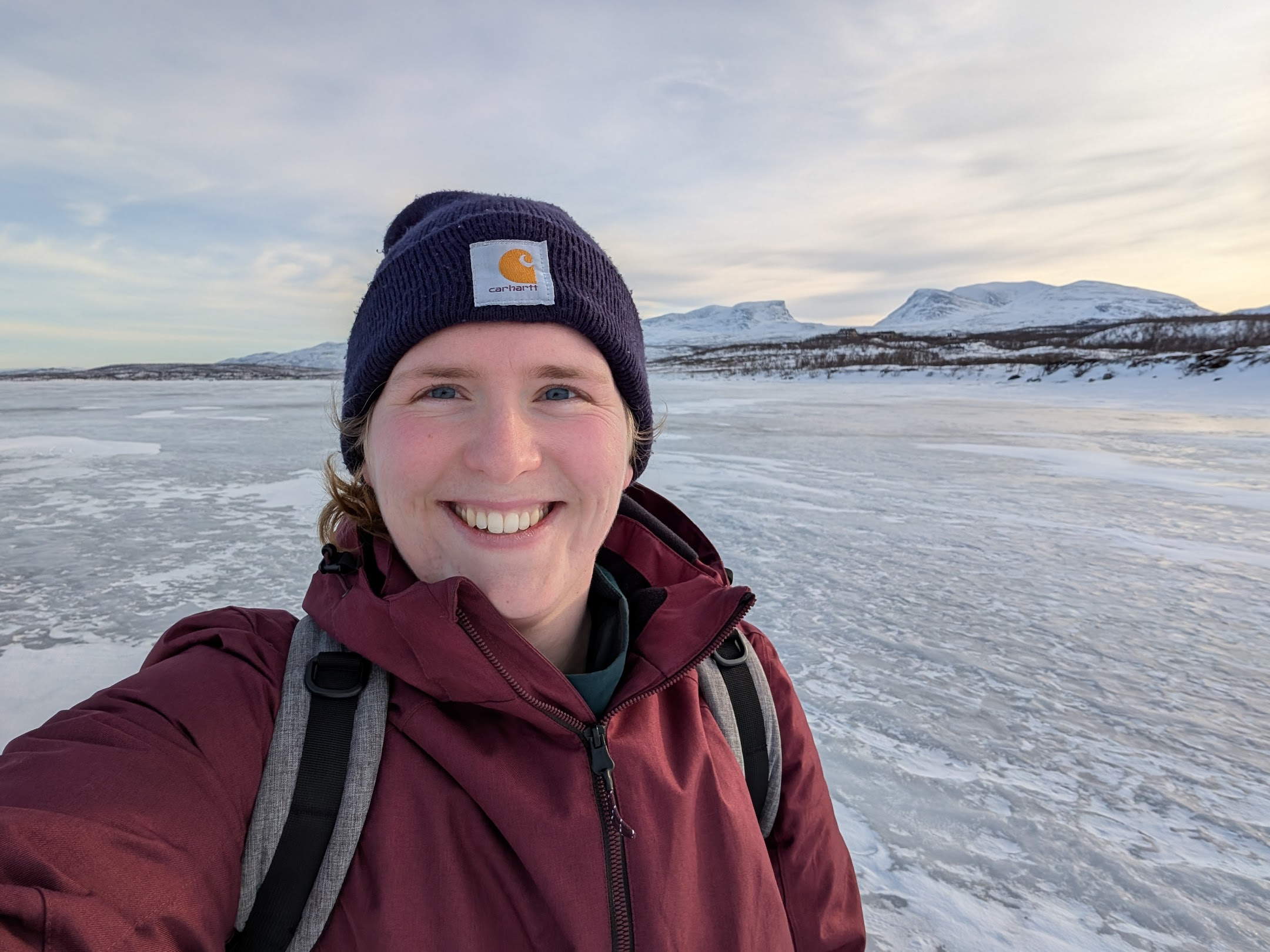
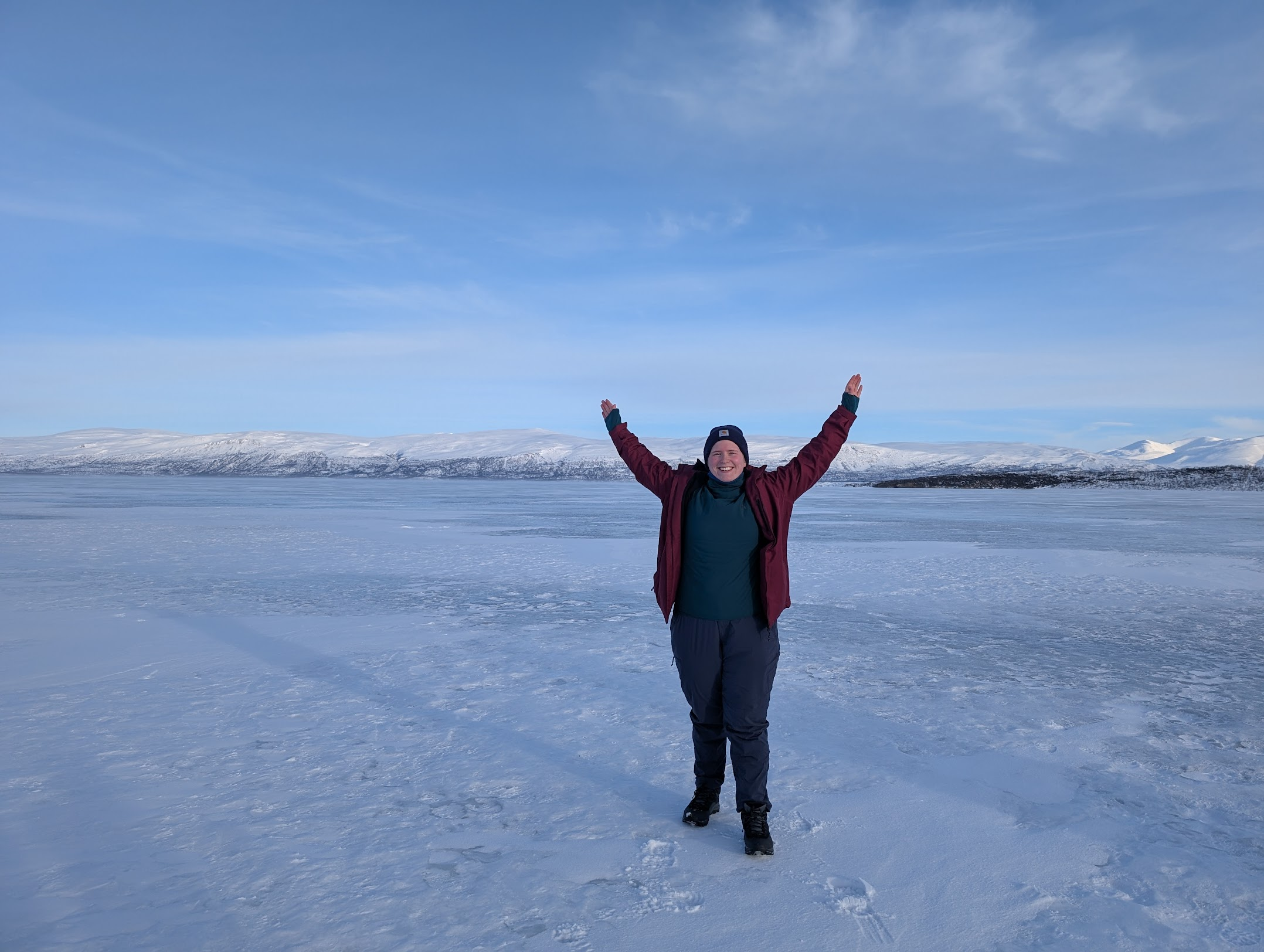
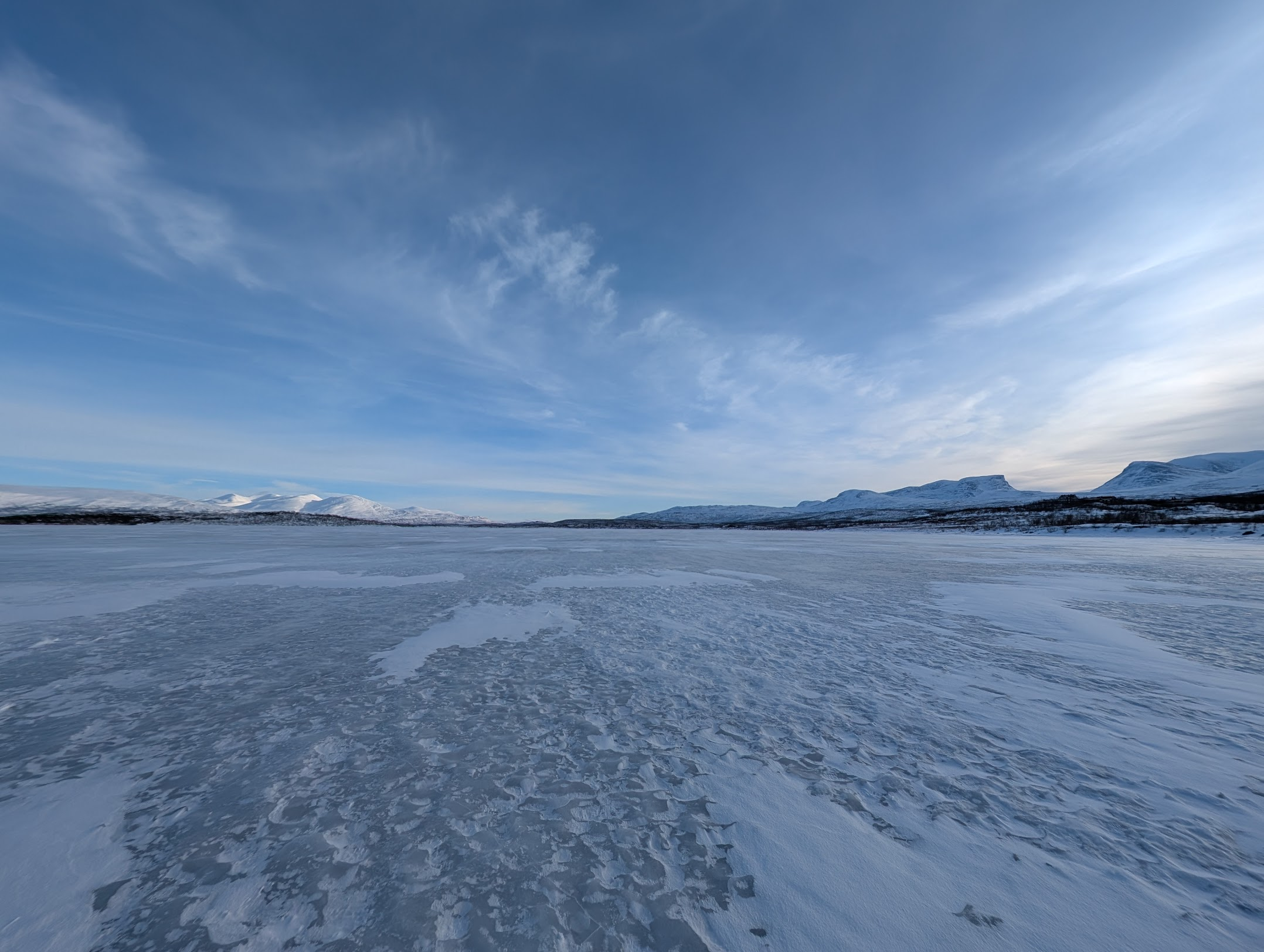
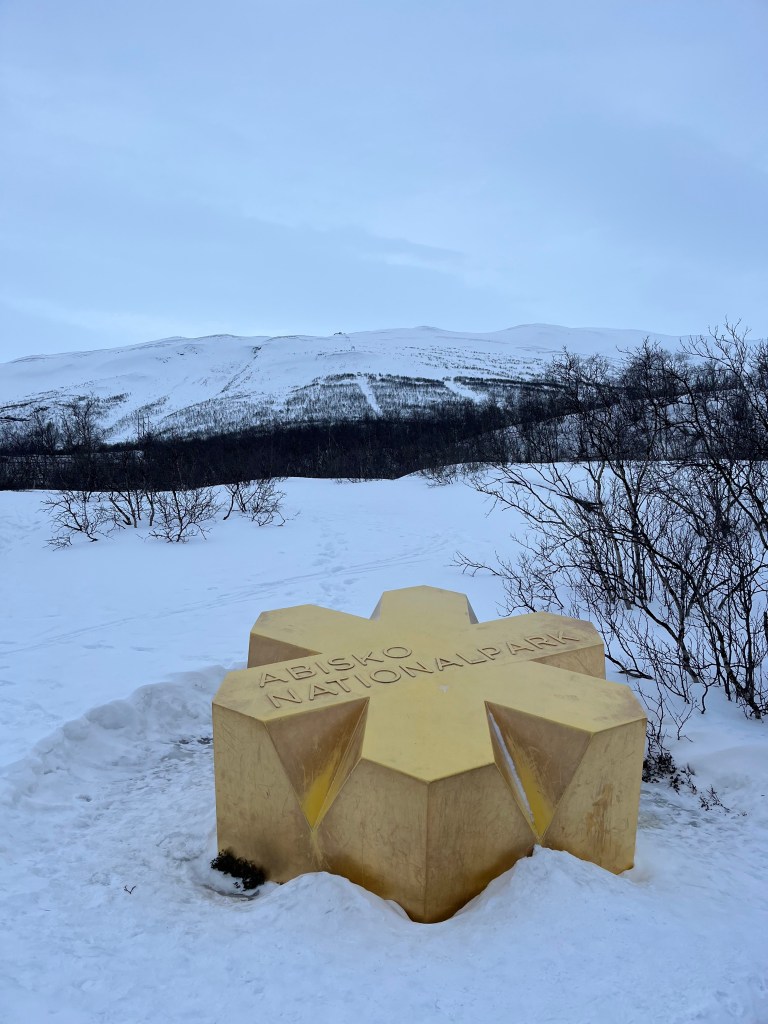
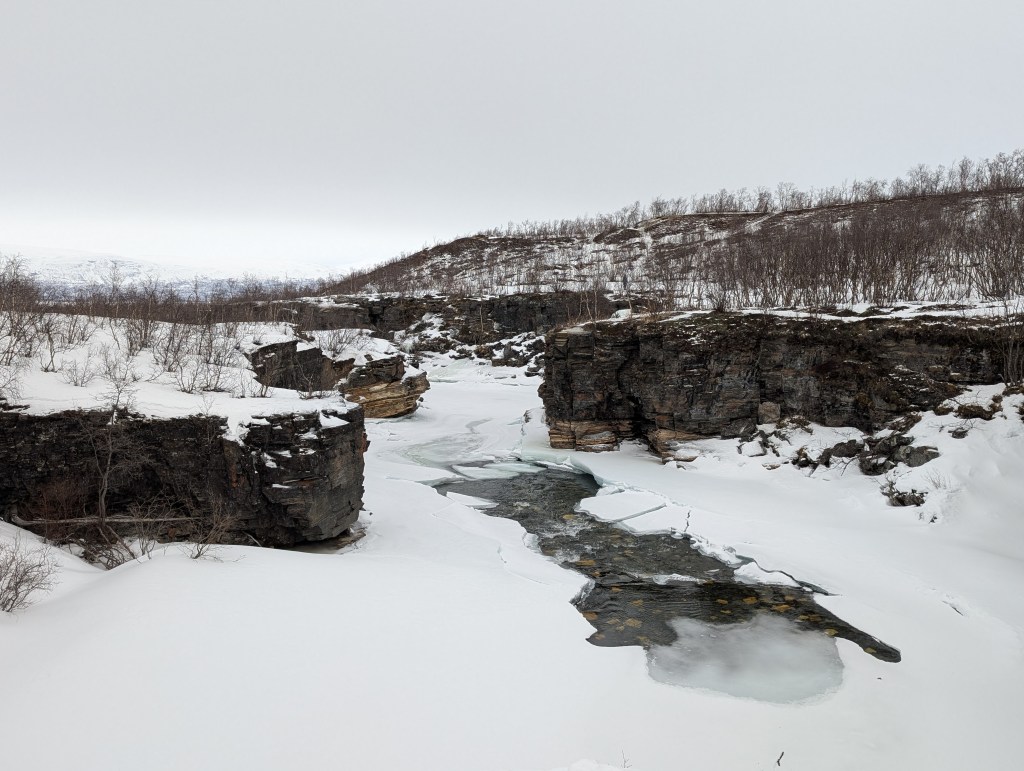
After our ice bath we enjoyed a nice buffet lunch in the park headquarters and then headed out for a guided tour of the park. The landscape is stunningly beautiful and it was great to learn about some of the history and local wildlife. Not much else to say here – the photos speak for themselves.
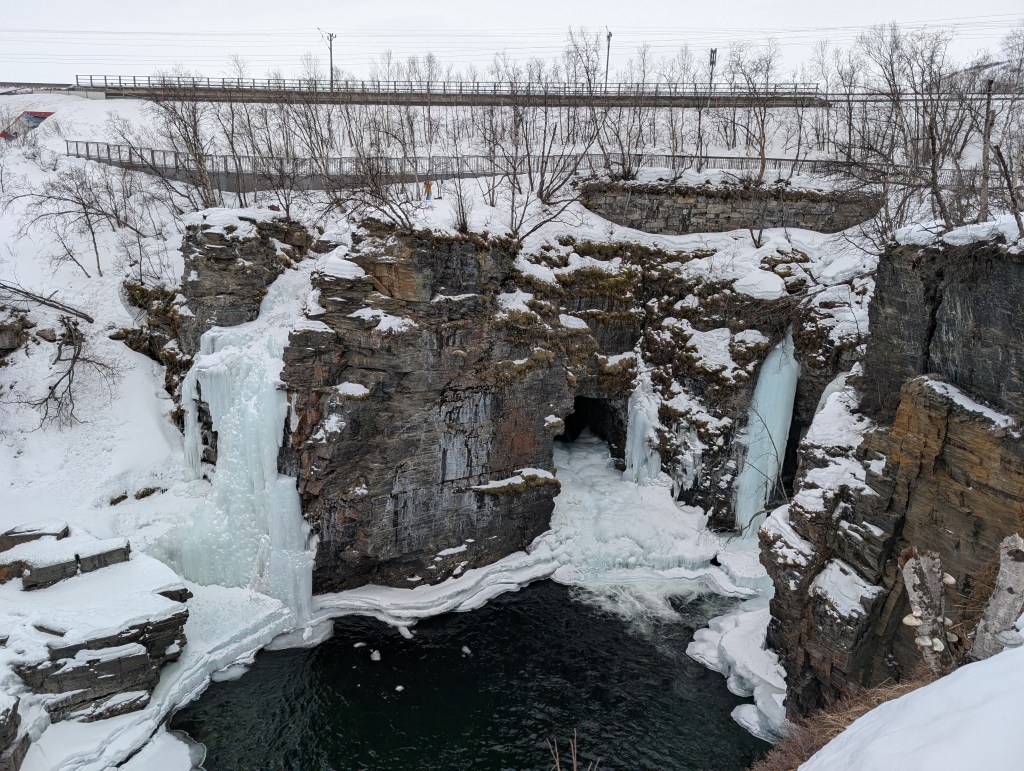

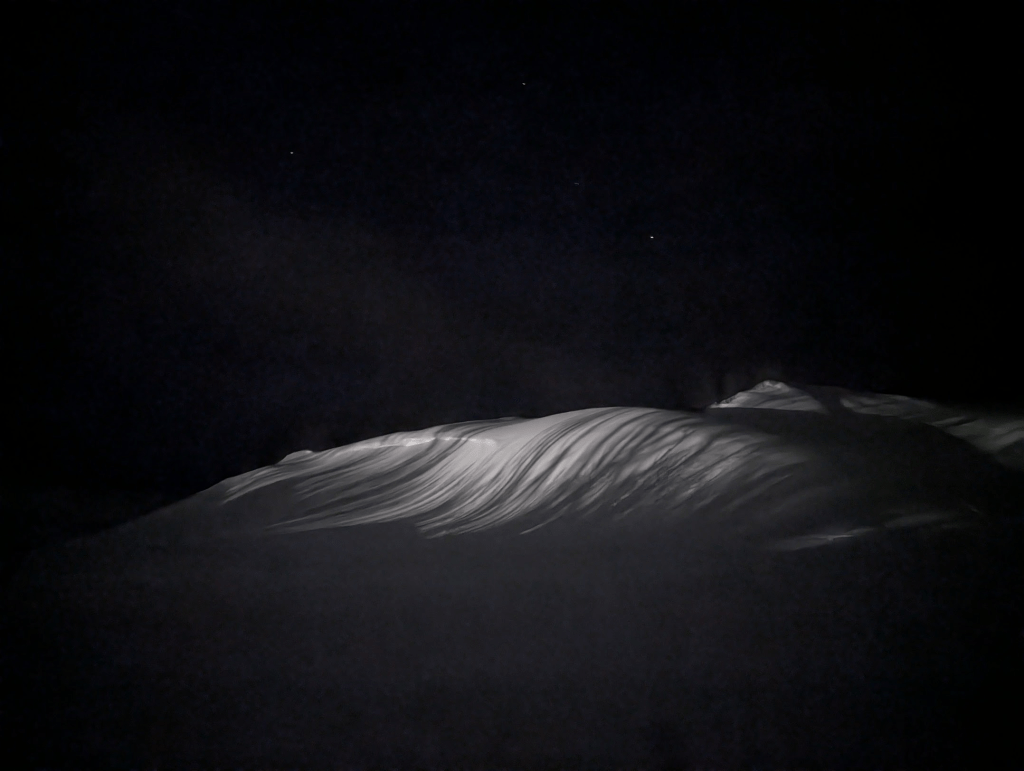
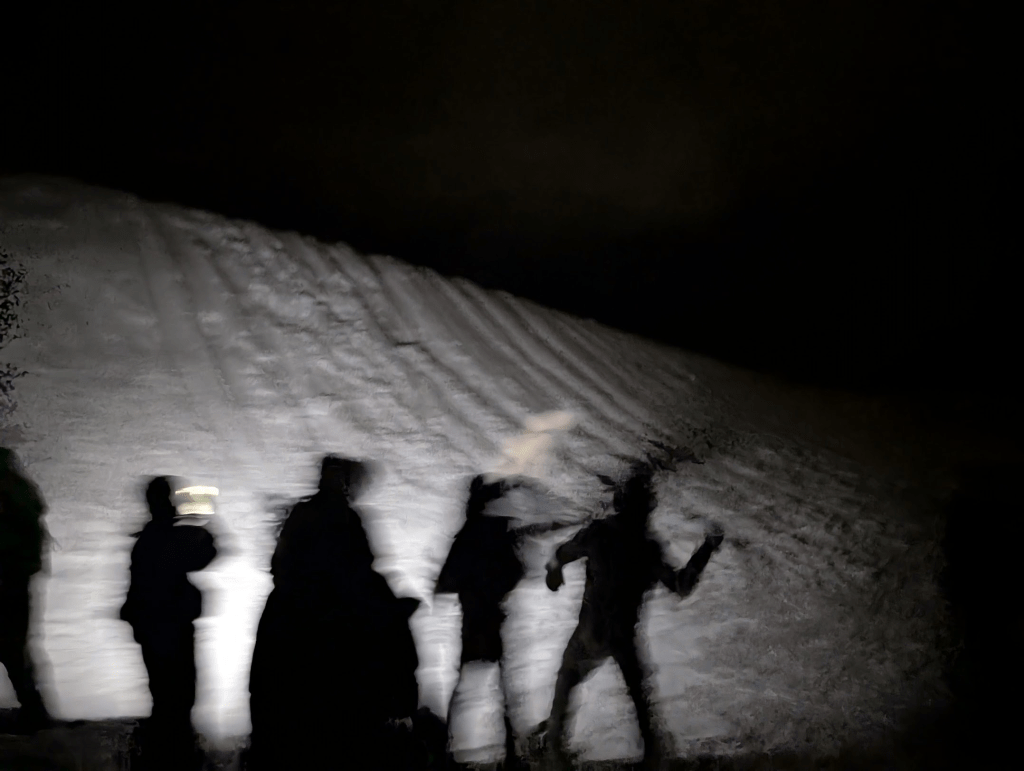
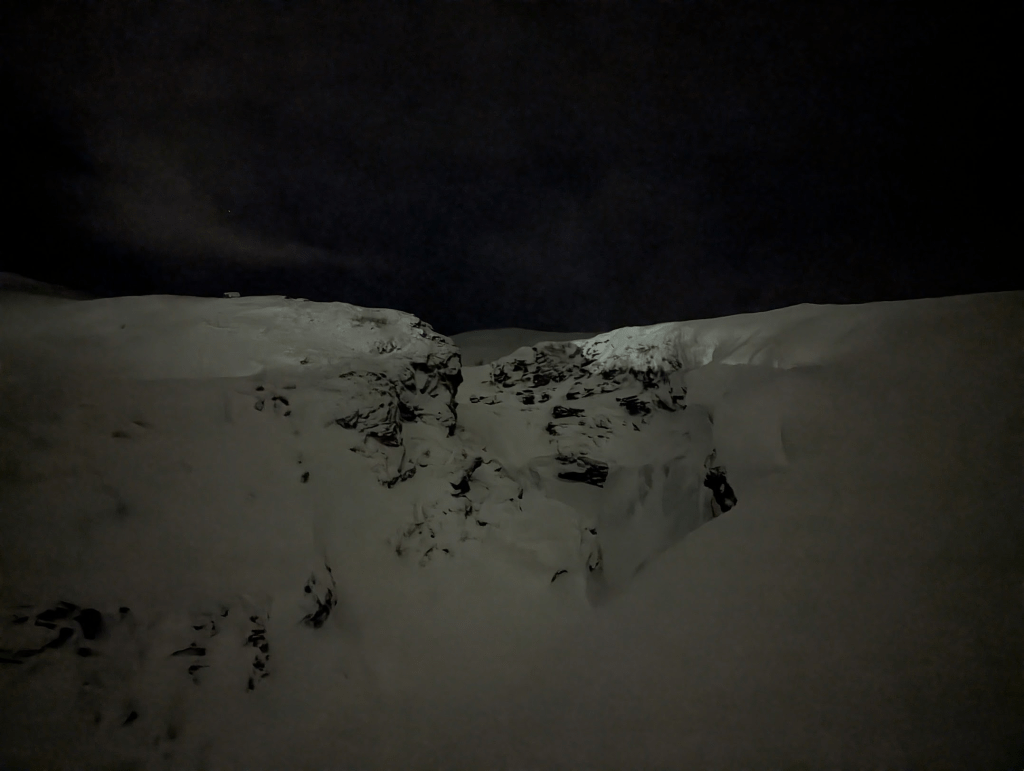
In the evening we went out on a moonlight snowshoe hike. This was my second time snowshoeing in my life. My first time was in West Virginia a few years ago and it had been something I had wanted to try for years. It is kind of an awkward action at first but I love being able to go hike out in deep snow and enjoy the quiet of a winter landscape. Partway through our hike we stopped for about five minutes and lay down in the snow and just enjoyed the intense quiet and the beautiful dark night sky. It made for excellent stargazing, but unfortunately we didn’t see any northern lights. We climbed across hills that were actually massive snow drifts pushed around and shaped by the wind. On one large hill we sat and slid down on our butts which was super fun! At the bottom of the hill, someone started a snowball fight and we all laughed and played and had a blast. I have to give a huge shoutout to Night Sight mode on my Google Pixel 8 for these amazing photos even in the near-complete darkness. The light and shadows in the first picture are entirely from moonlight reflecting on the snow.
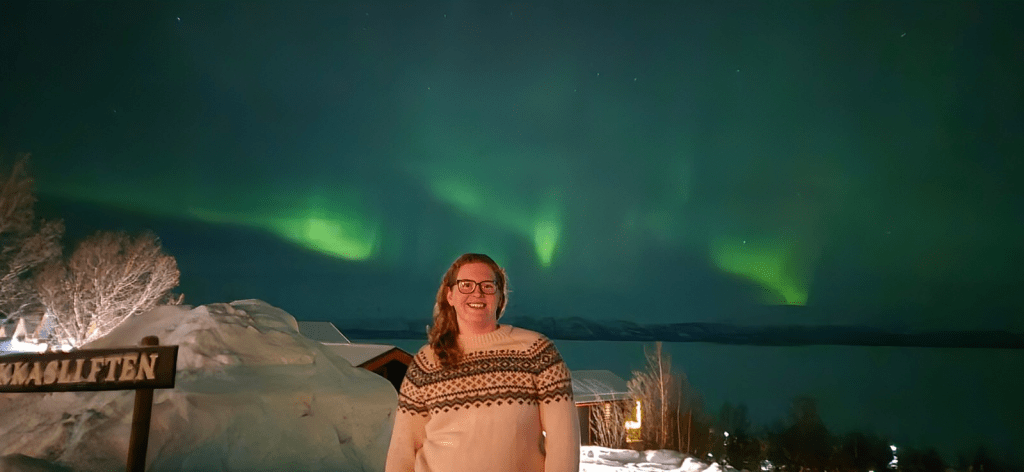
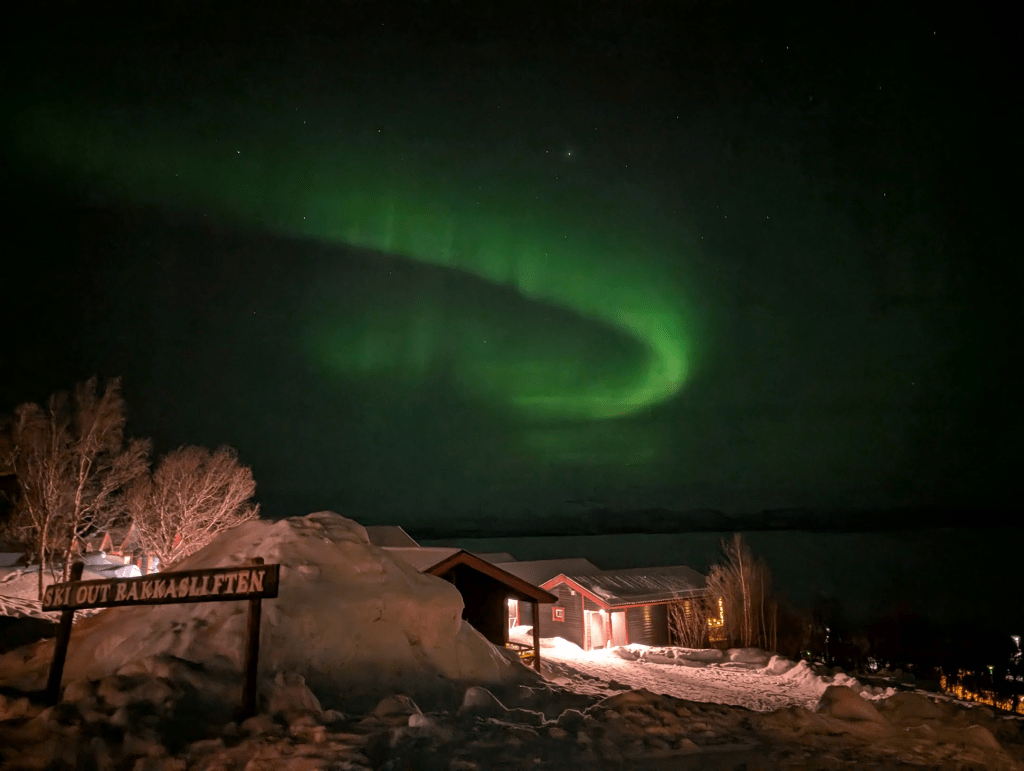
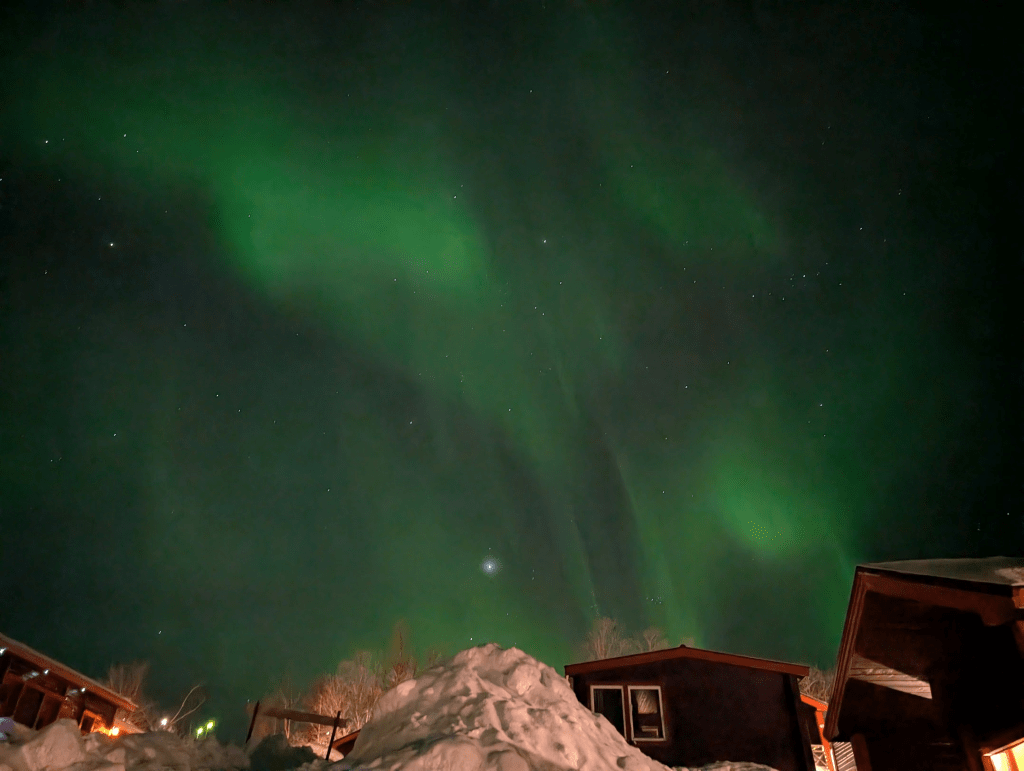
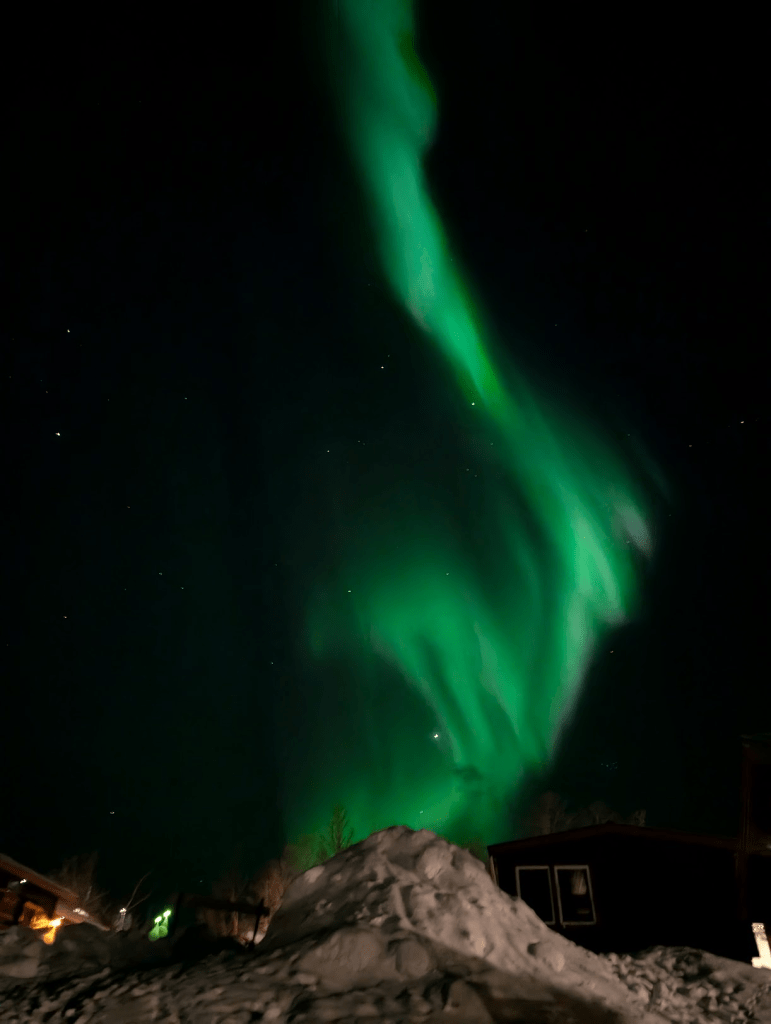
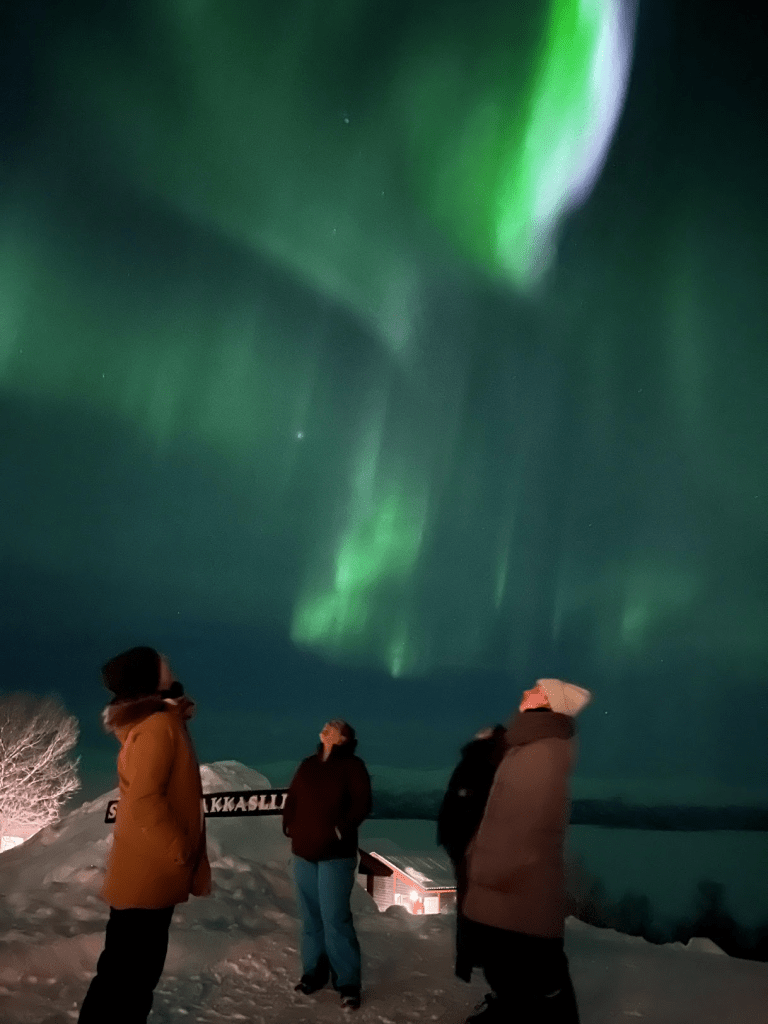
I got back to my cabin around 9:30 PM, ate a late dinner, and chatted with my cabinmates. At midnight, right after I had showered and was about to crawl into bed, someone called me out to see the northern lights. Before this point we had seen some greenish looking clouds in the sky and a little bit of action through our phone cameras but nothing more. So, exhausted, I threw on my ski pants and my woolen sweater from Lithuania and my boots and clambered outside. There are no words to describe the experience. It was like what you see in the movies but even better. I can only describe it as sacred. If you’ve ever had the pleasure of watching the movie The Snowman, it felt like that. The lights were bright to the naked eye and danced and swirled in ways that defied my knowledge of physics. We laughed, we giggled, we cried in awe and joy. It was breathtaking. I tried to take some pictures but also to just to soak it in with my own two eyes. It felt like the world was ending, or something was beginning. How is this possibly a real thing that happens on our Earth? I completely understand the physics behind it and yet it is still nothing short of miraculous.
Day 3 – Dogsledding, Kiruna, XC Skiing
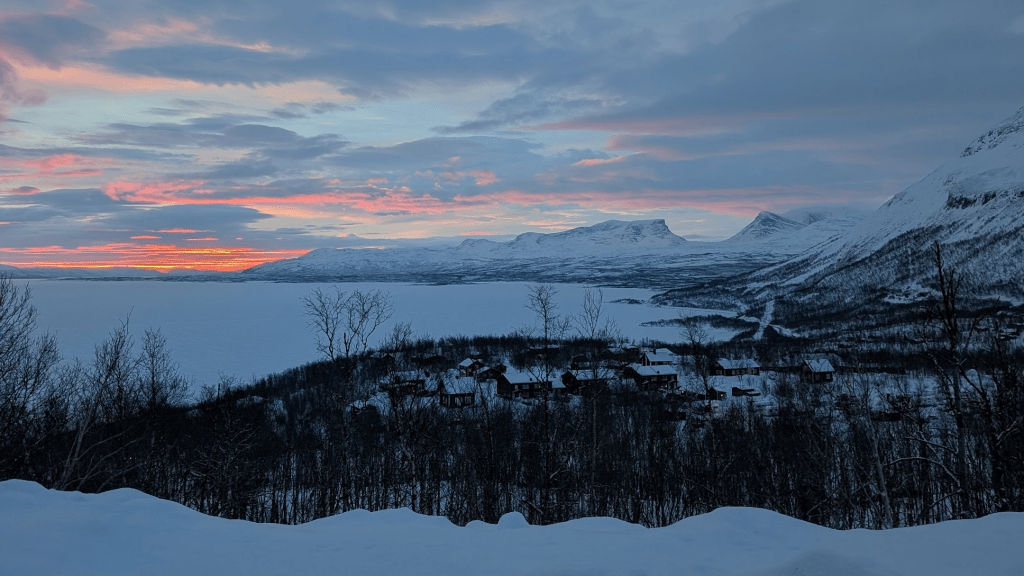
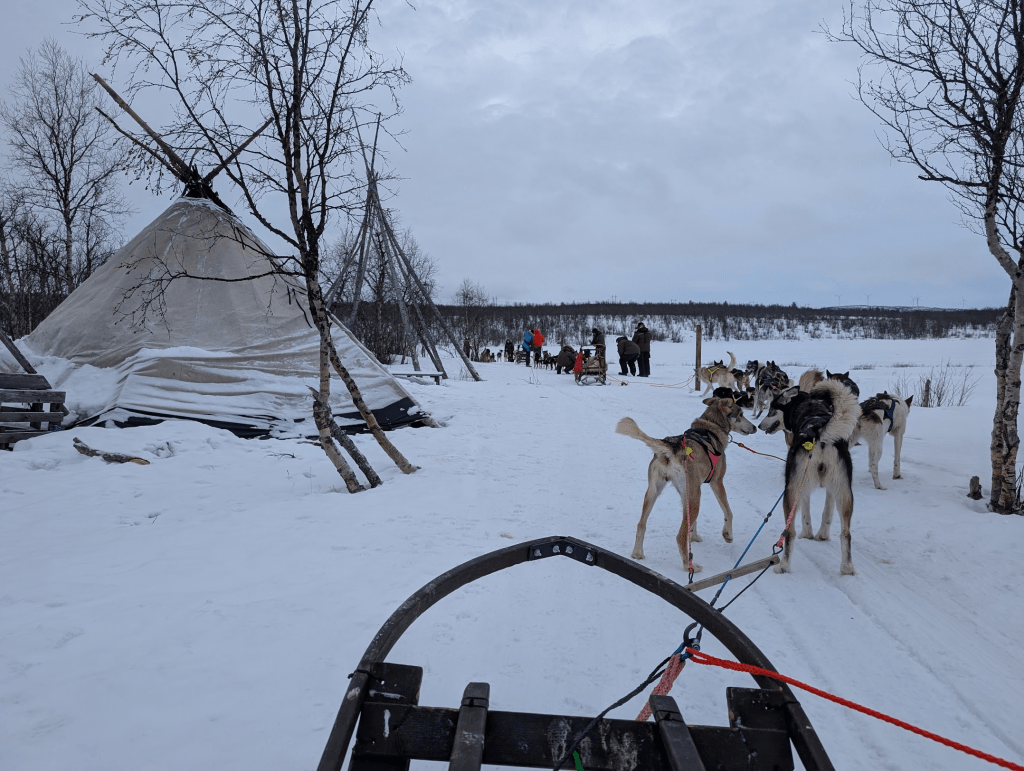
Another action packed day. Our first activity was dogsledding. I was on the fence about signing up for this one but I’m glad I did in the end. Our day started with a brilliant sunrise over the lake. Then, for the second day in a row, things stopped going as planned. We gathered at the bus in the morning only to find that we had a flat tire. Our wonderful drivers (Gregory and Gregory, both from Estonia) quickly replaced the tire and we were on our way. Then, halfway into our hour-long drive, our bus broke down. There was a leak in the coolant pipe. We sat on the side of the road for a while and then one or both of the Gregorys rigged up a quick fix that allowed us to get back underway. The cold outdoor air was enough to keep the engine cool but this also meant that the bus had no heating. We made it to our destination safely and were able to go about our day mostly as planned with only a bit of a delay in the schedule. Despite it being a Saturday in a very remote area, they were able to get the bus fixed before we finished up with the huskies.
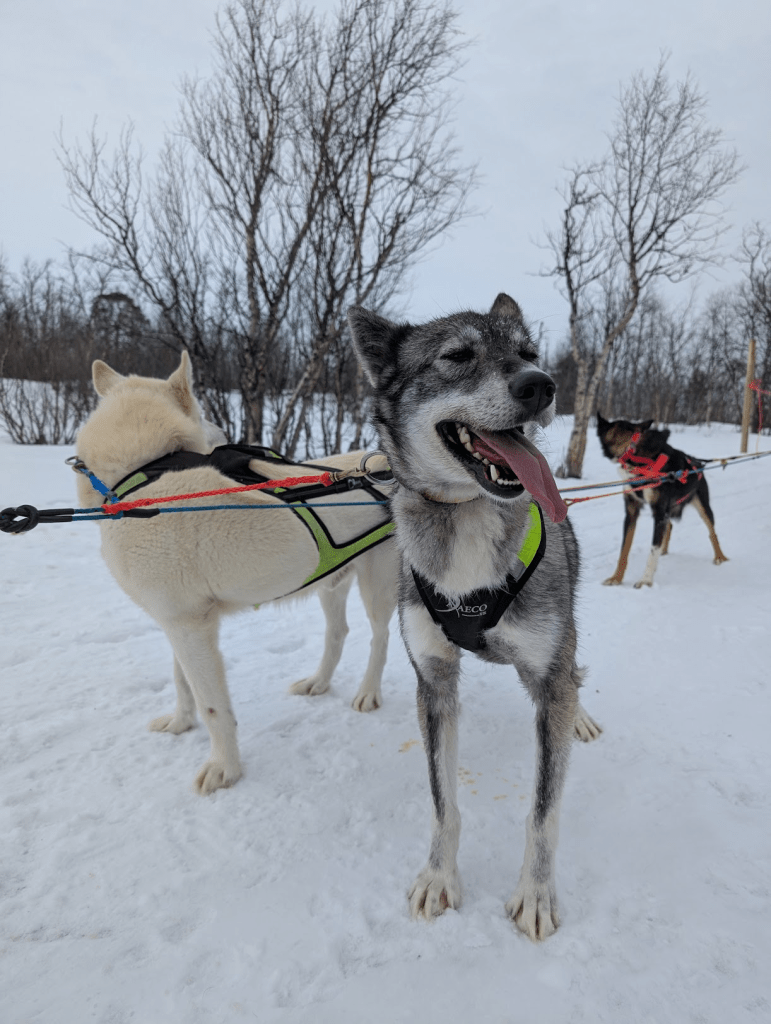
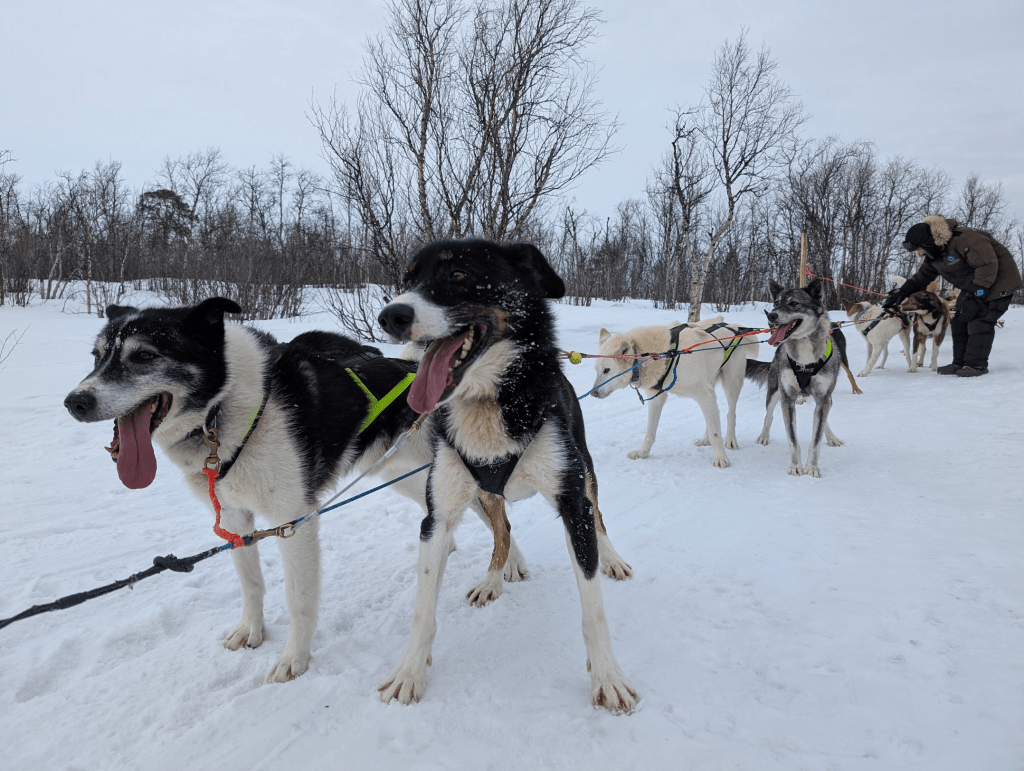
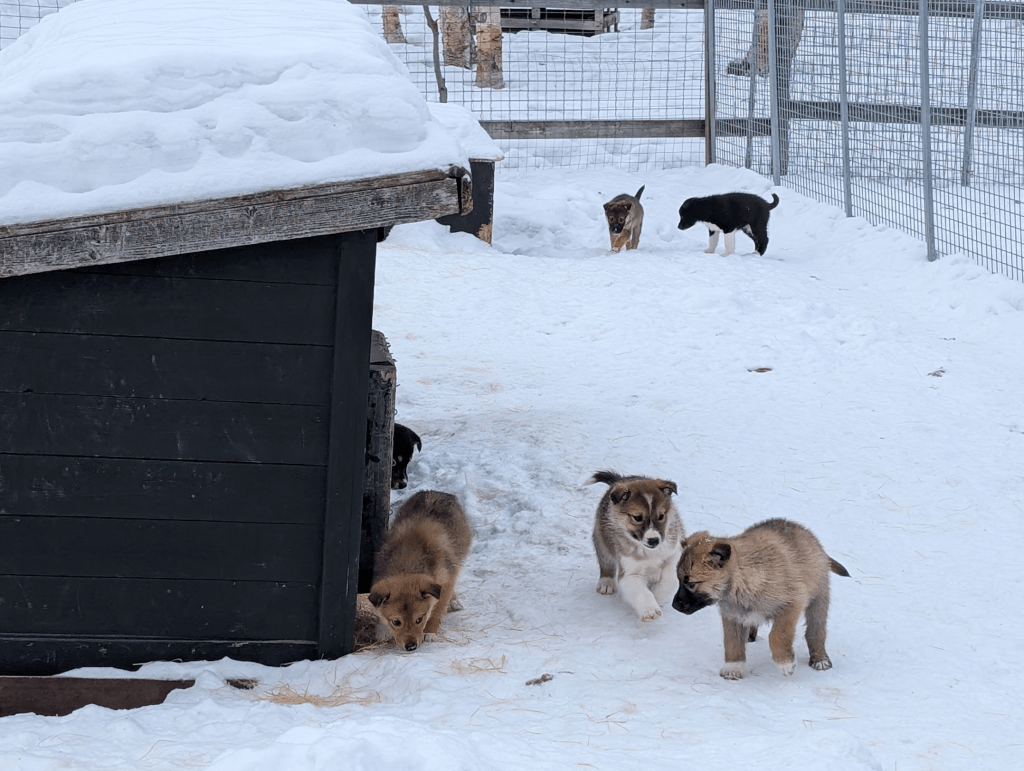
My primary takeaway from this dogsledding experience was that these dogs LOVE to run. They are clearly very well cared for and loved. This family and organization pride themselves on taking very good care of their dogs and it’s clear that they are succeeding. The only time the dogs looked unhappy were when they were asked to stand still. The only thing the dogs love more than running is getting cuddles and attention. We also got to see some very young puppies that were absolutely adorable. They were so young that we weren’t allowed to pet them or play with them yet.
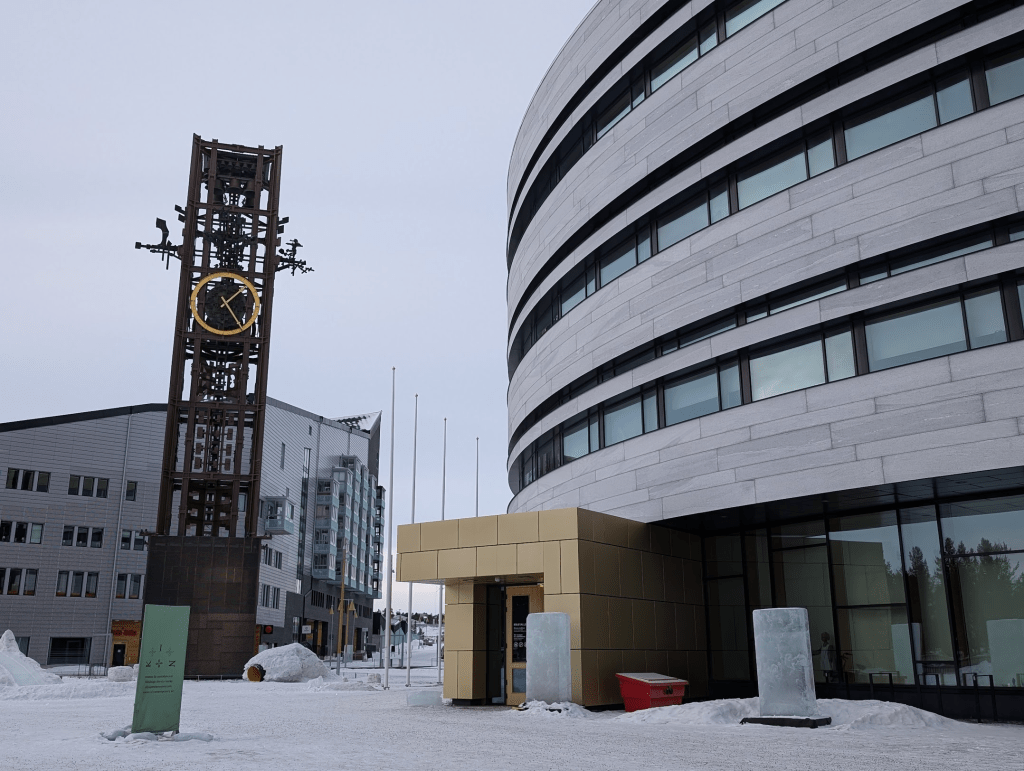
After our dogsledding adventure we had a short visit to the city of Kiruna. There’s a lot I could write about here but it’s a very interesting city and I would recommend reading more about it if you’re interested. The primary and dominant source of economic activity is the massive and extremely long-lived iron mine. This is the largest iron mine in the world. Since exploitation began in 1898, the mine has produced over 950 million tons of ore, yet only one-third of the ore body has been extracted so far.
Due to the operations and expanding size of the mine, the surrounding area has become unstable. Because of this, the entire city of Kiruna is being relocated about three kilometers east. New commercial and residential buildings are being built in the new city center, while historic buildings like the iconic church are being physically picked up and moved to their new locations. The relocation began in 2004 and is scheduled to be completed in 2035. The church is scheduled to be moved on August 19-20, 2025. The new city center officially opened in 2022. The cost of the relocation is almost entirely (or possibly entirely) covered by LKAB, the mining company.
It is a massively complicated project logistically, technically, politically, and socially. There are entire books that could be written on Kiruna, the mine, the effects on the Sámi people and reindeer herding, and local economics. I find it to be an extremely interesting topic, and one where there are absolutely more questions than answers. We drove through the old city and walked around the new city center. It’s a bit eerie in all its newness and it tastes a tad artificial, but it’s a nice little city.
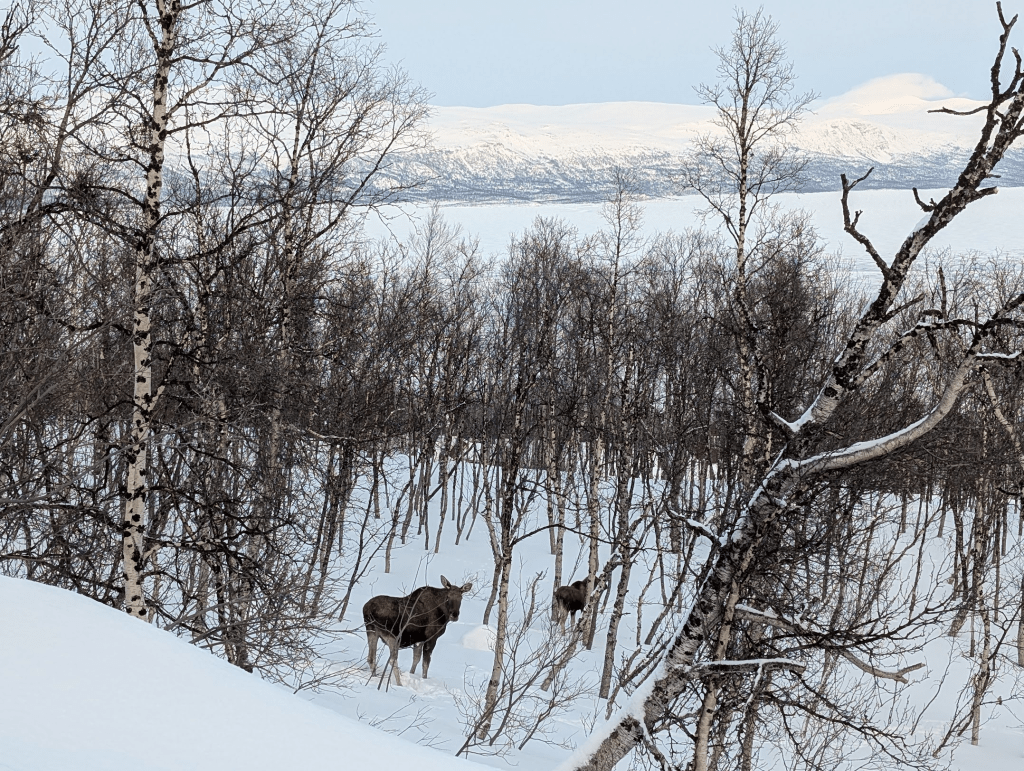
When we got back to our cabins in the afternoon, I finally checked the other item off my bucket list – I saw a moose! And not only did I see a moose, I saw two moose right up close! They were right by the cabins and did not seem to mind people hanging out and watching them at all. It looked like it might have been a mother and a young calf. On this trip I also saw a moose briefly out the bus window, twice! That makes for a total moose count of four on this trip.
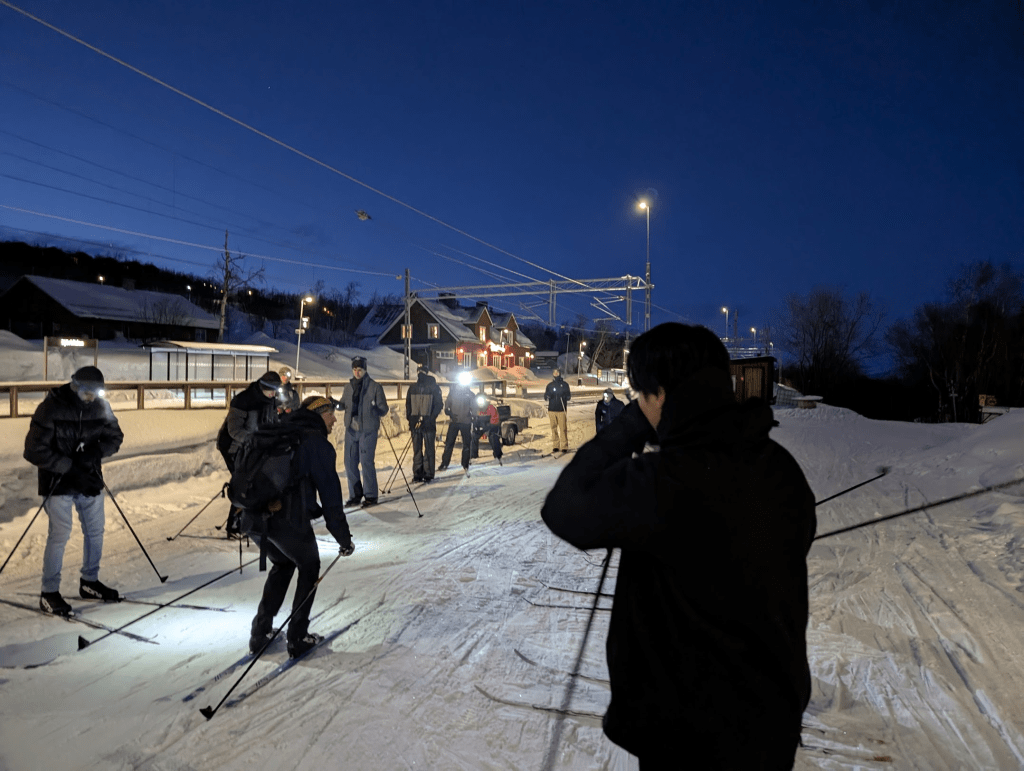
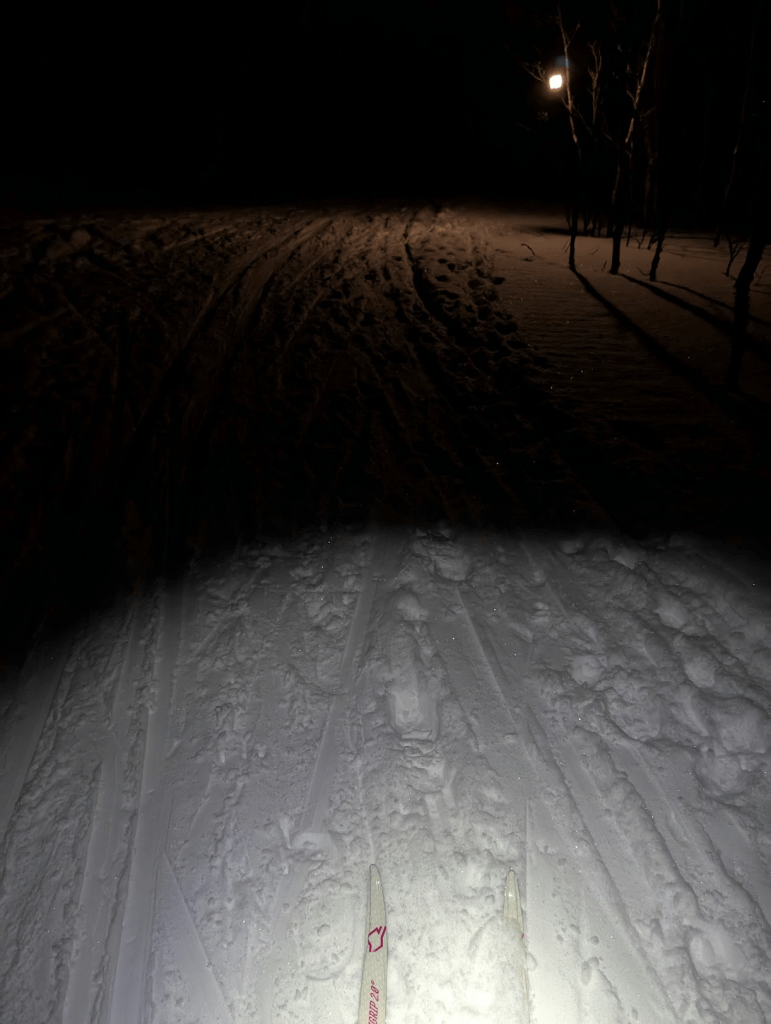
In the evening we went cross-country skiing. This was my second or third time trying it and I don’t think I have improved at all. It is HARD. It requires strength, cardio, balance, and coordination all at once. It was fun to ski through the woods at night with headlamps to light the way. I was kind of surprised they offered this as a night activity until I realized that if you’re going to run tours throughout the winter above the Arctic Circle you have to be prepared to do just about any activity in the dark.
Day 4 – Travel Home
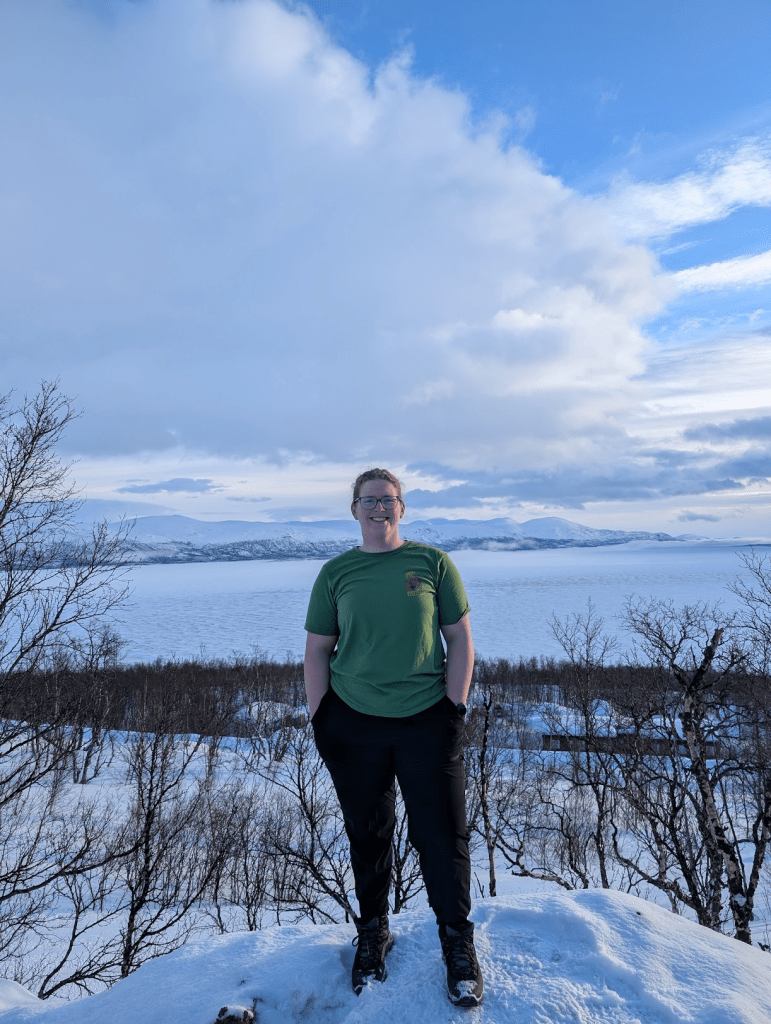
We left Björkliden in the morning and began the 20-hour bus ride home to Stockholm. It was sunny and in the low 30s which meant t-shirt weather for me! My cabinmates did not agree. It was very hard to leave this beautiful place.
We made it back to Stockholm by 6 AM the next morning. My lower back hurt for about a month afterwards. Hopefully this was the last 20-hour bus ride I’ll ever take.
I absolutely loved this trip though and I would do it again in a heartbeat. I would definitely recommend traveling with TimeTravels, especially as a student. I would very much love to come back to this area, further explore Kiruna and Abisko National Park, and actually get to Narvik. We definitely lucked out on weather for February but I absolutely loved it and I would also be curious to experience some of the more extreme weather. This was absolutely the trip of a lifetime and I will remember it forever.
 Nordic Breeze | Iberian Seas
Leave a comment