In May I went on an amazing 10-day trip to Poland. Twice a year, everyone in my program, from each of the different participating universities, gathers in a central city for a week of business school classes and networking events. This year, the Fall Seminar was in Barcelona and the Spring Seminar was in Krakow. I believe that next year I’ll get to visit Stockholm for the Fall Seminar and Krakow again for the Spring Seminar. I’m very much looking forward to getting to visit Poland again because I really enjoyed my trip this year.
Ferry to Gdansk
Our trip started with an overnight ferry from Stockholm to Gdansk, Poland. Usually everyone flies to Krakow but a few of my friends care deeply about decreasing their carbon footprint and traveling by more sustainable methods whenever possible. They found this alternate route via ferry and train and proposed it to our program’s administrators who were able to make it happen for us. Door-to-door it took about 36 hours to get from Stockholm to Krakow (compared to a 2-hour flight). About 10 of us opted to (quite literally) take the slow boat to Poland and we ended up having a lot of fun throughout the journey.
We took a commuter train from Stockholm Central down to the ferry terminal at Nynäshamn on a Thursday afternoon. We boarded our ferry around 5 PM and arrived in Gdansk around noon the next day. There are a few of these long ferry routes across the Baltic that run on these massive ferries that are essentially cruise ships. I had taken a similar ferry from Stockholm to Helsinki in the fall. It’s a really fun way to travel.
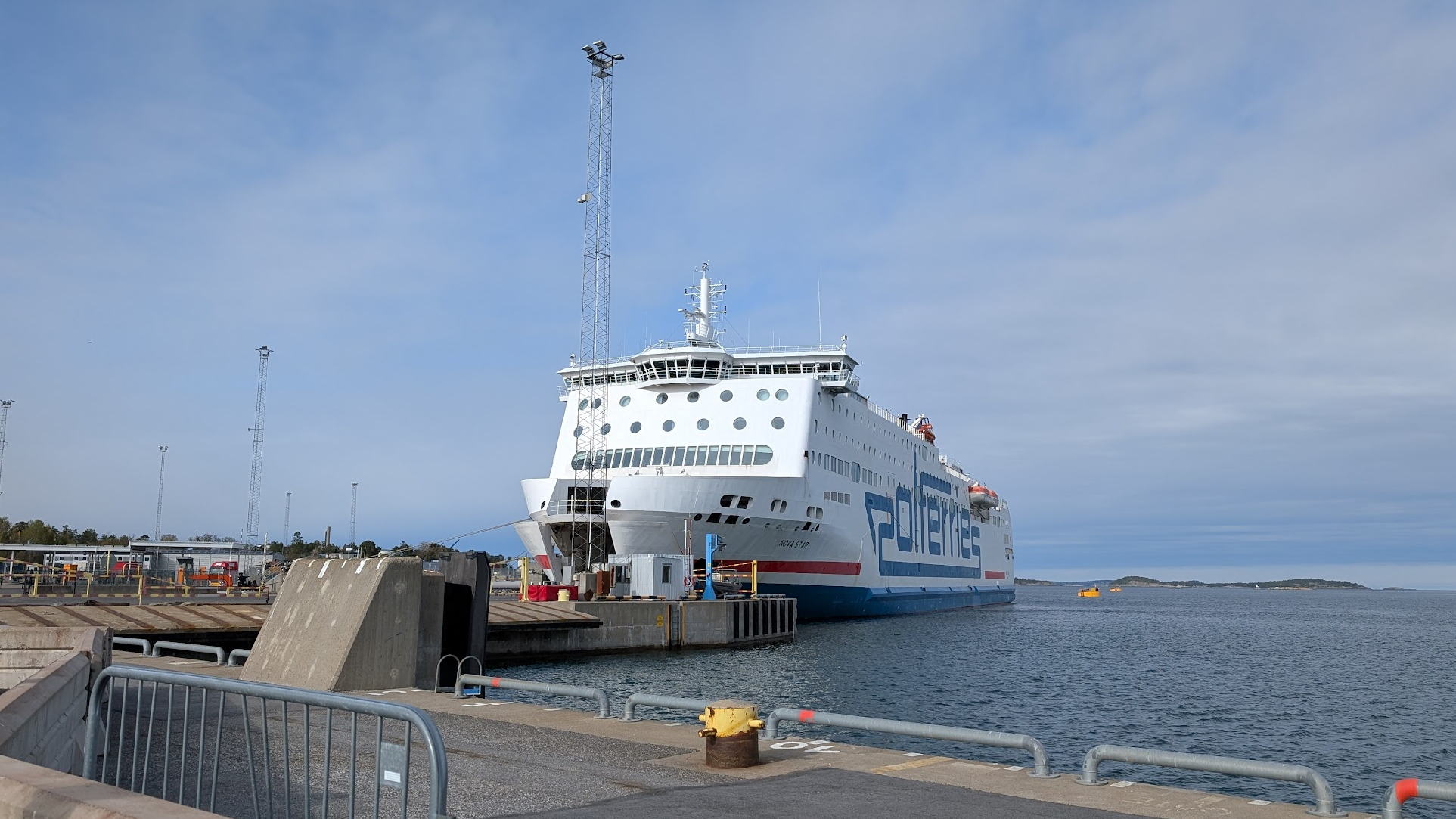
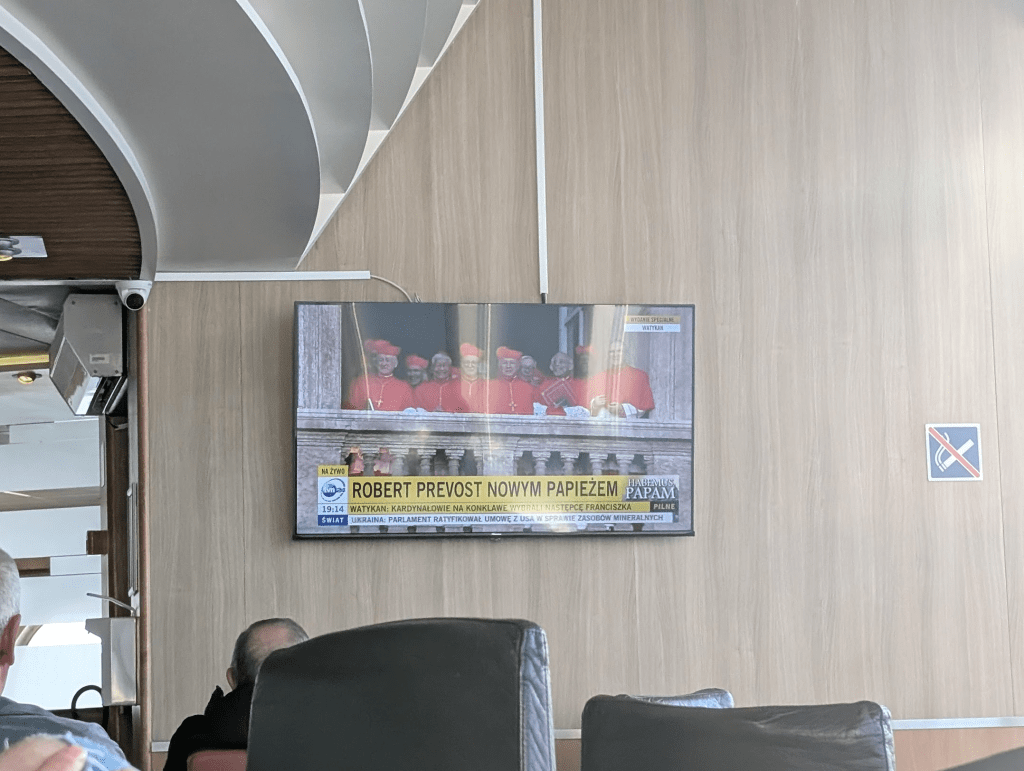
The ship has cabins, restaurants, bars, dance floors, activities for kids, lounge areas up on the deck, and, most importantly, the duty free shop. You can buy alcohol and other goods onboard tax free and many travelers take full advantage of the opportunity. We enjoyed a delicious Polish dinner at one of the restaurants and then shared a round of beers in the lounge. We happened to be on board the night Pope Leo XIV was elected so we watched that together on the bar TV. The Wi-Fi onboard was pricey and when the ship is in the middle of the sea it is in international territory and there is no cell phone service, so we enjoyed living completely in the moment and being fully present with each other, old school style. It was awesome. By this point in the year we were all really good friends with each other and everyone really got along which made it all super fun.
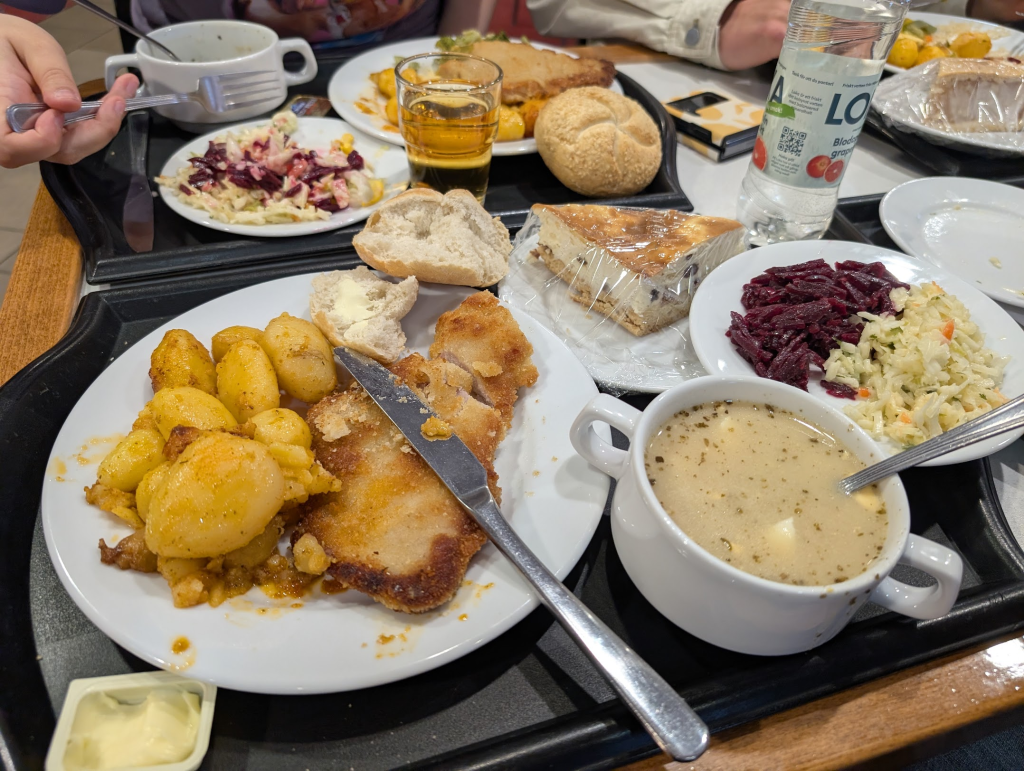

Our cabins were small but comfortable and I slept really well. I took a lovely morning walk around the sun deck before meeting up with my friends for an all-you-can-eat breakfast that we took full advantage of. We docked in Gdansk around 12 PM and took an Uber to the central train station. From Gdansk we would be taking the train to Krakow, via Warsaw, and we had a few different options for which departure time we could take. I talked everyone into choosing a slightly later departure so we could spend an hour or two exploring Gdansk.
Gdansk
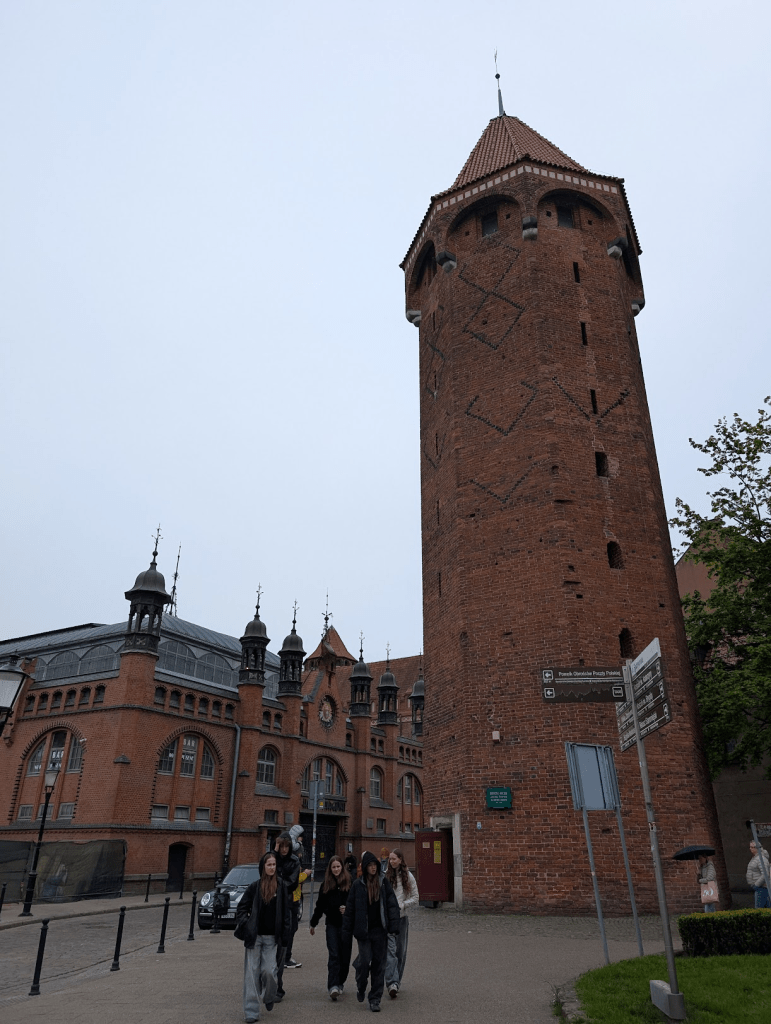
Gdansk is a beautiful city with a definite Baltic feel. It is Poland’s 6th largest city and the country’s major seaport. As with Poland as a whole, it has a very complex history that I won’t get into here but would recommend looking into if you’re interested. The many different eras and cultural influences can be seen in the art and architecture of the city. We spent an hour or two just walking around and soaking it all in. We visited St. Mary’s Church, where we saw an amazing astrological clock. It rained the whole time but we had fun anyway. I would have loved more time to explore but I’m glad we were able to at least see a little bit of the city!


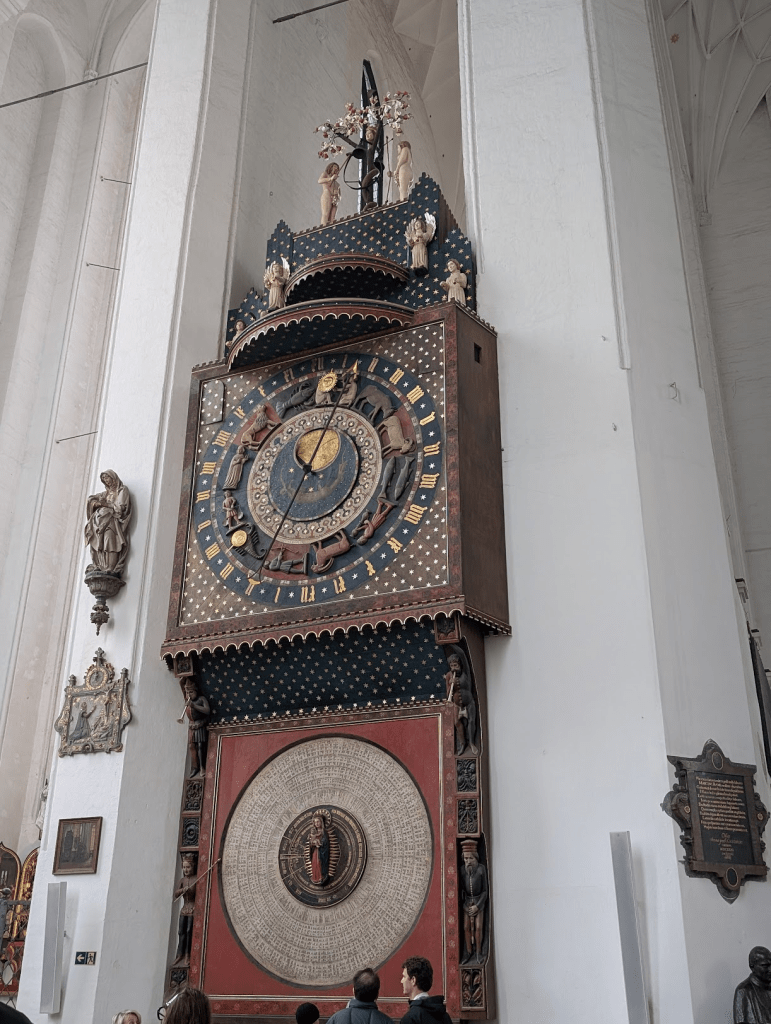
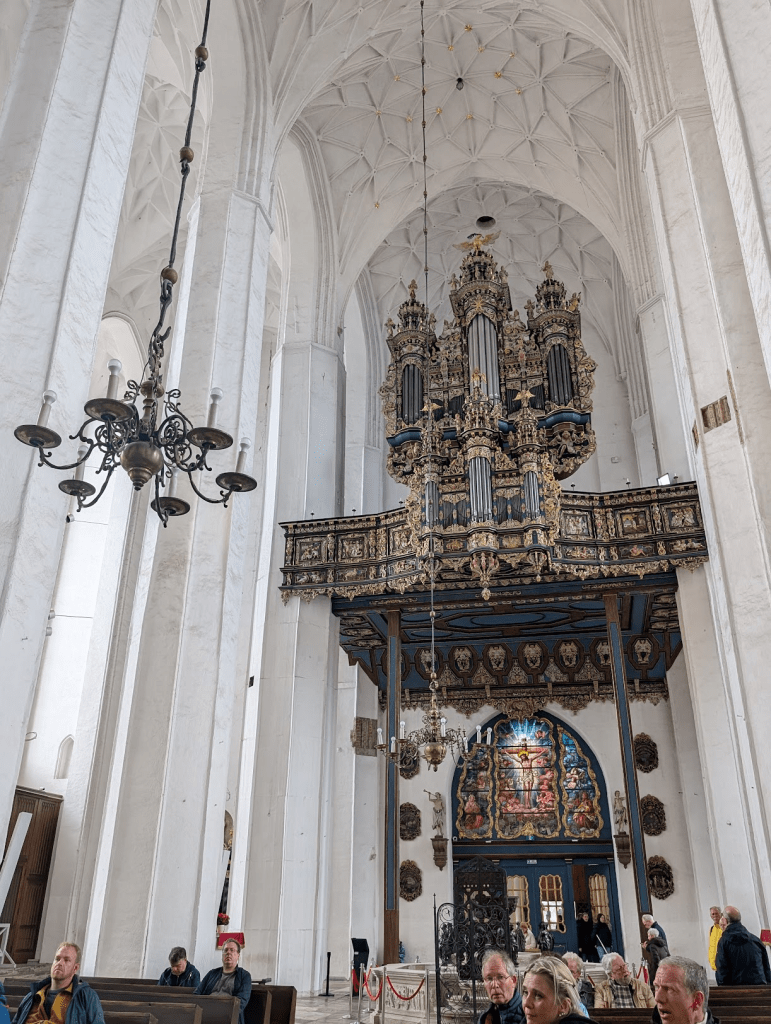
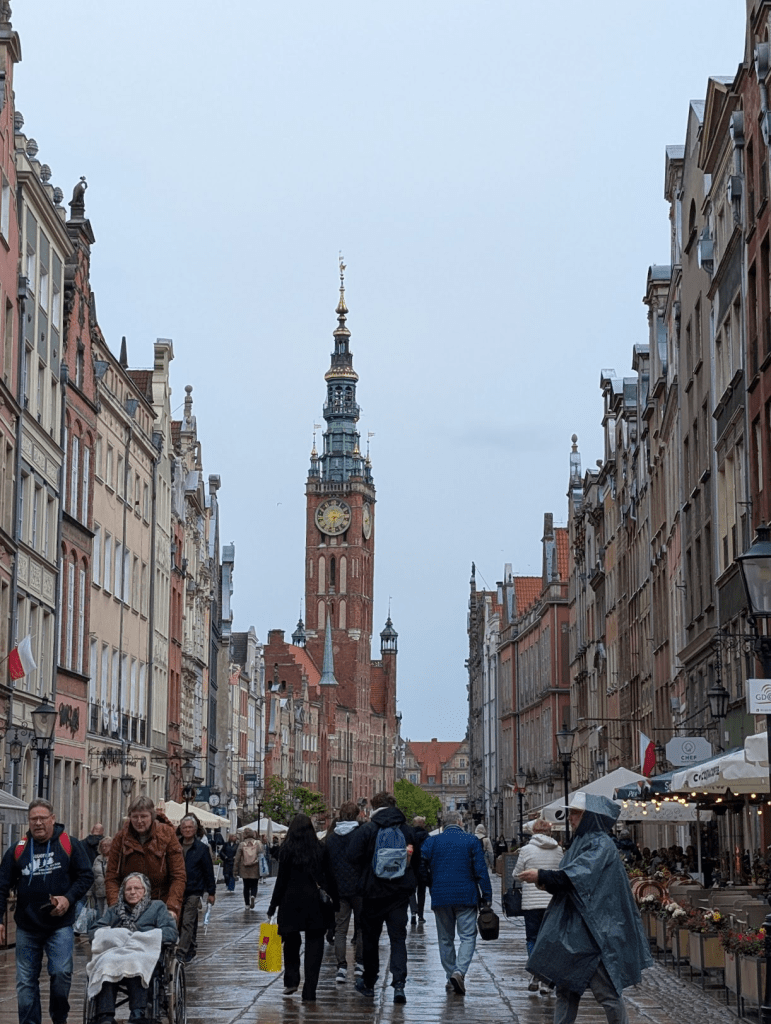
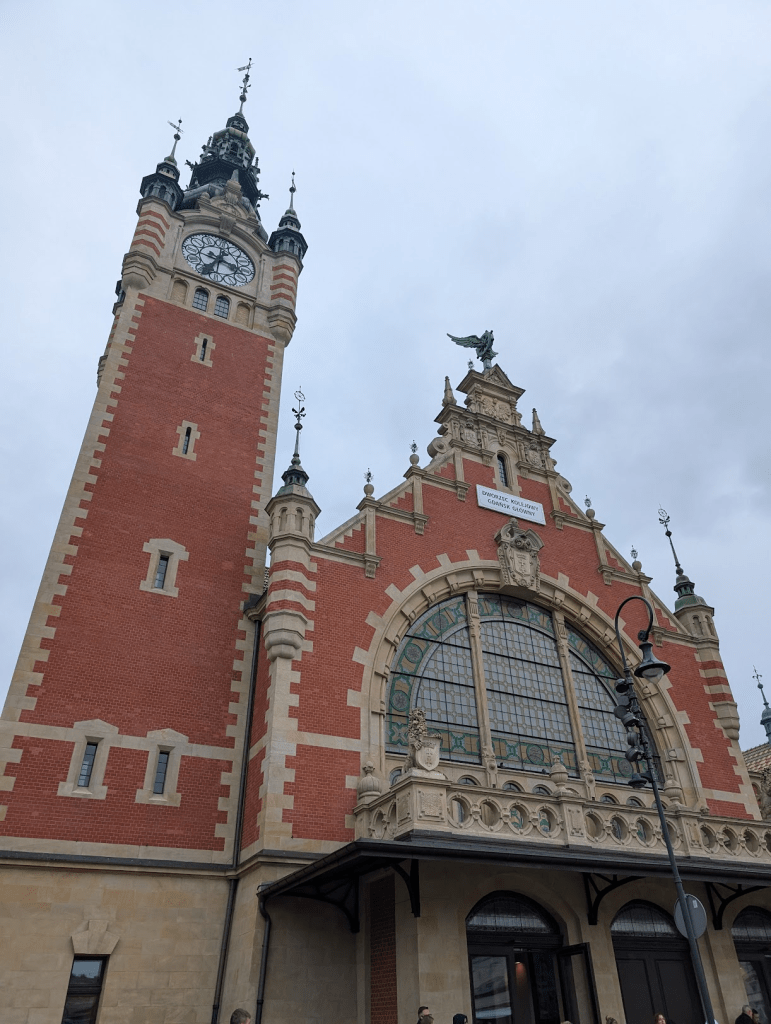
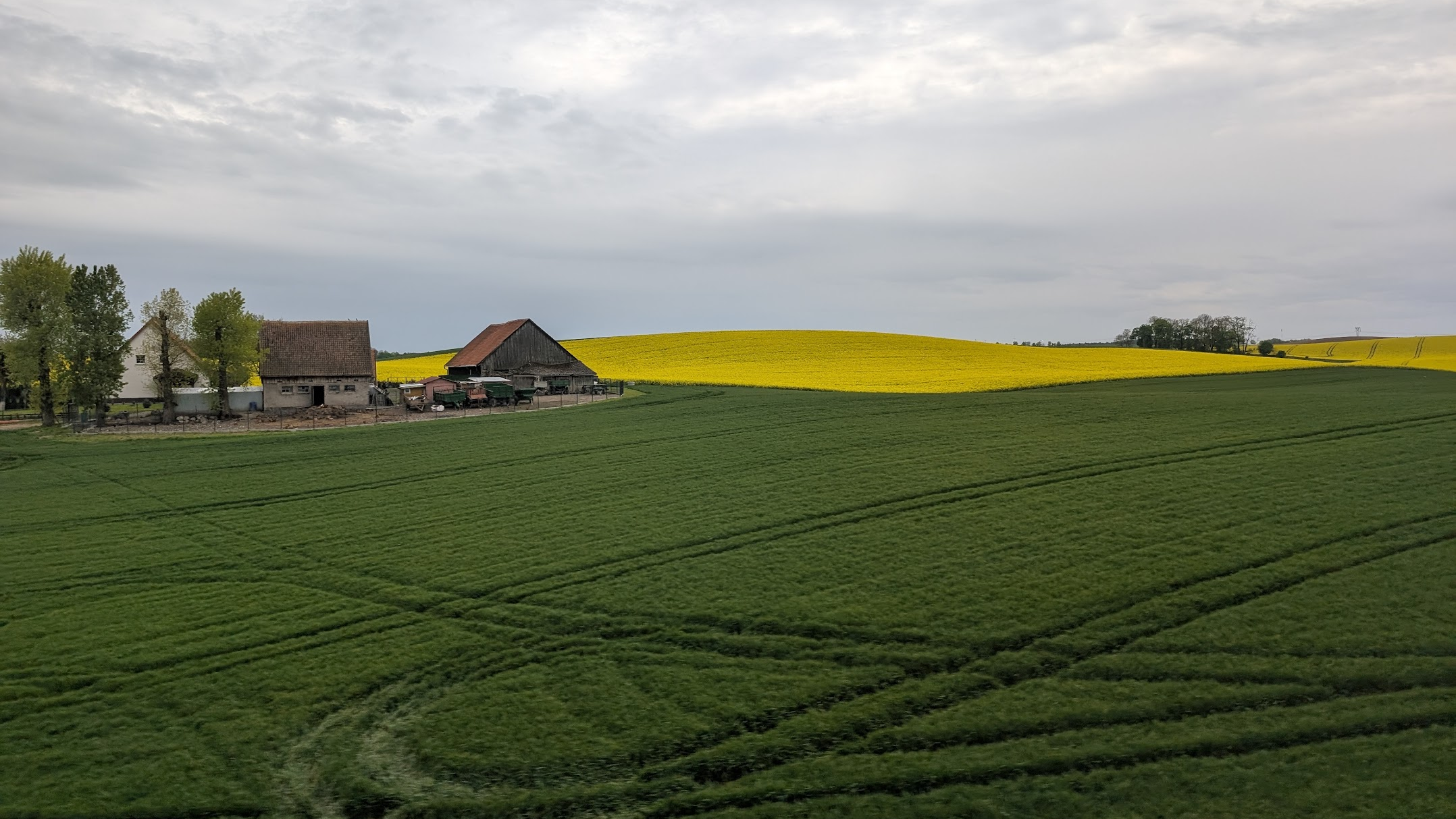
Around 4 PM we made our way back to the train station and boarded a train to Krakow. There was some confusion with our tickets and which trains we were and weren’t allowed to be on. First we got on a high speed train and quickly discovered that we didn’t have the right tickets for that so we got off at the next stop. We were able to get on one of the slower trains to Krakow via Warsaw but all the seats were taken so we had to stand in the aisles for a few hours. I was pretty tired by this point and it was tough but the views of the bright yellow rapseed (canola) fields were outstanding. We made it to Warsaw and, after about a 45 minute layover, successfully got on another train to Krakow. We checked into our hostel (a 10-bed room) and I was very ready to go to sleep.
Zakopane and the Tatra Mountains
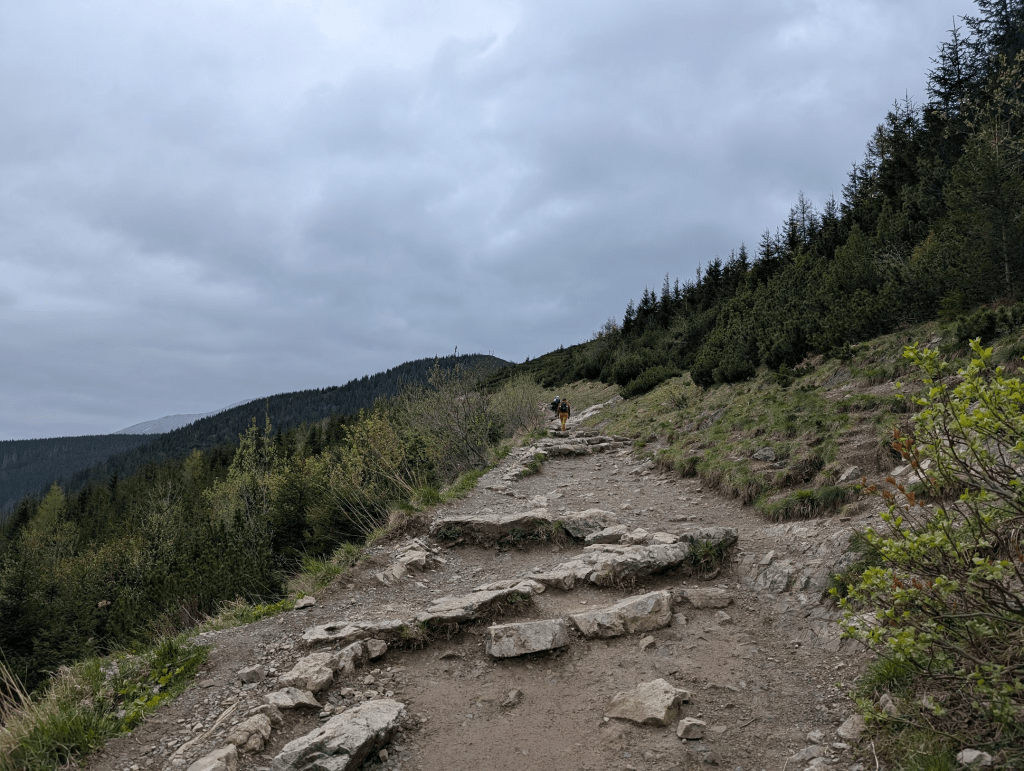
At 8 AM the next morning, we left the hostel and took a bus two hours south to Zakopane, a resort town in the Tatra Mountains. One of our friends had been hiking here before and he planned an amazing overnight hike for all nine of us. We hiked about 6 miles up the mountain with around 2800 ft of elevation gain. Unfortunately, I don’t know the names of the trails we took since I was just happily following my friends. Also, Polish names are difficult to remember when you don’t speak Polish. I’m fairly certain it was this trail (AllTrails link) or something pretty close to it. Whatever it was, it was stunning!
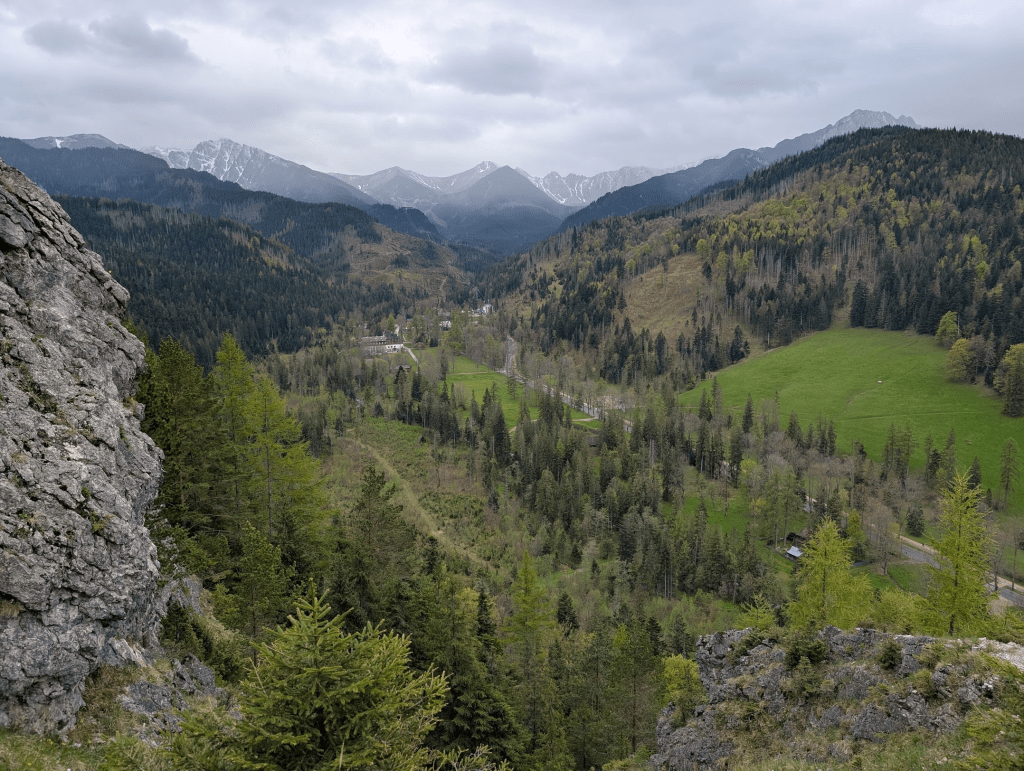

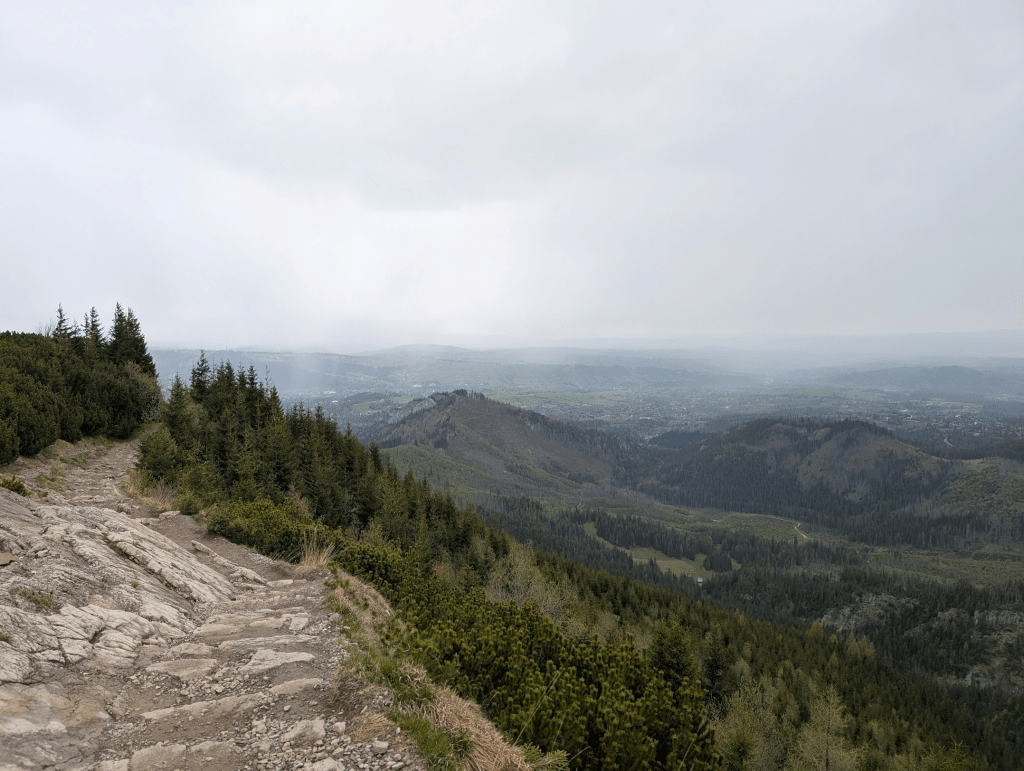
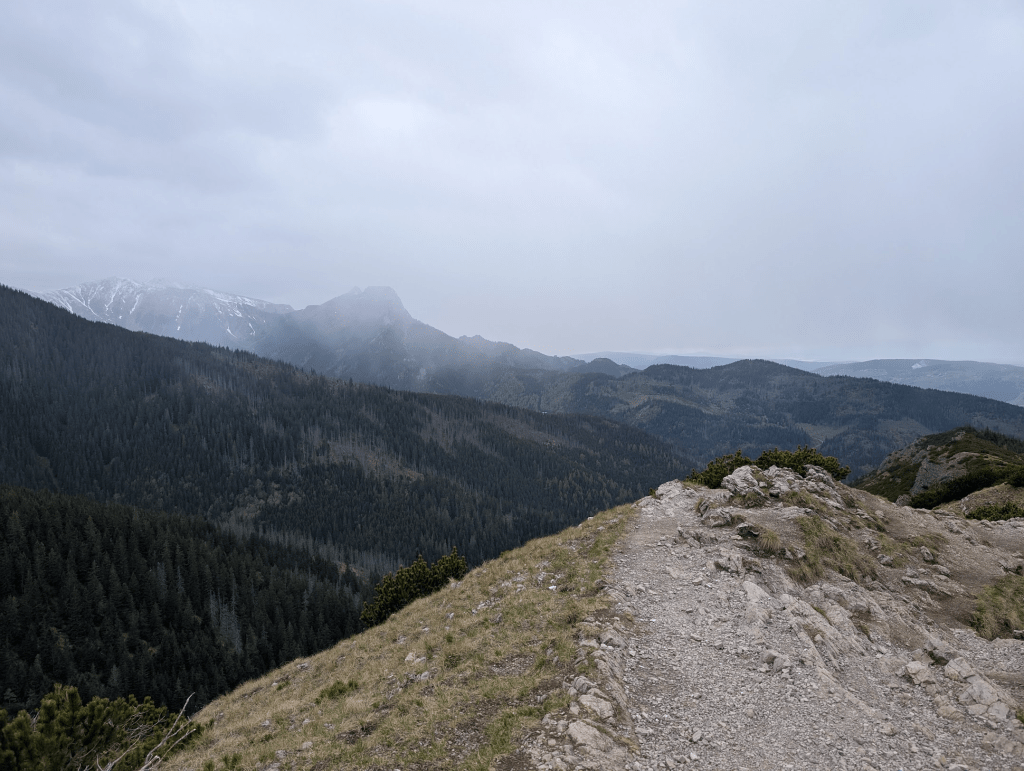
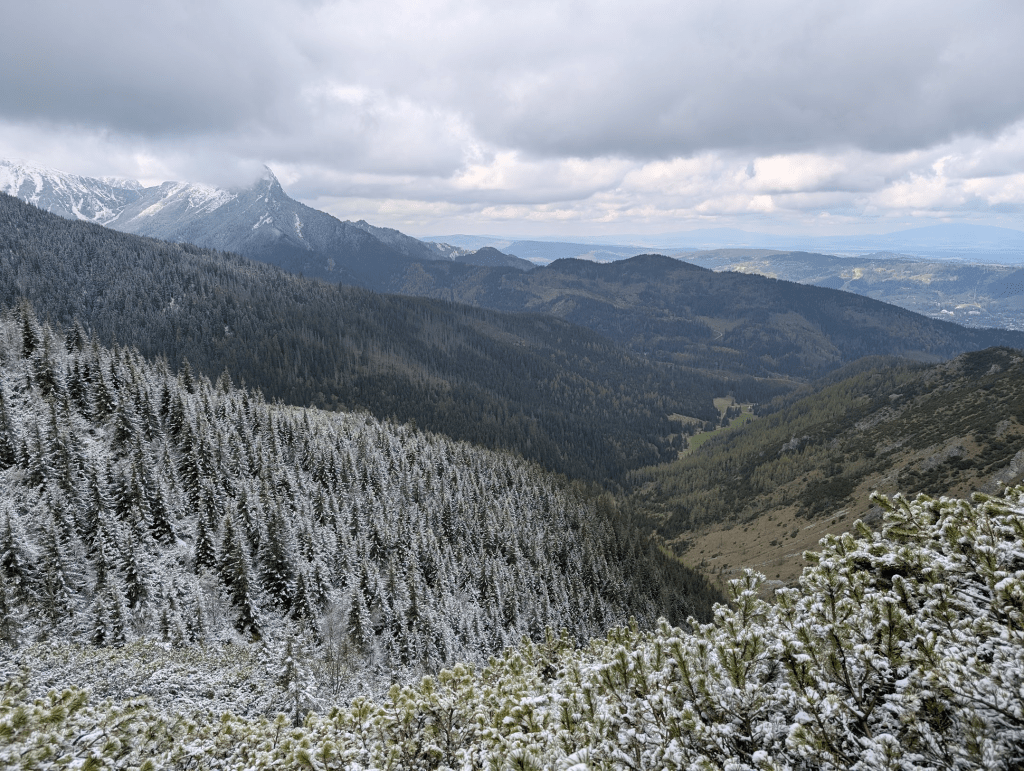
When we got higher up and into the valley, it began to snow! This was on May 10th so snow wasn’t unexpected but it still caught us a bit by surprise. I loved it. It made for some really cool pictures too. If you look closely at the photo below you’ll see the snow-covered peaks lurking in the background.
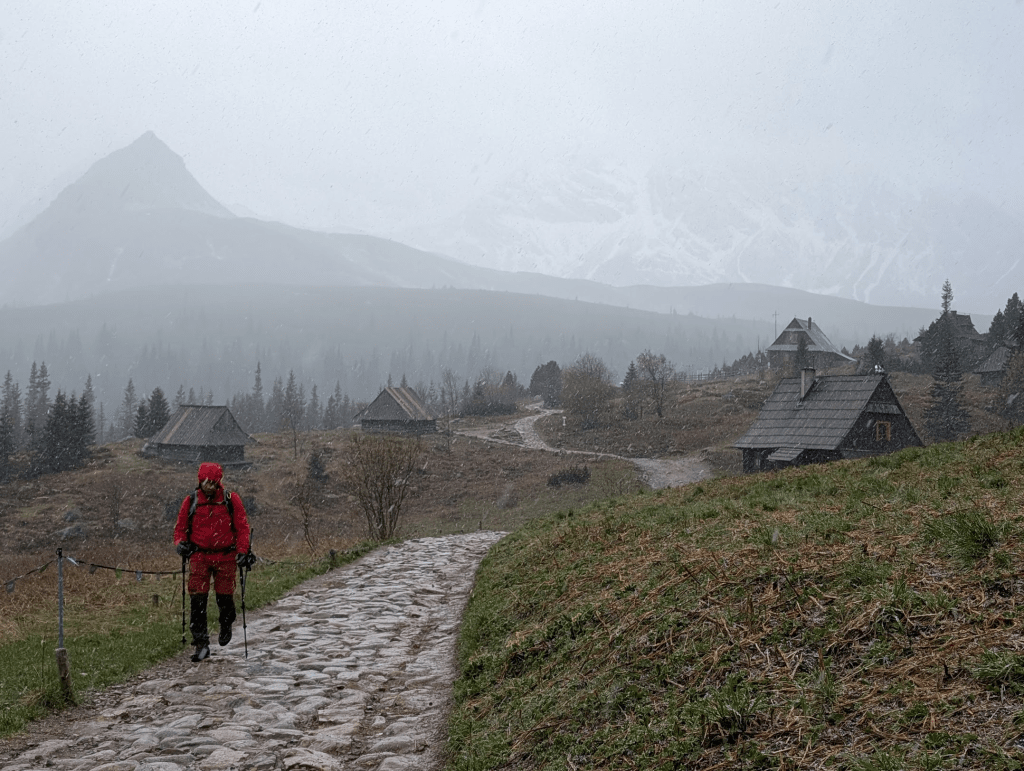
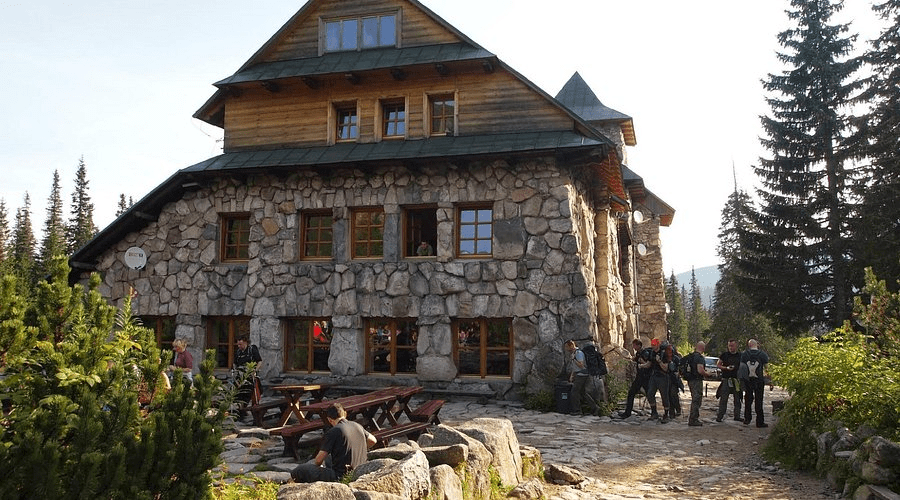
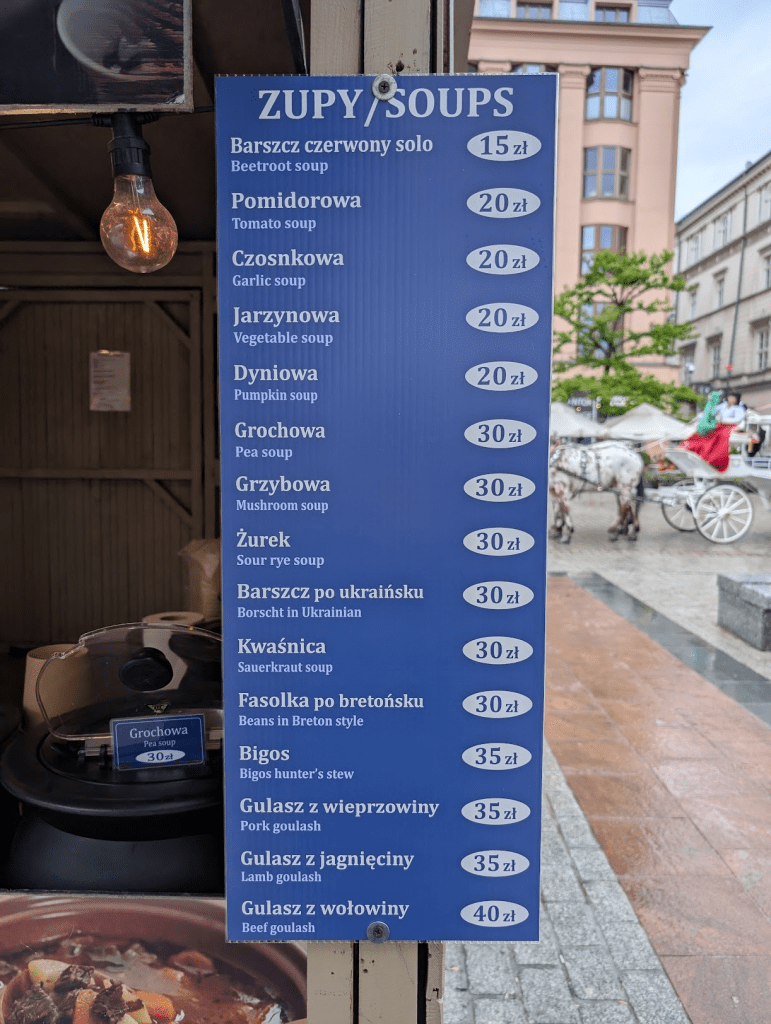
We stayed overnight at the beautiful and historic Murowaniec lodge located in the picturesque Gąsienicowa valley. The lodge was originally built in the early 1920s and then rebuilt in the 1960s after a fire. All nine of us stayed together in a 10-bed bunk room and quickly made friends with our tenth roommate, David. The lodge was super cozy and had delicious hot Polish food and cold beer – what more could you want after a long hike? I got chicken fingers, a cauliflower casserole, and my new favorite Polish dish: żurek. Żurek is a rich soup soured with a fermented rye starter and served with a boiled egg and white kielbasa. It is traditionally served around Easter but is also enjoyed all year round. Poland has an incredible soup culture with so many different traditional soups and stews. I would love to come back someday and just try all the soups. It was definitely the perfect dish for a cold snowy night after a long hike up the mountain. We all enjoyed dinner and a few beers together in the cozy common area of the lodge. Someone found a guitar and our friend Arjen led us in a singalong of all the songs he knew. We celebrated last call with a heartfelt rendition of Piano Man before heading up to the room for a good night’s sleep. It was one of the best nights I had this year and I’ll remember it for a very long time.
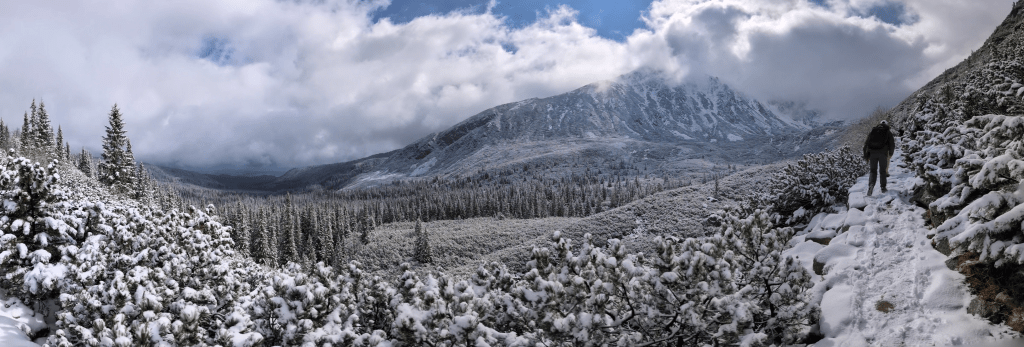
The next morning we awoke to a gorgeous layer of thick fresh snow. We had all day to hike back down so we decided to do some exploring in the morning after a nice big breakfast in the lodge.
We hiked approximately 1.5 miles (2.5 km) up to an alpine lake called Czarny Staw Gąsienicowy (Black Gąsienicowy Lake). Located at an altitude of around 5300 ft (1600 m), the lake sits in a deep glacial basin surrounded by steep granite walls. It is the second deepest lake in the Tatras, with a depth of about 160 ft (50 m). It was quite possibly the most beautiful place I’ve ever seen.
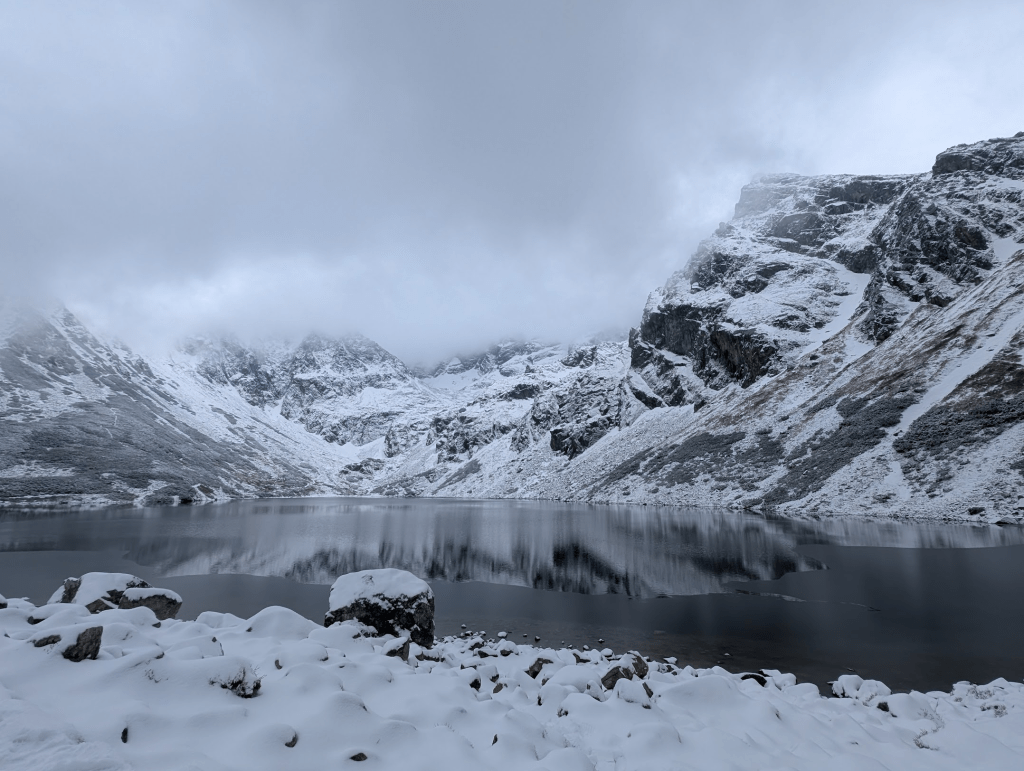
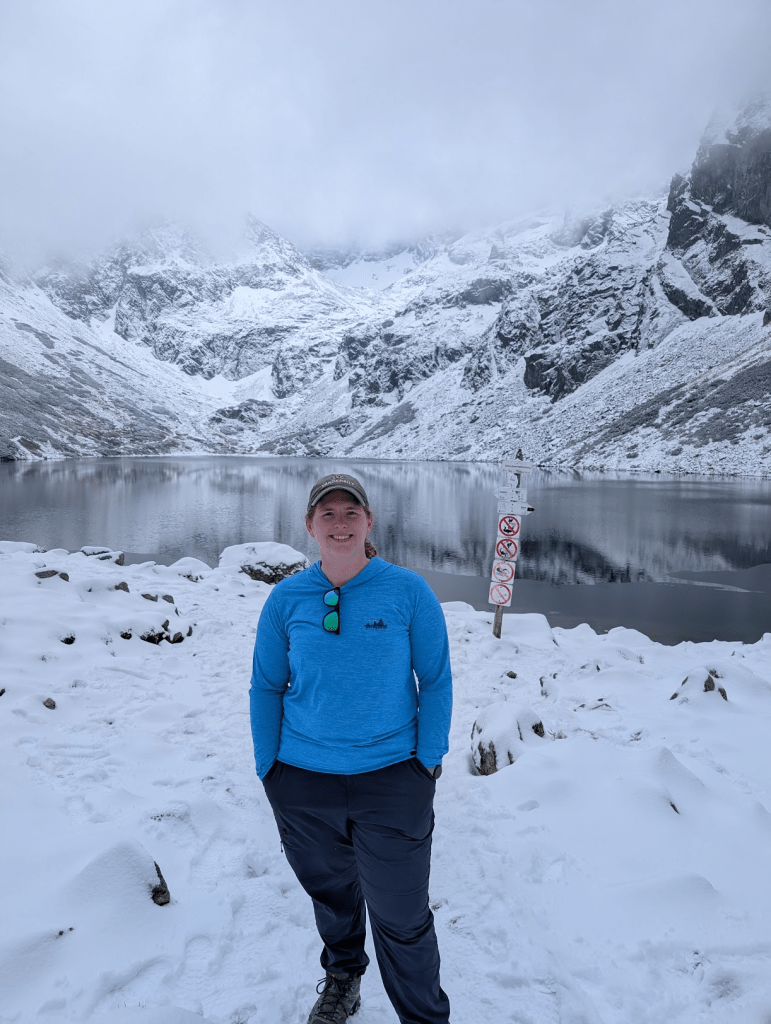
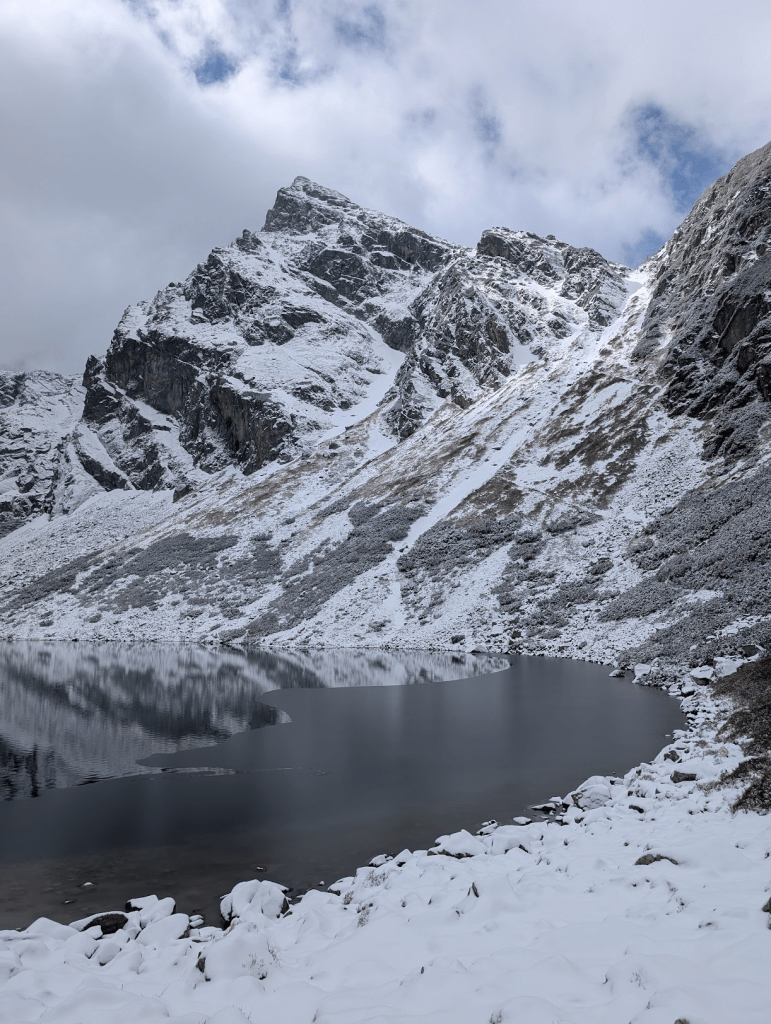

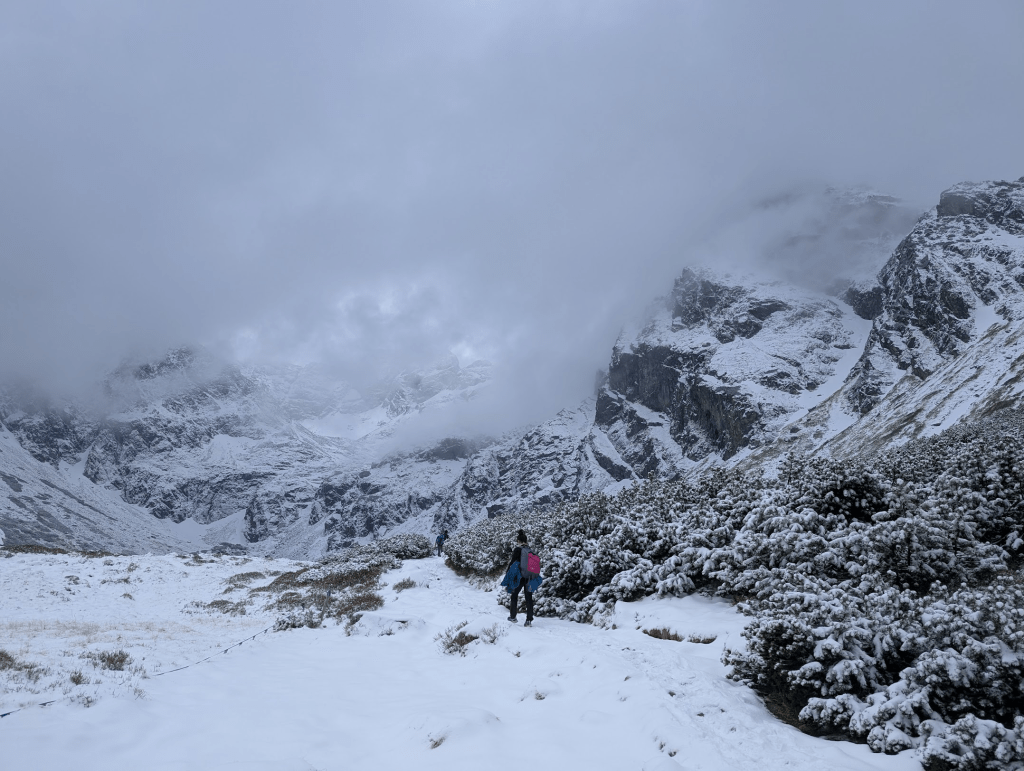
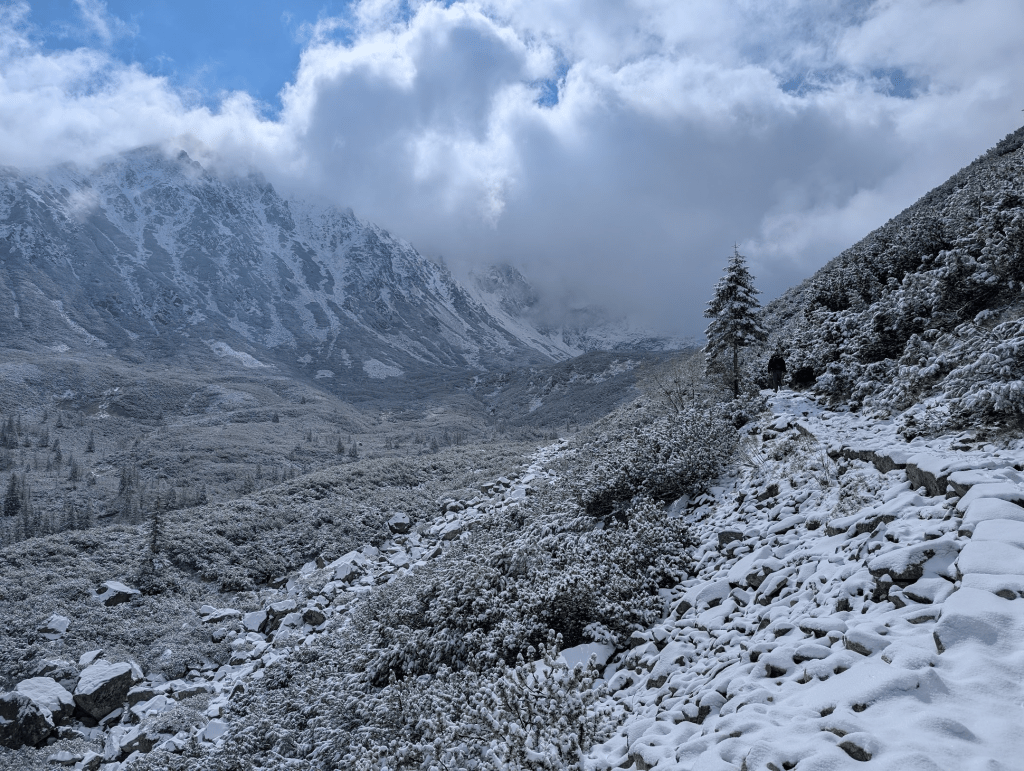
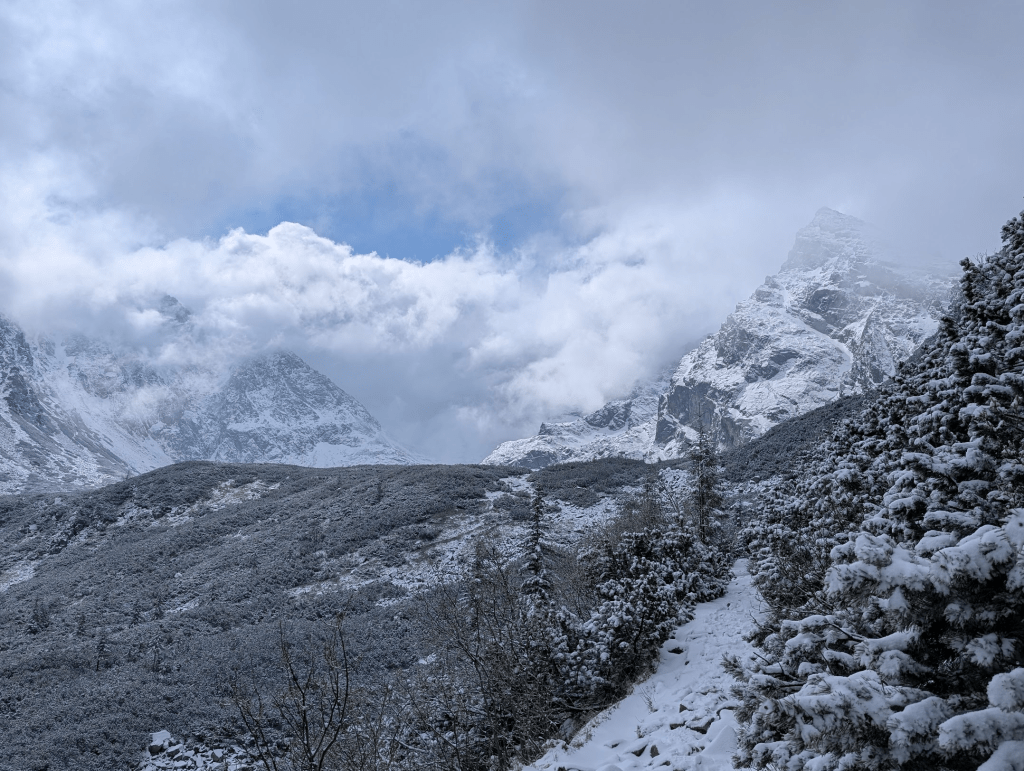
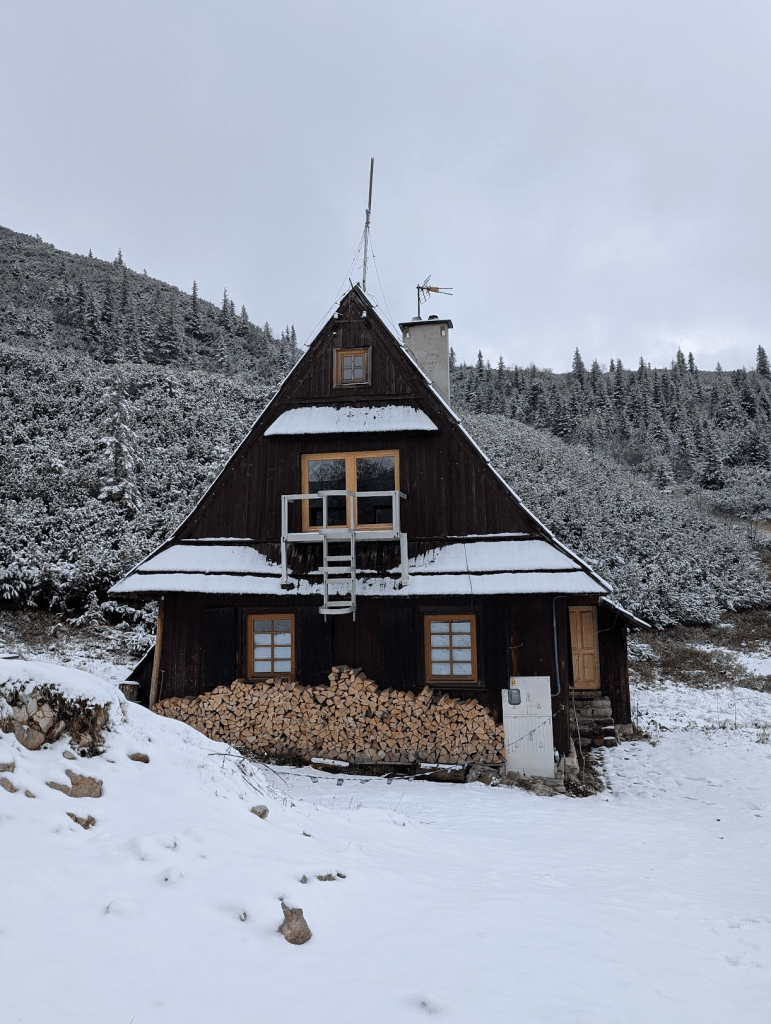
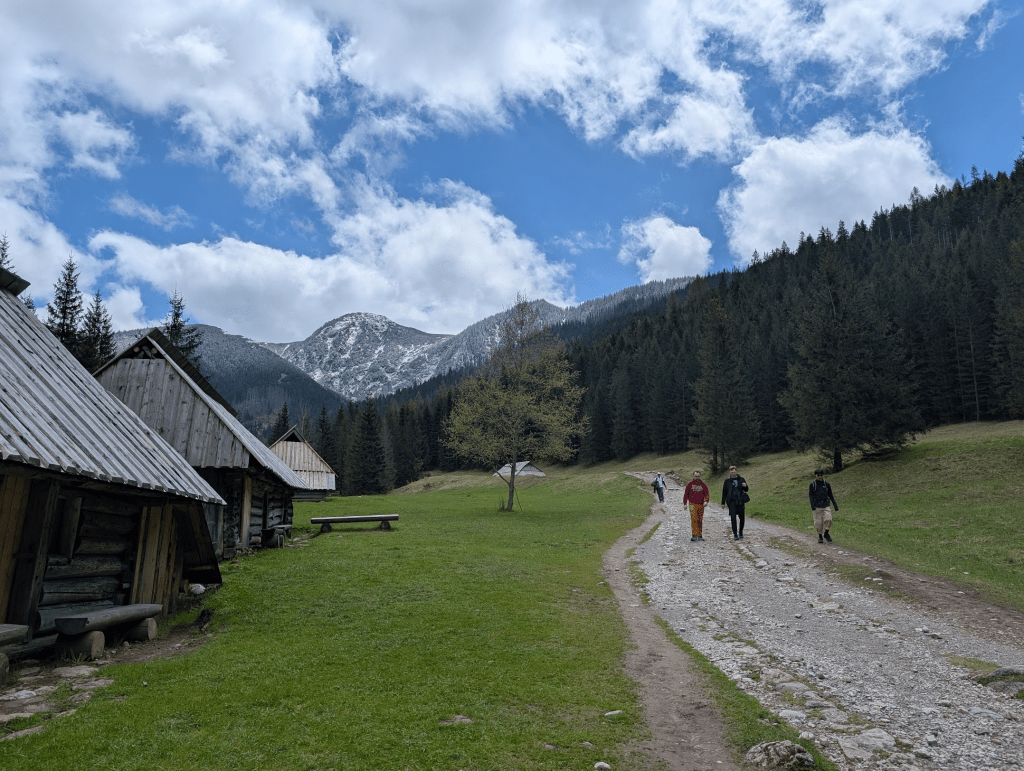
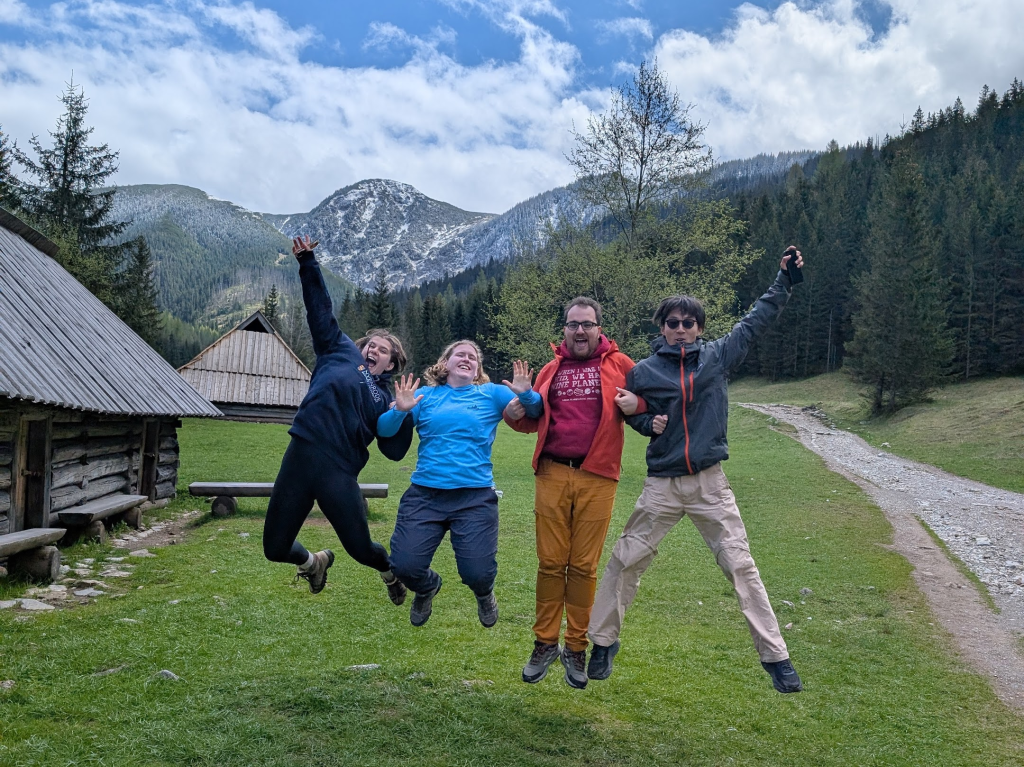
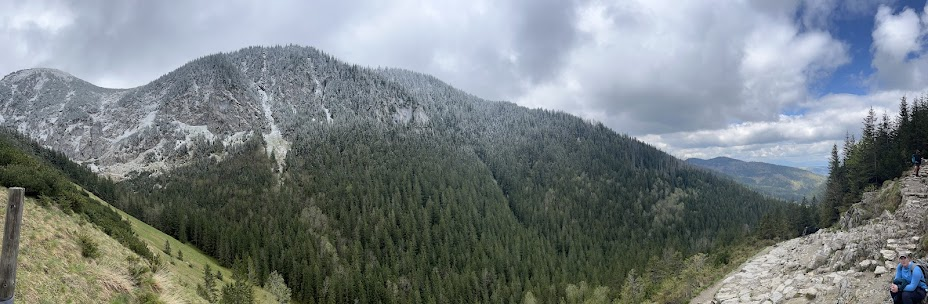
After the lake, we hiked back to the lodge for a quick bathroom break and water refill before heading down the mountain. We split into two groups; three people went off for a longer, harder hike while the rest of us took our sweet time hiking back down the easiest way. We had a blast stopping often for snack breaks, enjoying a slow lunch in the valley, and having full-on photoshoots. It was really cool to see the very distinct snow line across the mountain. We came back into Zakopane by way of an area called Kuźnice, which was the cultural center of Zakopane in the early 1800s.

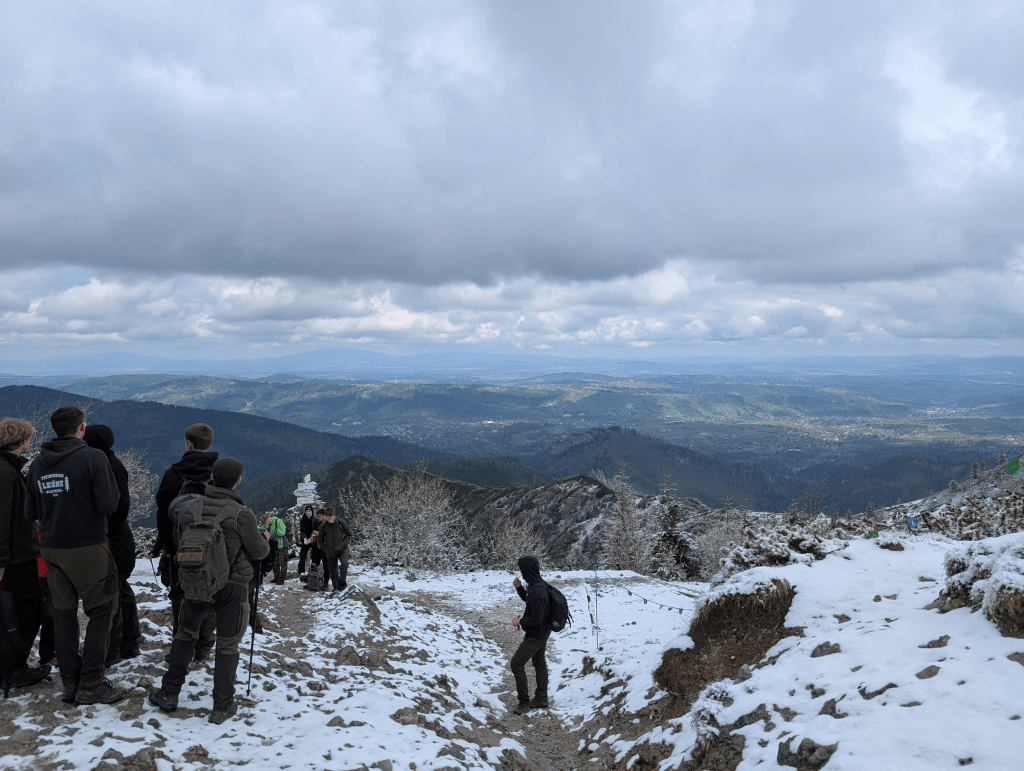
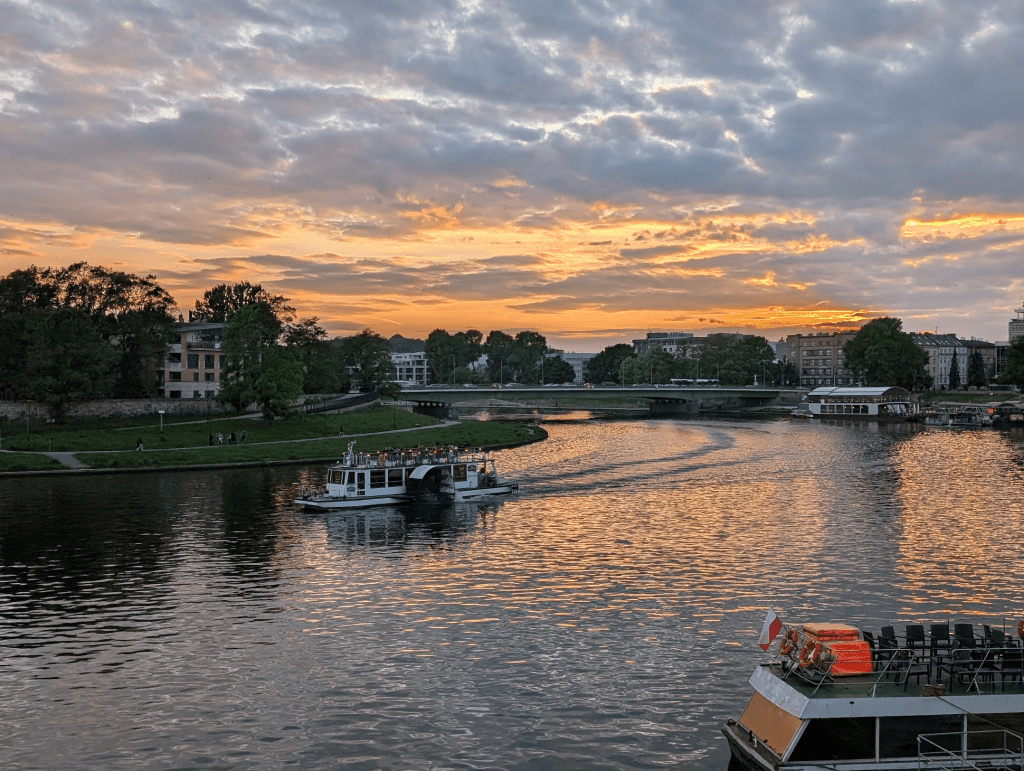
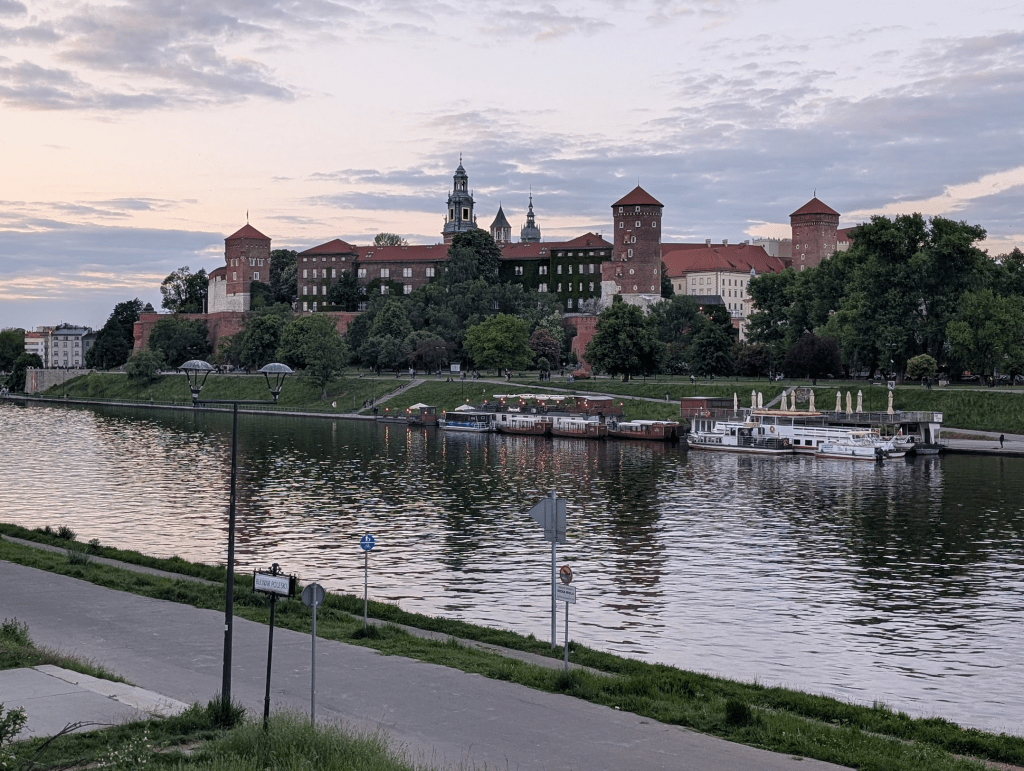
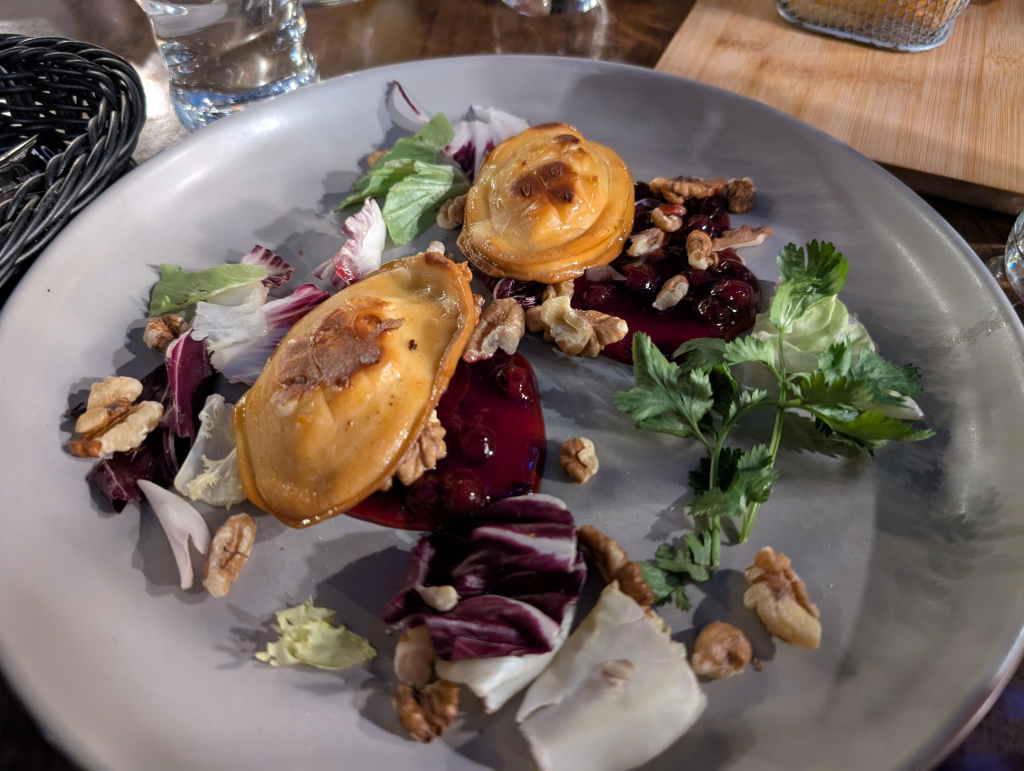
Back in Zakopane, we met up with our three friends who had taken the longer route. I very much enjoyed sitting and watching the world go by on the 2-hour bus ride back to Krakow. When we got back into the city we dropped our bags off at the hostel and then I somehow got talked into going for a long sightseeing walk around Krakow. By the end of the day I had taken 37,687 steps, a personal record! We saw a lovely sunset by the Vistula river and had dinner in Kazimierz, the Jewish quarter. I tried “grilled mountain cheese,” a smoked cheese made of salted sheep milk from the Tatra Mountains, and it was delicious. We slowly made our way back to the hostel and I fell into a much needed sleep.
Auschwitz-Birkenau Memorial and Museum
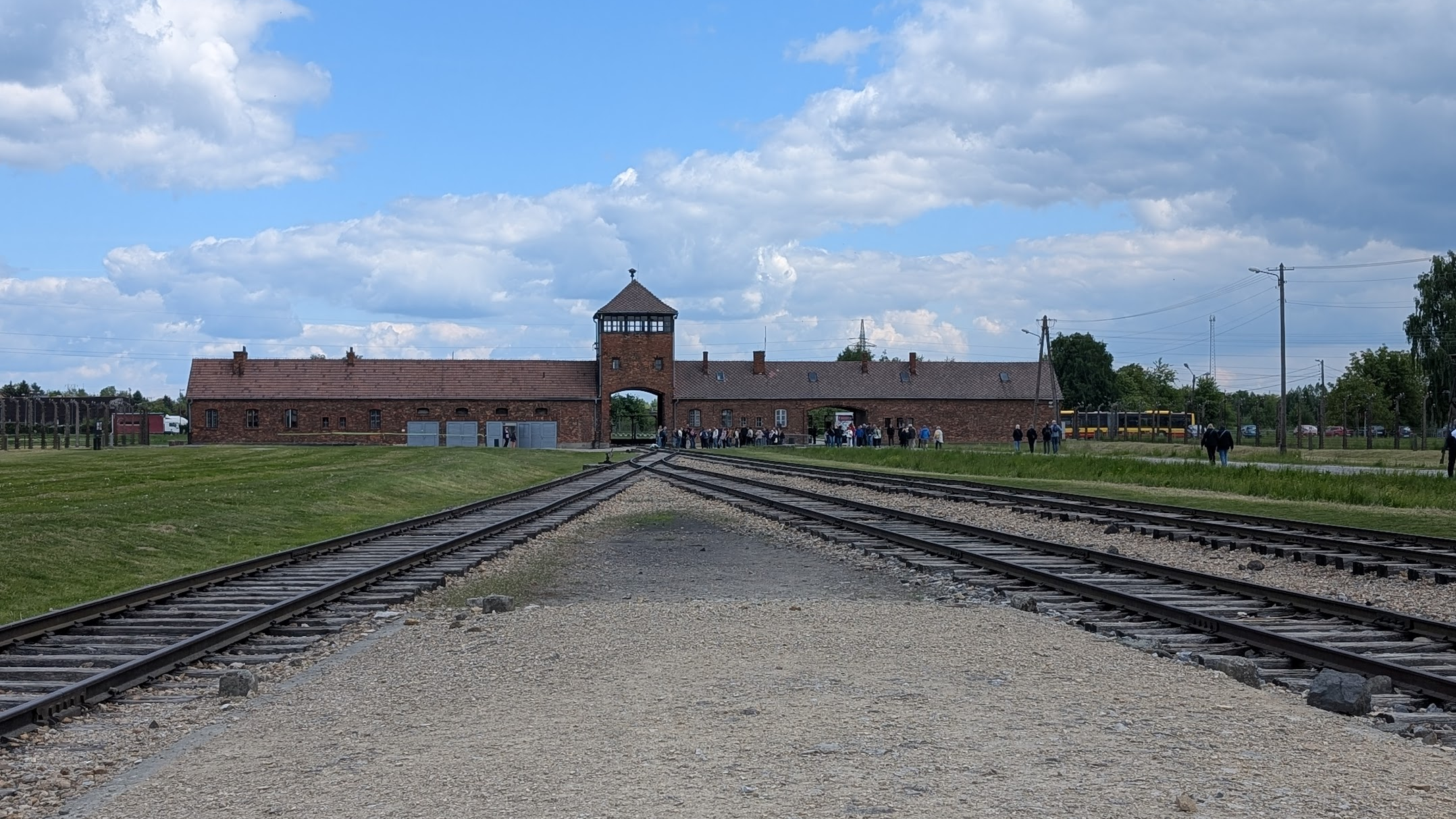
On our last free day before the Spring Seminar began we visited the Auschwitz-Birkenau Memorial and Museum. It feels incongruous to write about this experience in the same blog post with all of these fun activities and happy memories but it does reflect the reality of this trip. We did a guided tour, which I believe is the only way you can visit these former concentration camps. The guide was very calm and neutral and almost emotionless, and I was left wondering if that was a deliberate choice to facilitate this experience for visitors in a certain way, or if it was the only way you could survive leading these tours everyday. Some of the stories we heard were familiar to me, learned through school history lessons, books I’ve read, or common knowledge. In some ways it was almost hard to picture what happened here because all I saw in front of me was tidy brick buildings on a gorgeous spring day. I didn’t really know how to approach it as a visitor. I tried to just be present and soak it in, to learn what I could and pay my respects. I tried to strike a balance between listening and learning and also taking some quiet time to reflect and absorb.
My primary takeaway was the unfathomable scale of tragedy and cruelty. Auschwitz was an industrial-scale murder operation, and yet still only one of many death camps in a vast network across Europe. The numbers are completely incomprehensible. It reminded me trying to wrap my mind around astronomical distances in my Astronomy 101 class in college. The human brain is just incapable of understanding something on that scale. There is no language to effectively convey the depth of cruelty and grotesqueness that was present in this place and many others. It is impossible to understand and yet some of the foundational human concepts behind it are terrifyingly familiar.
All in all, I am glad that I decided to take the tour. It left an imprint on my heart and mind. Reading about history is good and necessary but walking in people’s footsteps gives a new weight to the reality. It also serves as a call to action and vigilance in our own communities today. My generation’s grandparents are among the last people to have seen and experienced the Holocaust firsthand. I vividly remember in middle school having classmates’ grandparents come to our school to talk about their experience in concentration camps, telling stories about the loved ones that made it out and those who didn’t. Every year there are fewer and fewer of them remaining to tell their stories. One of the reasons Auschwitz is preserved and open to visitors is to keep history alive and ensure that we, as a society, do not forget. To conclude, I’ll share their mission statement:
The mission of the International Center for Education about Auschwitz and the Holocaust is to provide a learning experience, which is dedicated to the tragedy of the Victims as well as the history of the last well preserved of the vast extermination centers. The authenticity of the Auschwitz-Birkenau site and the testimony of survivors are to further a deeper understanding of the origins of intolerance, racism, and anti-Semitism. Education at the Memorial is meant to foster reflection about the meaning of personal responsibility today, in Europe and beyond. (Auschwitz.org)
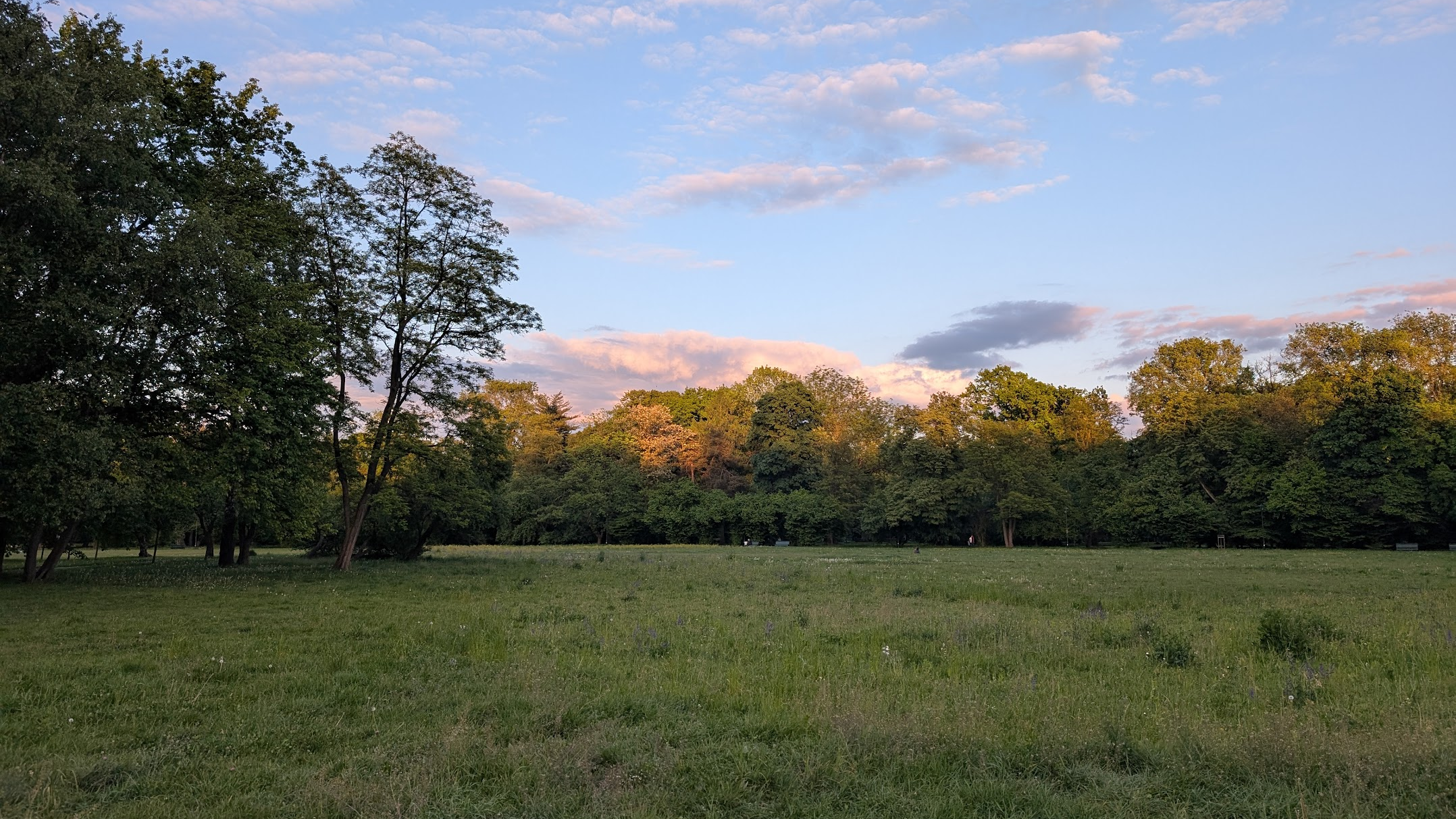
It’s hard to pivot to a new topic after that experience, but that’s how it goes. We walked back to the train station and got reuben sandwiches and zapiekanki, a popular Polish street food that is basically a toasted baguette with tomato sauce and other toppings. Back in Krakow, we checked into our hotel for the week and then went and played a game of pickup soccer in the park with the rest of our SELECT classmates who had arrived that day. I was more conscious than ever of being alive and safe and free and happy. I was tired and overwhelmed from the day so I took a long walk through the park. I found a section of the park with statues and biographies of Polish heroes, including Marie Curie and Pope John Paul II. It was a beautiful evening in a beautiful city.
Spring Seminar
From Tuesday through Thursday we had our program’s Spring Seminar. On the first two days we had business classes through the ESADE business school. Our two courses for this seminar were Strategy & Innovation and Corporate Entrepreneurship & Science-Based New Ventures (a bit of a mouthful). I really enjoy this aspect of the program. I personally have a bit of experience in the business world, having completed a minor in engineering management during my undergrad degree and having spent four years working in the consulting industry. For many of my classmates, however, this is their first exposure to some of these concepts and ways of thinking. Familiarity with business concepts is hugely beneficial to anyone who works in a business, regardless of role. A lot of our education in this program is focused on innovation and entrepreneurship, giving engineers the skills and confidence to pursue exciting new ideas.
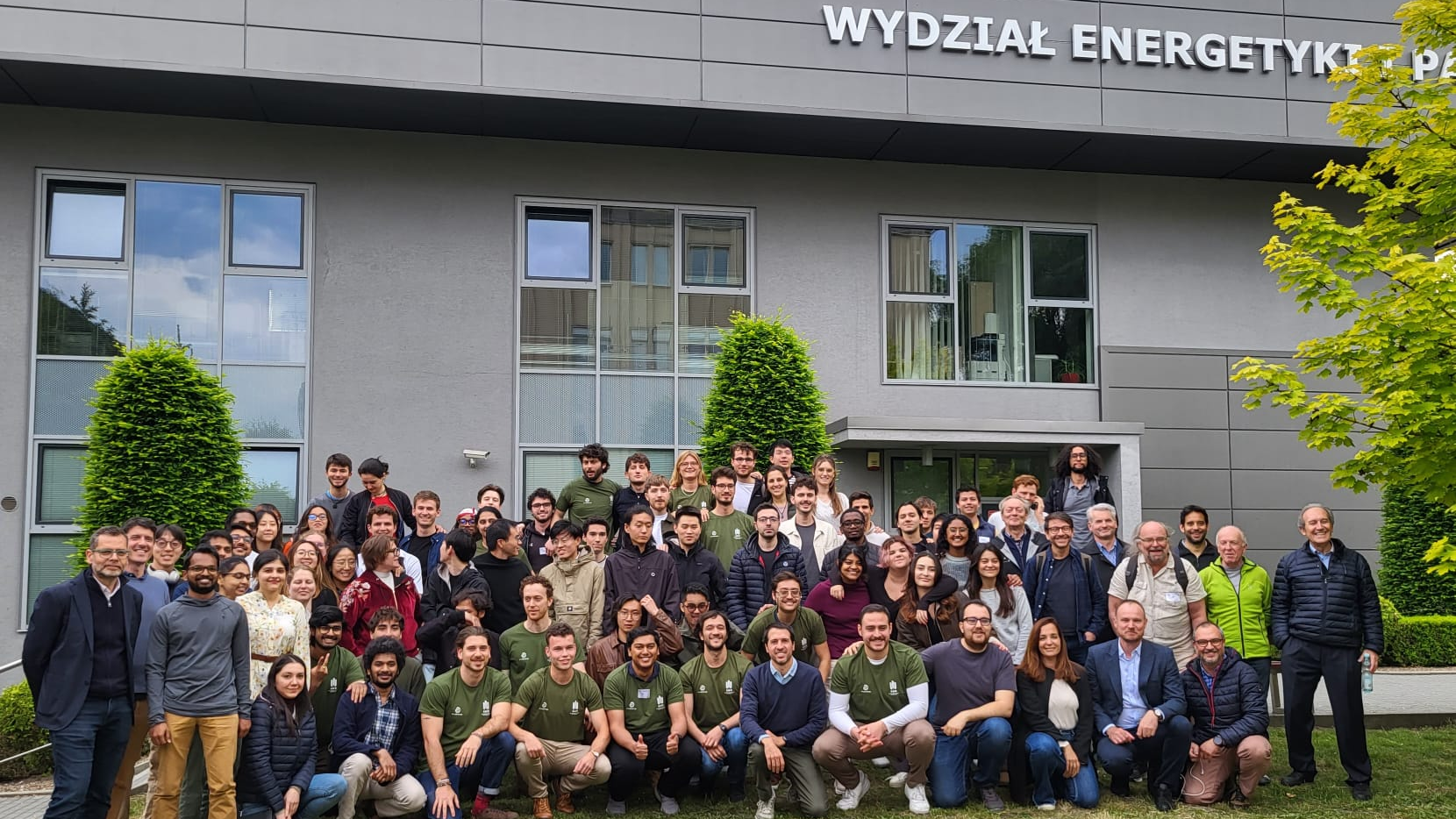
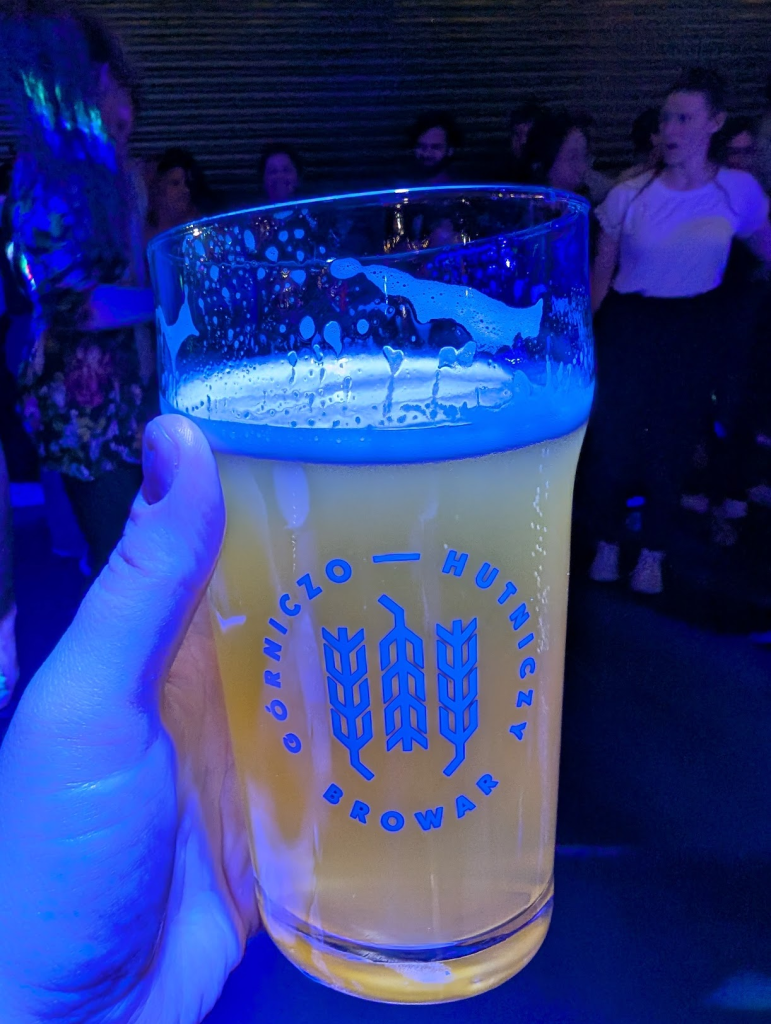
In addition to classes, we had plenty of coffee breaks, lunches, and evening events that gave us the time and space to get to know each other better. In the first year of the SELECT program, students are spread out between only three universities: KTH in Stockholm, UPC in Barcelona, and TU/e in Eindhoven. There are various classes and projects that we all work on together, so these events are also an opportunity to meet up with teammates and friends in person. We also get to meet the second-year students and ask them for advice. Second-year students are spread across 6-8 universities so it’s even more exciting for them to get together and see each other, especially their friends from the first year of the program. The business classes are great, but the real fun of these seminars is spending time with our classmates. It’s fun and it also serves as networking, laying the groundwork for not only personal relationships, but professional ones in the future. On Tuesday we had a very fun evening of dinner, drinks, and dancing at a brewery called Browar Górniczo-Hutniczy. The brewery was established on the 100th anniversary of the AGH University of Science and Technology in Krakow, which is one of the second-year universities in the SELECT program and where this seminar was hosted. The brewery is located on campus and was created by students, graduates, and employees of AGH. The beer was excellent and we had a lot of fun dancing the night away with our classmates and professors/program coordinators!
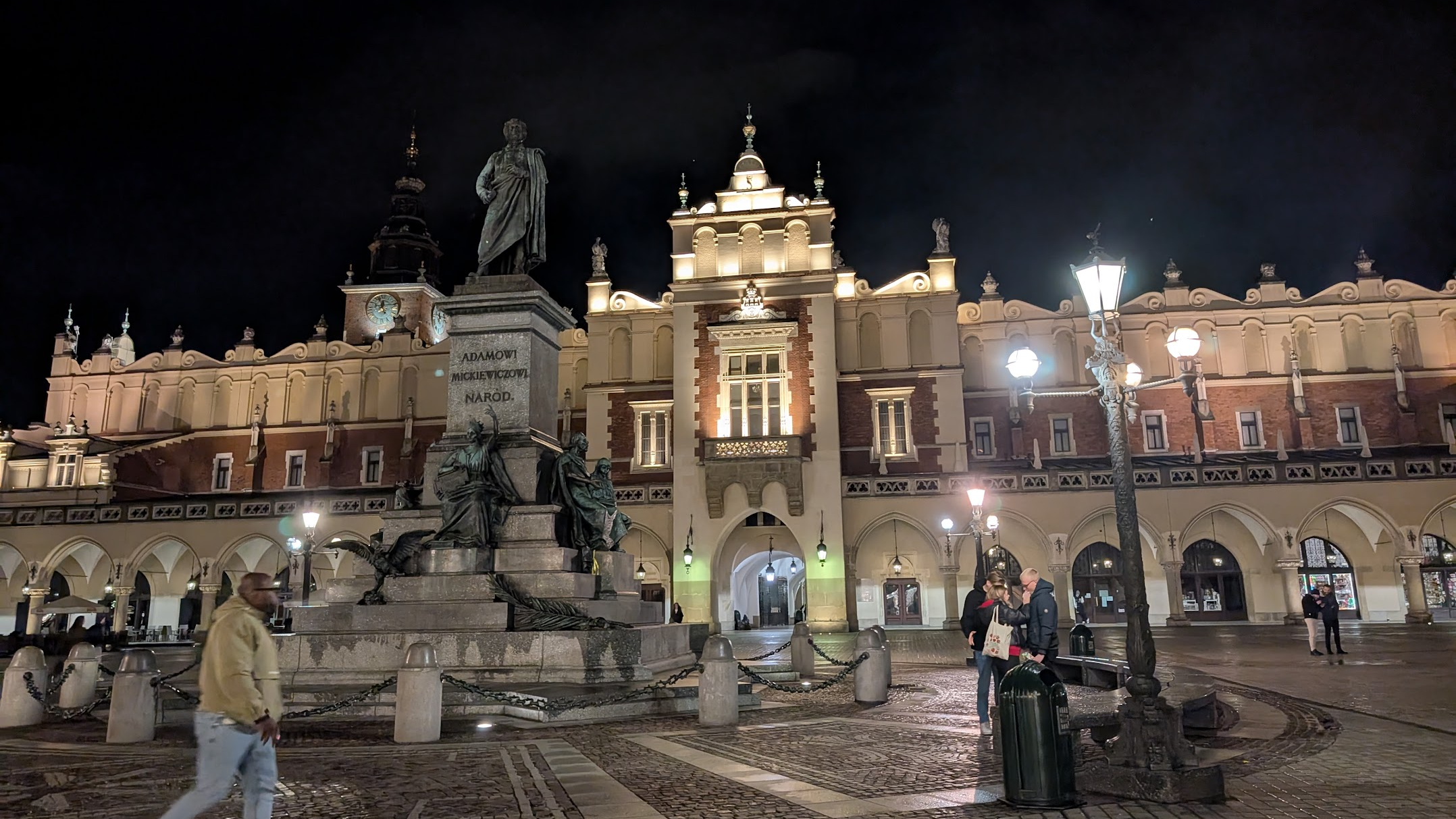
On Thursday night, we had another dinner at a lovely restaurant located in Krakow’s main square (Rynek Główny). It was a bit more formal and the food and beer were both delicious. That was the last official time that all of the second-year students would get together, so it ended up being a bit emotional. Some of the students sang a beautiful song together to say thank you and farewell to their classmates. After dinner, we walked through the main square and admired the architecture. Then we went to a club where I witnessed my first real bar fight. All in all, an excellent night.
Exploring Krakow
On Friday we had the day free to explore the city. Despite a late night and possibly something resembling a hangover, I talked a few friends into joining me for a free walking tour. We saw the medieval city walls, St. Florian’s gate, the main square and market, a few churches and cathedrals, the Jagiellonian University courtyard, and the Wawel castle. The architecture and depth of history in this city are absolutely incredible.
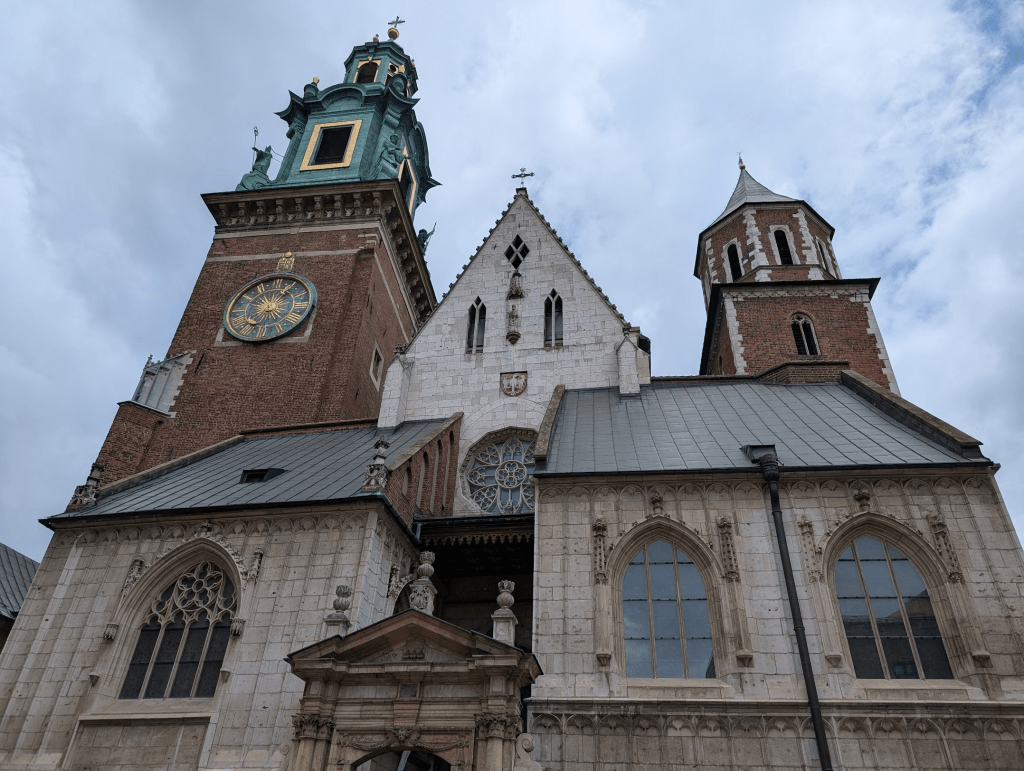
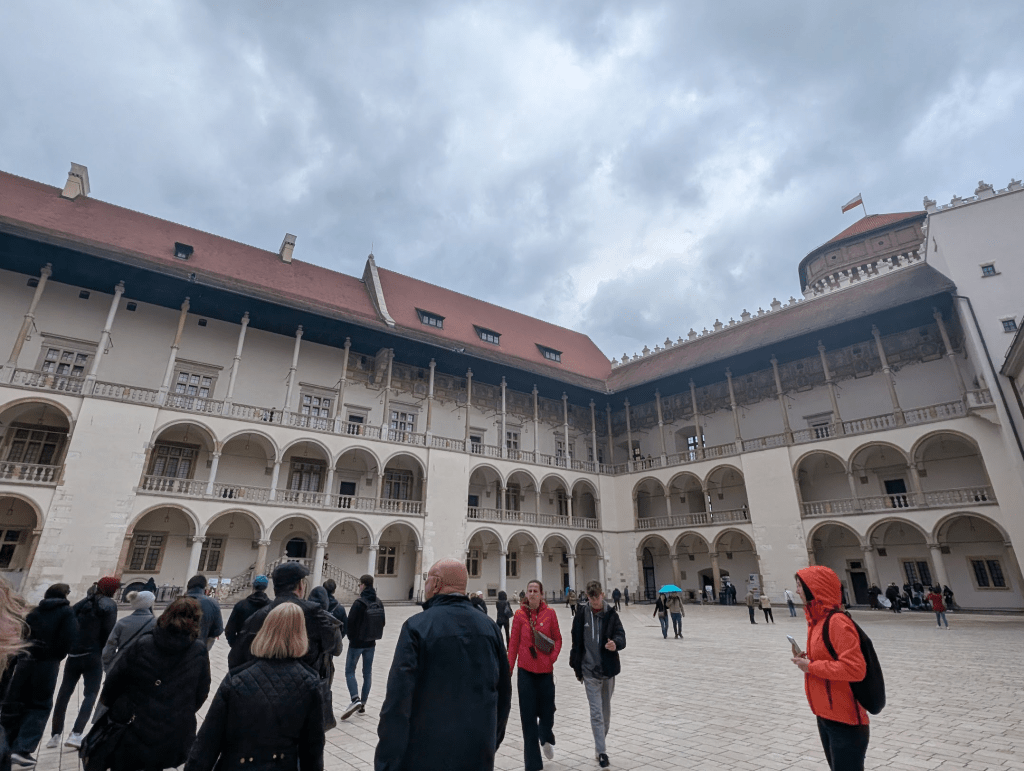
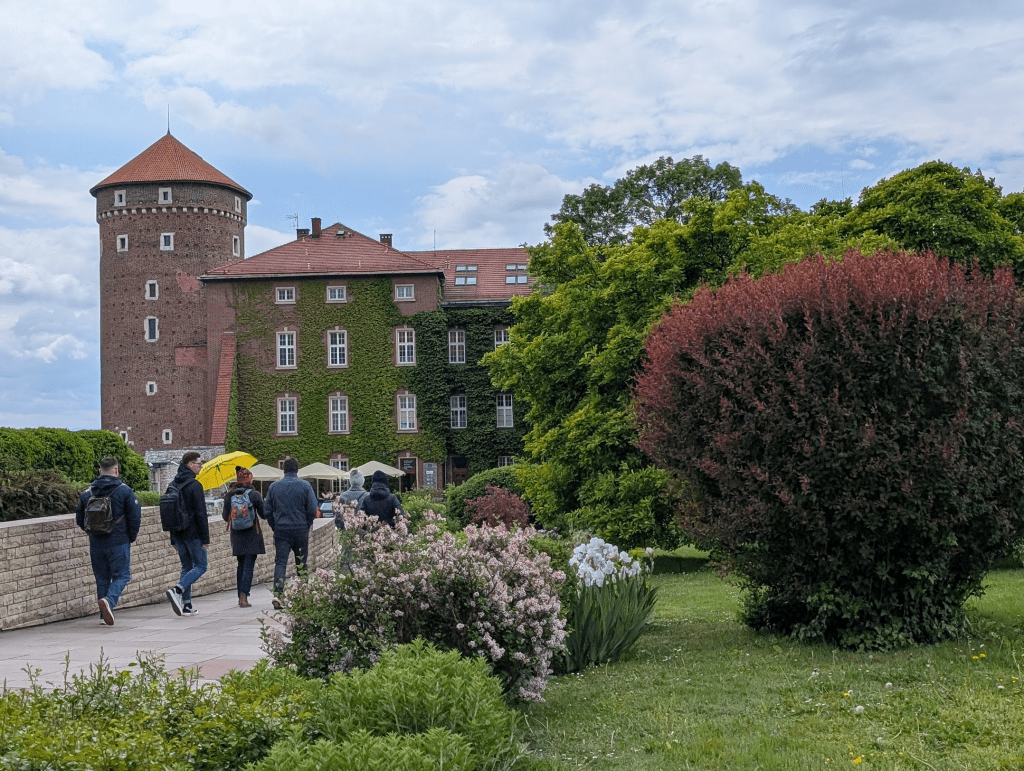


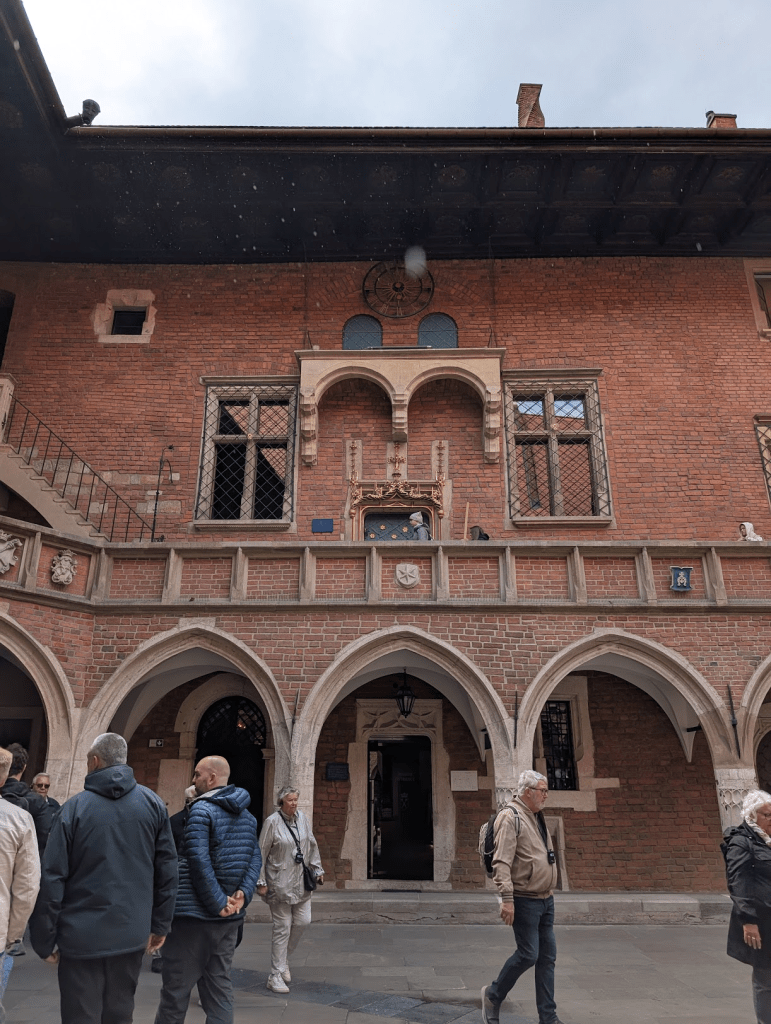
There are a lot of stories to tell but I’ll highlight a few things I thought were interesting. Jagiellonian University, founded in 1364 by King Casimir III the Great, is the oldest university in Poland and one of the oldest universities in continuous operation in the world. The famous astronomer Nicolaus Copernicus studied there in the early 1490s. Pope John Paul II is also an alumnus (and extremely beloved in Poland).
My other favorite thing I learned about on our tour was St. Mary’s trumpet call (Hejnał Mariacki). This bugle call is played from the highest tower of the Saint Mary Basilica to mark the time. Every hour on the hour, a real live trumpeter plays the tune four times in succession in each of the four cardinal directions. According to Wikipedia, the noon performance is broadcast via radio to all of Poland and around the world. I was shocked that it is still actually played by real people, not a recording. I confirmed this when I came back in the afternoon and happened to be in the square on the hour (check out my video below). In each direction, the trumpeter waves to the people out the window after playing the tune. The team of trumpeters is maintained by the city’s fire brigade, with seven regular players and one reserve. Trumpeters work in pairs on 24-hour shifts (!!!). Our tour guide told us stories about the trumpeters occasionally forgetting or sleeping through the hour. There are many legends and stories associated with the trumpet call and the church. If you’re interested and want to know more about this special piece of Krakow’s history and culture, I highly recommend this article on the subject.
After our walking tour, we grabbed lunch at a small Polish restaurant run by an older couple, using a combination of Google Translate and sign language to communicate. My friends went off to go check out a local rock climbing gym and I spent my afternoon wandering around the Kazimierz, the Jewish quarter. Google’s summary describes the neighborhood better than I can:
Trendy, creative Kazimierz is Krakow’s historic Jewish quarter, now a jumble of indie galleries, quirky shops, vintage clothing stores and bars that range from hip cocktail dens to shabby-chic spaces. Szeroka Street’s many synagogues include the 16th-century Old Synagogue, while the nearby Remuh Cemetery has a wall built of tombstones broken during WWII. (Google)
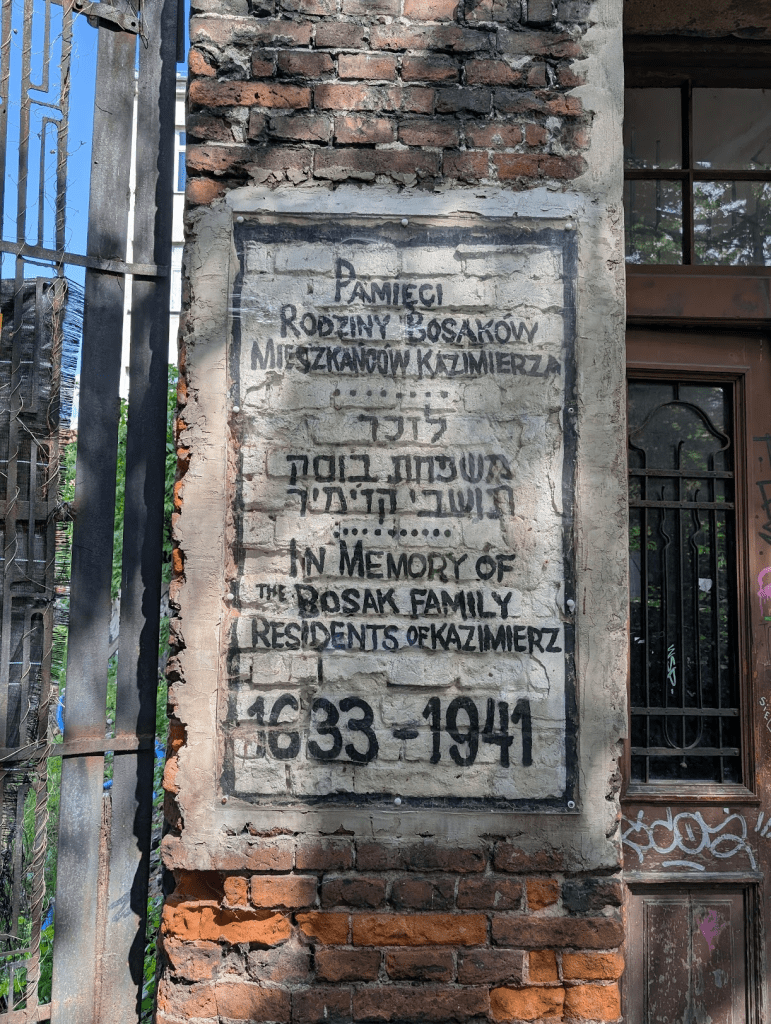
This hip and historic neighborhood is home to the ghosts of the past and the hopes for the future. Next to breweries and thrift stores and zapiekanki stands you’ll find memorials like the one below (3rd photo) that reads “in memory of the Bosak family, residents of Kazimierz, 1633-1941.”
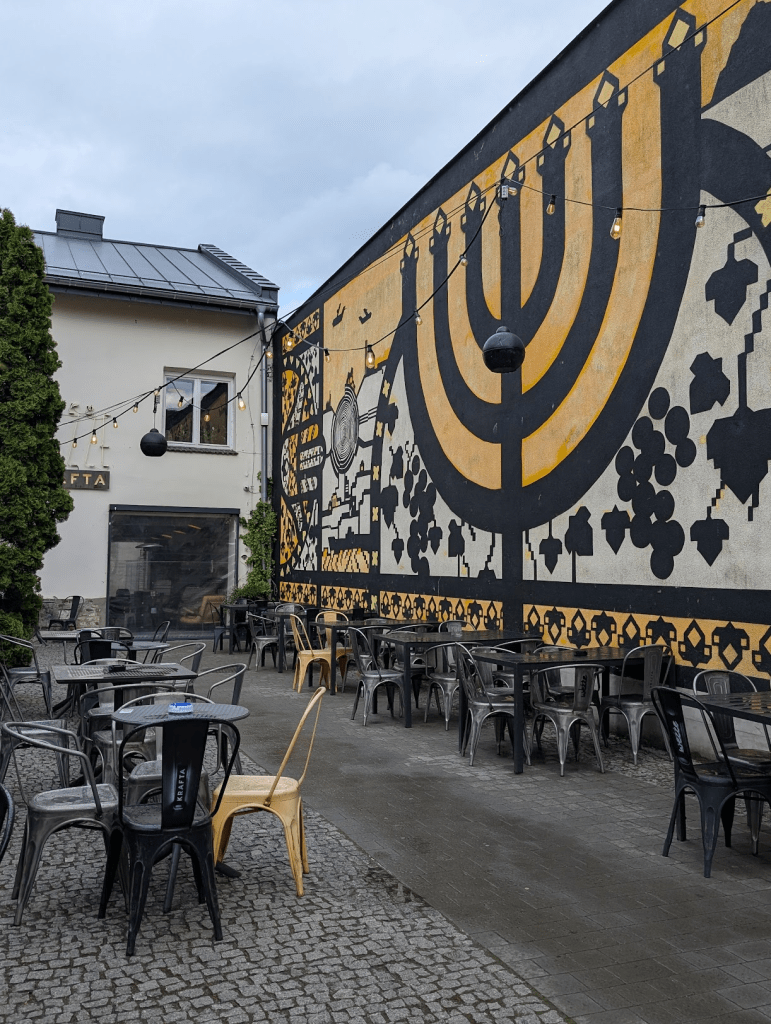
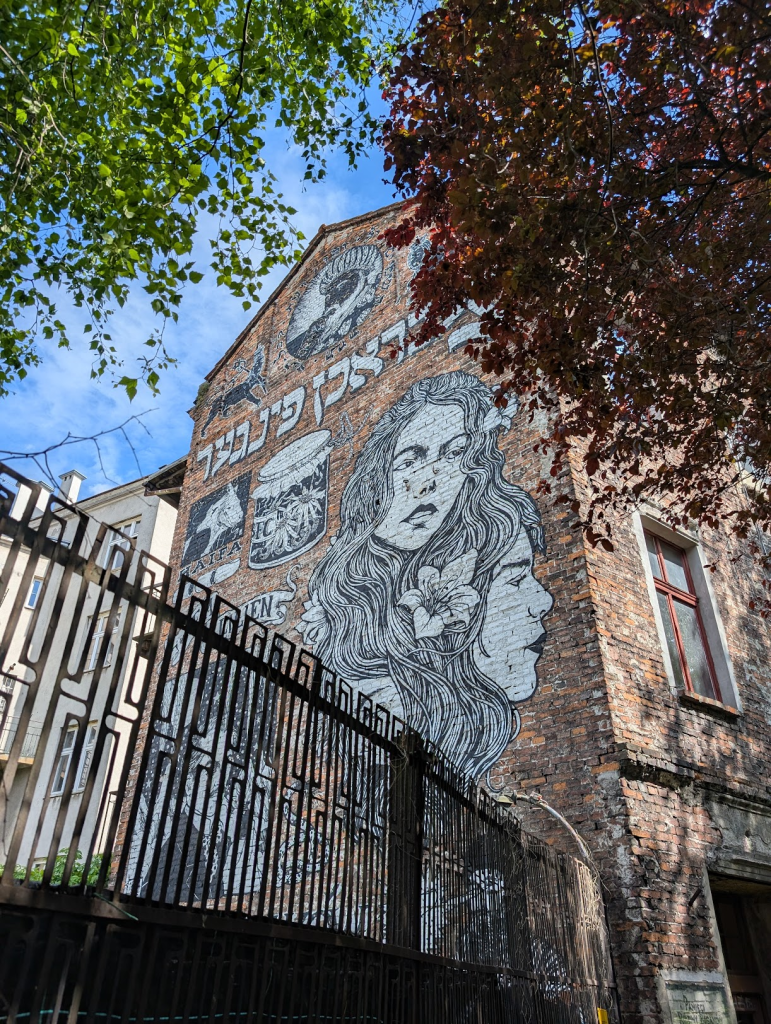
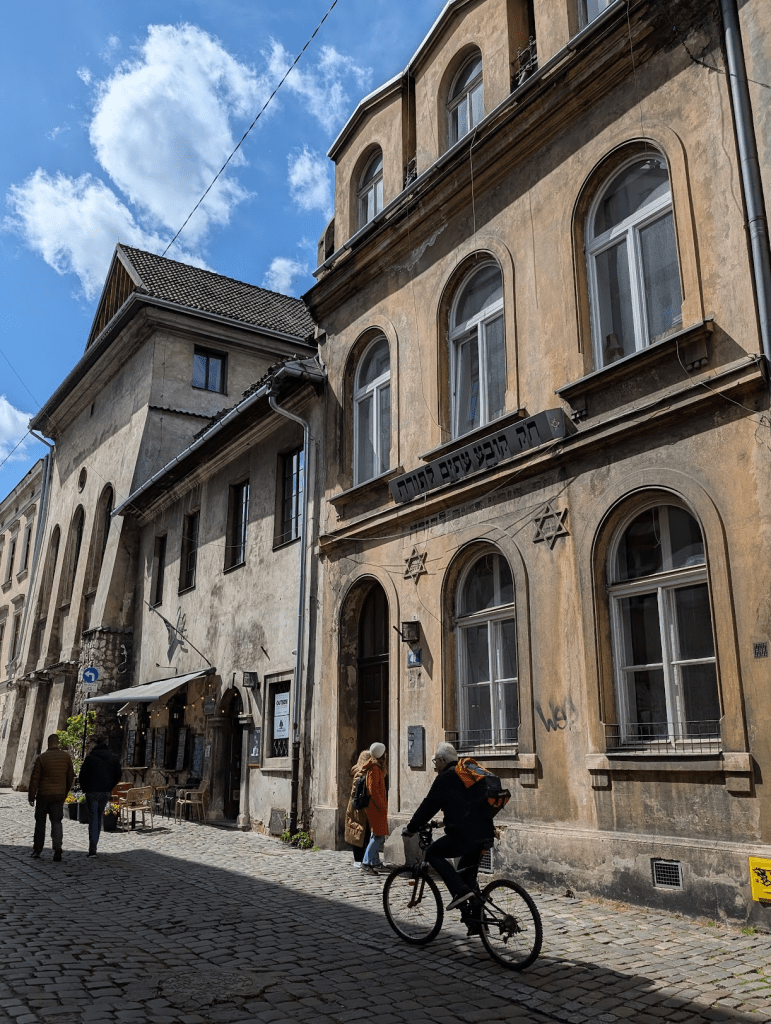
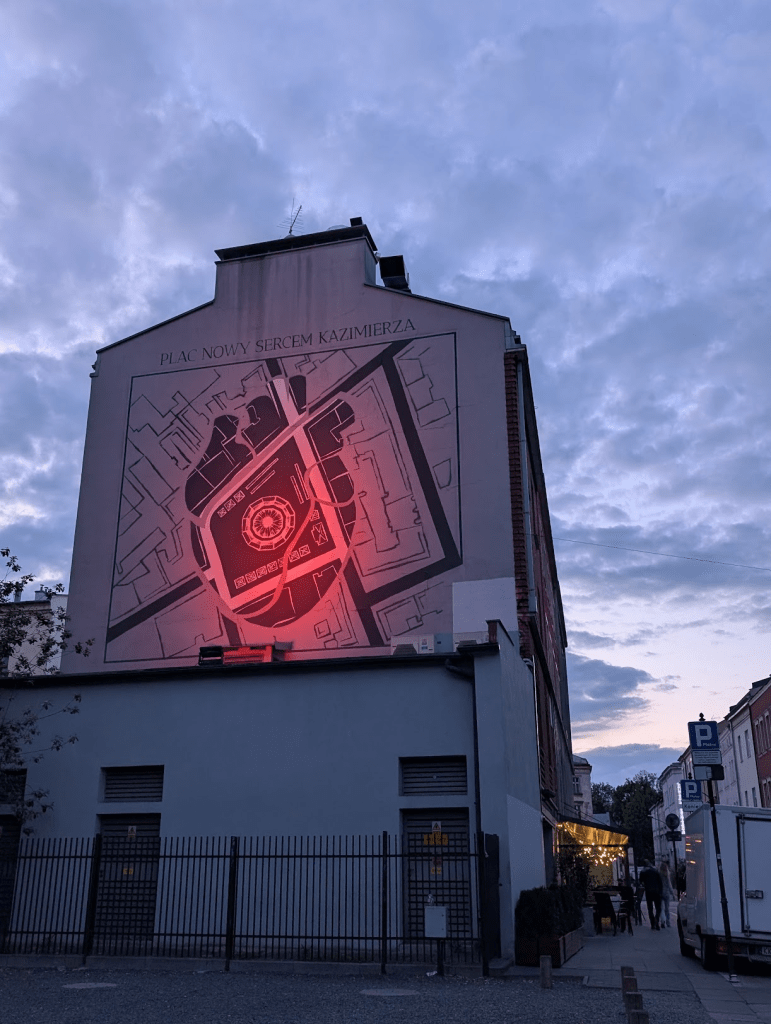
I also went to the Galicia Jewish Museum, which was excellent and well worth the time and cost of admission. It is primarily a group of photo exhibitions documenting Jewish history, culture, present day life, and contemporary issues in this area. The museum gave me new perspectives and a space to sit with big thoughts and feelings. It was especially powerful after having visited Auschwitz a few days prior. The simple combination of photos and stories was particularly moving. I’ll quote their website directly to describe the purpose of the museum:
The exhibition offers a lament for the destroyed Jewish civilization that once flourished in this country, remembers the location where annihilation took place, and gives credit to commemorative efforts that have occurred since the Holocaust. As the exhibition documents traces of Jewish presence in dozens of places, it allows us to localize the story, relaying to visitors a narrative not of strangers but rather their former neighbours. The creation of an interesting and diverse exhibition programme in a safe and friendly Jewish space enables local non-Jewish communities to start exploring Jewish heritage as a part of their own heritage, arousing curiosity, breaking stereotypes, and overcoming prejudices. (Galicia Jewish Museum)
After the museum I headed back across the river to Krakow’s main square. I went inside the Cloth Hall, the large market building in the square. Once a major center of international trade, it is now home to more magnets, postcards, and other cheap souvenirs than you would think is economically possible to maintain. Despite some heavy rain, I browsed the market stalls outside which were selling soup, bread, meats, pastries, clothing, souvenirs, and more. I bought myself some cherry-filled pierogi drizzled with dark chocolate, yum!
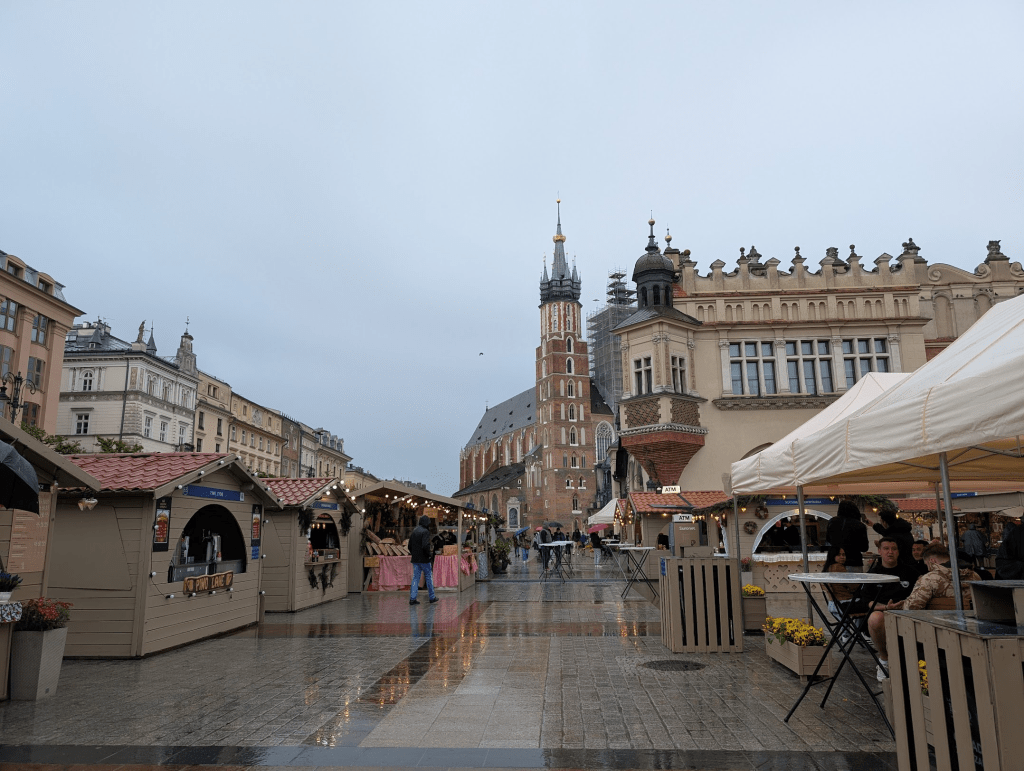
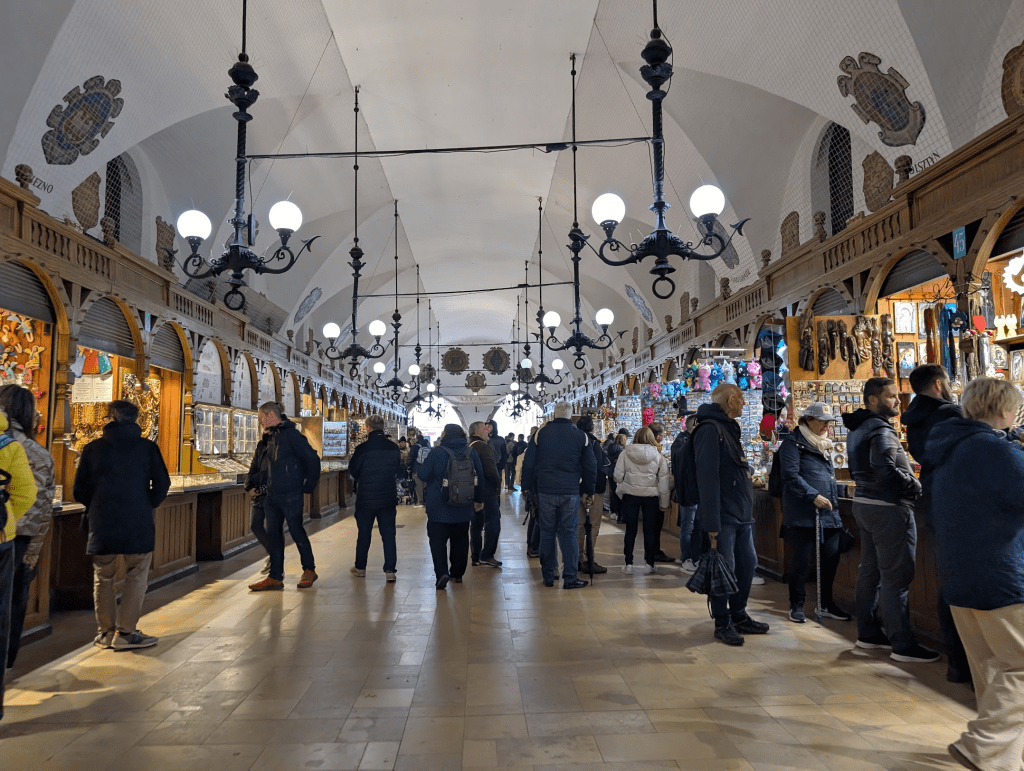
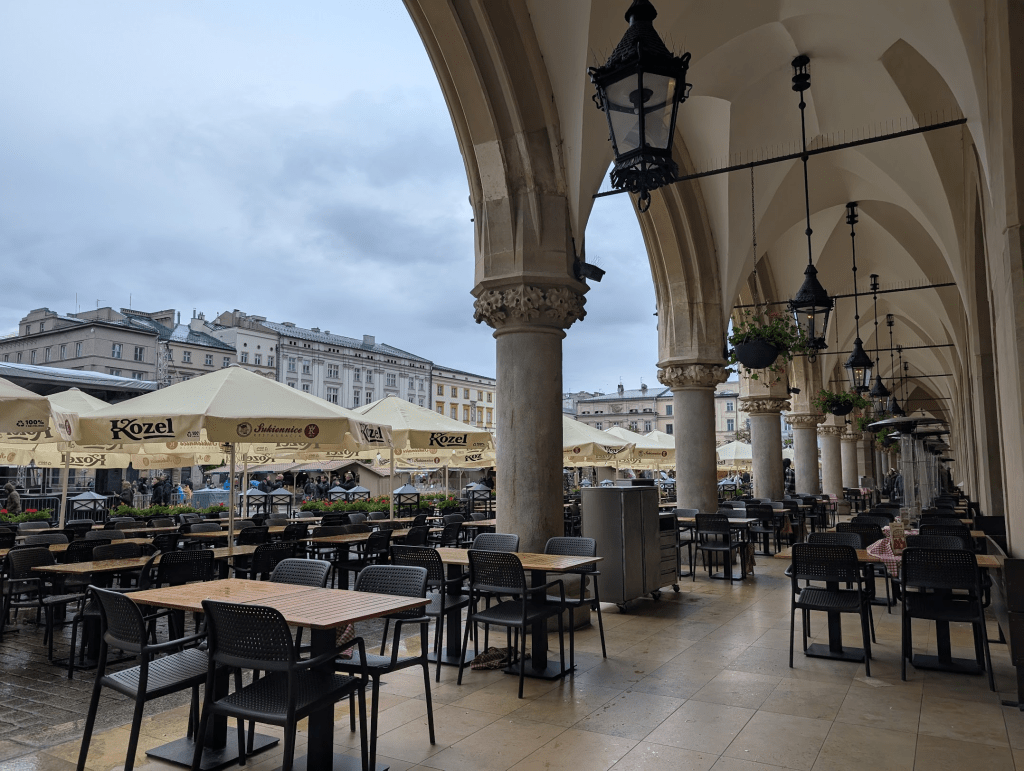
I have to give a special shout-out to the soup vendors who were selling no fewer than 15 different kinds of soups. The options ranged from $4-11 per bowl, based on the ingredients. The Poles are very serious about their soups. I was in heaven!
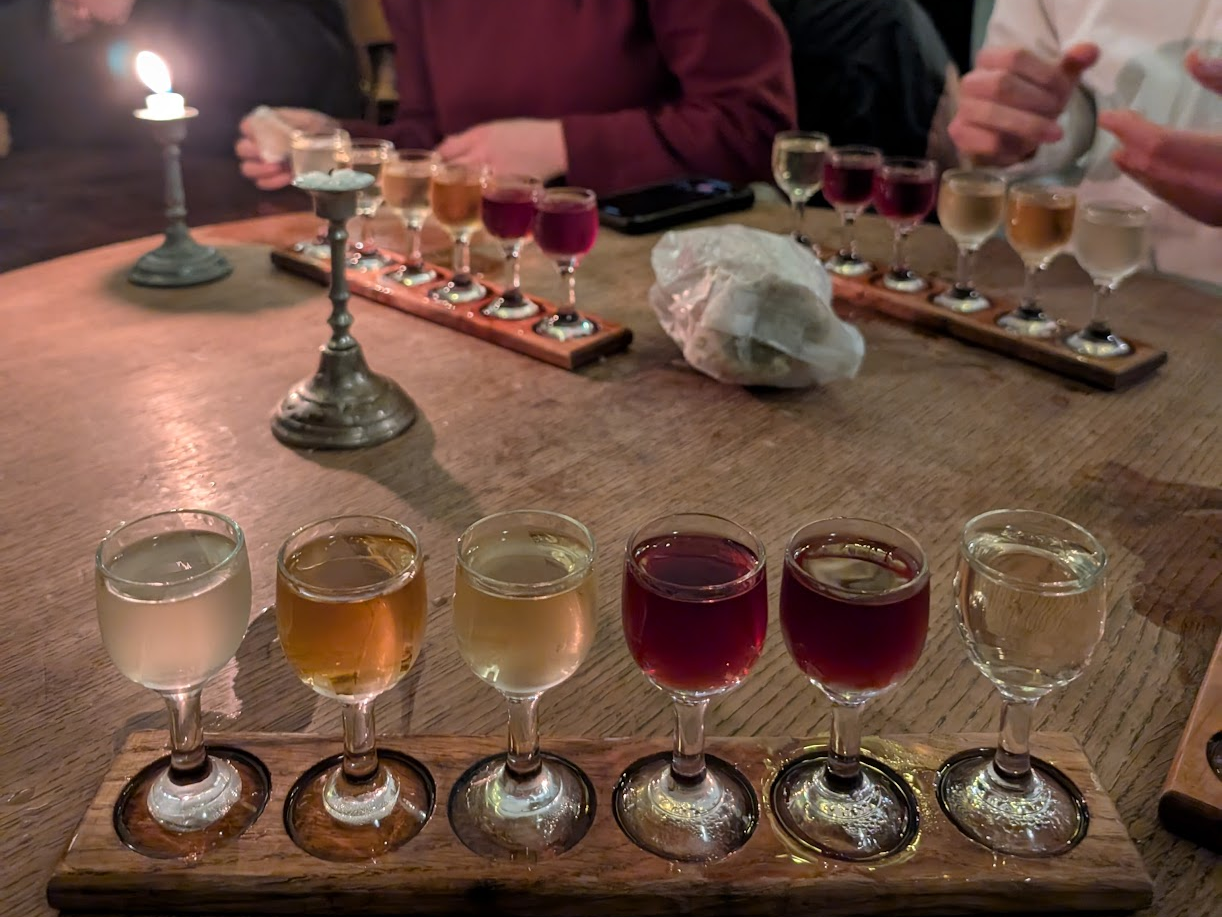
Later that evening, I met up with about 10 of my classmates from different universities at a vodka bar aptly named Wódka Café Bar. We tried flights of different flavored vodkas. At the end of the night, our half Azerbaijani, half Ukrainian friend talked some of us into taking a shot of Śliwowica 70%, a plum brandy that burned like the devil. Not pleasant, but certainly memorable!
Back home to Stockholm
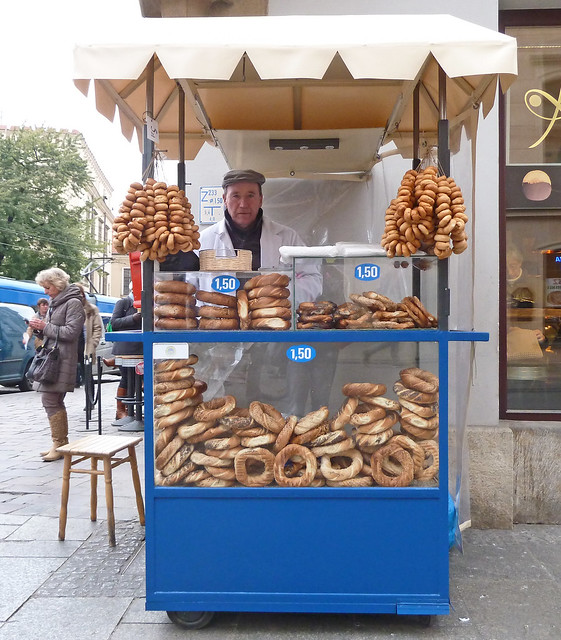
On Saturday I flew back to Stockholm. I could have opted to take the train and ferry journey in reverse, but I wanted to get home in time to attend a choir event on Saturday night. On the train ride back to Gdansk, my friends discovered that we did, in fact, have tickets on the fast train for the entire trip, which means there was no reason we had to stand for hours on the slow train to Krakow. Oh well. In the airport before my flight I bought a couple more obwarzanki, a type of bagel unique to Krakow and sold in small stands on almost every corner.
Of all of the many places I got to travel to this year, Poland was my favorite in many ways. The slow journey via trains and ferry was fun and special. Two hours in Gdansk was not nearly enough but was a delight. The hiking we did in the Tatra Mountains was absolutely stunningly gorgeous. Visiting Auschwitz was somber and profound and will stick with me for the rest of my days. Krakow is a very beautiful city with deep history and vibrant culture that was partly familiar to me and partly new and surprising. I tried many new foods and drank delicious beer and vodka. I have a newfound passion for Polish soups. As always, getting together with my classmates from different universities was a blast.
Poland is a country I might not have ever visited if not for this seminar, so I am very thankful for the opportunity. It is a beautiful country that has a rich and sometimes tragic history. It is easy to see the scars that that history has left, but the future is also incredibly bright. Krakow is full of life and ambition and hope. If you ever get a chance to visit, please do. I am very much looking forward to (hopefully) going back next year for our second-year Spring Seminar!
 Nordic Breeze | Iberian Seas
Leave a comment